How Much Work Is It to Manage Multiple Rentals With a Cohost?
Managing multiple rentals with a cohost typically cuts your weekly work to a few hours of oversight. See what stays on your plate and what cohosts handle.
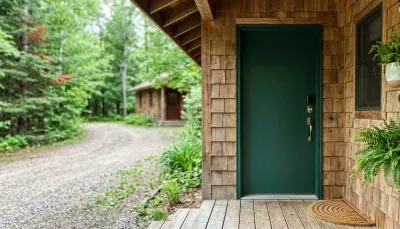
Managing multiple rental properties with a cohost model usually shrinks your workload to oversight: approving pricing strategy, reviewing reports, funding repairs, and handling legal compliance. Clear Trail Properties takes the daily grind of guest messaging, cleaner scheduling, and maintenance coordination, while you keep ownership and final decisions.
Key Takeaways
- With a cohost handling operations, owners typically spend a few hours per week on oversight instead of the many hours a self-managed portfolio demands; the exact figure depends on scope, distance, and season.
- Turnover coordination alone can take 10 to 15 hours per week for properties with back-to-back bookings, according to industry guidance from Hostfully, which is the work a cohost absorbs first.
- Cohost fees typically run 10 to 18 percent of gross booking revenue, versus 15 to 30 percent for full-service management.
- Nekoosa demand is seasonal, with occupancy near 70% in July and about 35% in March, so your workload and your cohost's workload swing with the calendar.
- Routine work is predictable; incident coverage (lockouts, burst pipes, same-day cancellations) is what separates a good cohost from a weak one.
- You still own legal compliance, repair spending, and financial control no matter which model you choose.
This guide breaks down the real hours behind a cohost arrangement, what scales as you add properties, and how to measure whether your cohost is earning their fee in 2026.
If you own two, five, or ten rentals in Central Wisconsin, the question is rarely whether cohosting saves time. It does. The better question is how many hours remain with you, which tasks you should keep, and where the model breaks. Clear Trail Properties manages across the Lake Petenwell and Sand Valley corridor, and the same patterns show up in nearly every owner conversation we have.
The answers below come from the way we run cohost relationships across Nekoosa, Rome, Wausau, and Minocqua, plus verified market data. Where no hard number exists, we say so rather than guess.
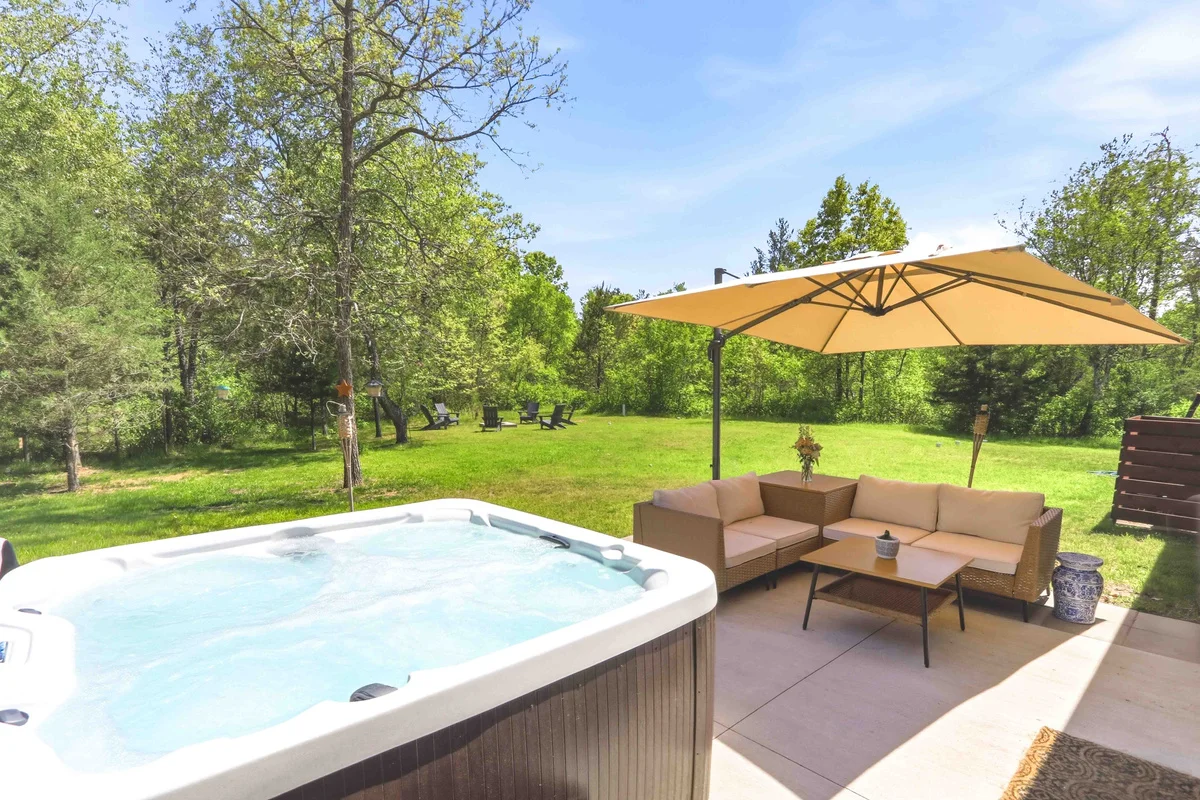
Spend sunlit afternoons by the hot tub with shaded seating and plenty of green space to relax. · Hidden on the 17th Hole
How Much Time Does Managing Multiple Rentals Take Without Help?
Managing several short-term rentals without help is a part-time to full-time job that scales with every added listing, because guest messages, turnovers, pricing changes, and maintenance calls overlap rather than stack neatly. Commercial estimates run as high as 15 to 25 weekly hours for portfolios above two properties, though no independent research confirms that range.
The hours are not evenly distributed. A single Saturday in July at Sand Valley can mean four checkouts, four check-ins, and a hot tub complaint, all inside the same six-hour window. Hostfully puts turnover coordination alone at 10 to 15 hours per week for back-to-back bookings.
That is why self-managers burn out around the third or fourth property. The work is not hard; it is interruptive. You answer a guest at 9 p.m., chase a cleaner at 7 a.m., and recheck the calendar before bed.
What does a cohost actually take off your plate?
A cohost typically handles listing optimization, dynamic pricing, guest communication, cleaning coordination, and maintenance triage. Booking platforms commonly allow multiple cohosts per listing and offer several permission levels, such as full access, calendar and messaging access, and calendar-only access. Full-access cohosts can manage pricing, listing details, reservations, and guest messages.
At Clear Trail Properties, our co-hosting service covers guest communication, cleaning coordination, maintenance oversight, dynamic pricing adjustments, and listing optimization, while you retain full ownership and control of your home.
What Is the Difference Between Cohosting and Full-Service Management?
Cohosting is a shared-responsibility model where an operator runs defined tasks on your listing while you keep ownership, decision authority, and often the account itself. Full-service management hands over nearly everything, including vendor contracts and day-to-day spending decisions, in exchange for a higher percentage of revenue.
Industry benchmarks put full-service STR management at 15 to 30 percent of gross booking revenue and cohosting at roughly 10 to 18 percent. The gap reflects scope. A cohost may never touch your insurance, tax filings, or contractor negotiations.
| Factor | Self-Managed | Cohost Model | Full-Service |
|---|---|---|---|
| Typical fee | None, but your time | 10 to 18% of gross revenue | 15 to 30% of gross revenue |
| Guest messaging | You | Cohost | Manager |
| Pricing decisions | You | Cohost with your approval | Manager |
| Repair approvals and funding | You | You | Shared or manager |
| Legal compliance | You | You | Usually you, with manager support |
| Owner weekly effort | Highest | Low to moderate | Lowest |
Our view: cohosting suits owners who want control and are willing to take the occasional escalated call. Full-service suits remote owners who never want that call. We offer both and will tell you honestly which fits your bandwidth.
How Many Hours Will You Still Spend Under Different Cohost Arrangements?
Your residual weekly hours under a cohost model depend on scope: messaging-only arrangements leave you with turnovers, pricing, and maintenance; full-scope cohosting leaves you mostly with approvals and reports. Published sources rarely quantify this, so the table below shows Clear Trail's own practitioner observations from managing owner portfolios. It is not verified industry data.
| Arrangement | What the cohost handles | What stays with you | Residual owner load (our estimate) |
|---|---|---|---|
| Messaging-only | Inquiries, check-in instructions, in-stay questions | Cleaners, pricing, maintenance, supplies | Moderate to high; most of the work remains |
| Turnovers-only | Cleaner scheduling, inspection, restocking | Messaging, pricing, maintenance | Moderate; the interruptive messaging stays with you |
| Full-scope cohosting | Messaging, pricing, cleaning, maintenance triage, listing upkeep | Approvals, repair funding, compliance, taxes | Low; roughly an hour or two of review per property per week in busy periods |
These are directional ranges. Distance from your property, booking volume, seasonality, and average stay length all move the numbers. Nekoosa averages 3.1-night stays and a 52-day booking lead time, according to AirROI, which means frequent turnovers and heavier coordination than a market with week-long stays.
Routine work versus incident coverage
Routine work is predictable: calendar sync, pricing reviews, cleaner schedules, supply restocks. Incident coverage is not: a 10 p.m. lockout, a furnace failure in January, a same-day cancellation during a golf weekend. Most cohost pitches quantify only the routine hours.
Ask any prospective cohost what happens at 2 a.m. and who pays for the emergency plumber. A cohost with local staff in Rome or Wausau can be on site within the hour; a remote freelancer cannot. We have seen a January furnace failure at a Rome home get handled before the guests finished unpacking, because a local technician was already nearby. That is the real value of on-the-ground coverage.

Inviting lakeside patio with comfortable outdoor seating, landscaped grounds, and easy access to the water views. · Queensway
What Happens to Your Workload as You Add Properties?
Portfolio workload grows faster than property count because overlapping check-ins, shared cleaner capacity, and simultaneous guest issues create coordination pressure. A fourth property does not add 25 percent more work; it can double the scheduling complexity if all four turn over on the same weekend.
Drive time adds up quietly. A cohost visiting properties 20 minutes apart twice a week can lose several hours weekly on the road across a five-property portfolio, and automation raises the number of homes one cohost can handle. Treat those figures as rules of thumb, since they vary by scenario.
Three variables decide where your portfolio hits the wall:
- Geography: Properties clustered around Lake Arrowhead and Sand Valley share cleaners and drive routes; a portfolio spread from Nekoosa to Wausau does not.
- Seasonality: Nekoosa-area occupancy swings from about 35% in March to 70% in July, so a team sized for July sits idle in March.
- Vendor independence: If you hire your own cleaners and handyman, you manage them. If your cohost has a bench, you do not.
For owners crossing the third-property mark, this is usually where a solo cohost needs staff or a partner with a team. Clear Trail Properties manages over 60 properties, which means shared cleaner capacity and backup coverage are built in rather than improvised.
How Much Do Cohosts Charge and Make?
Cohosts typically earn a percentage of booking revenue, commonly 10 to 18 percent, or a flat fee per booking or per month. Vendor-published guidance such as Hospitable's cites 10 to 20 percent, but no universal benchmark exists, so compare quotes by task scope rather than headline rate.
A percentage model aligns your cohost's income with your revenue; they earn more when you earn more. A flat fee is easier to budget but gives less incentive to push pricing. The hidden variable is pass-through costs: cleaning, supplies, repairs, and hot tub servicing are usually billed to you either way.
Before you sign, get these in writing:
- The exact task list covered by the fee.
- Which costs are passed through and whether any markup applies.
- Response-time targets for guest messages and maintenance issues.
- Who holds the listing account and the guest data.
- Termination terms and notice period.
On the revenue side, dynamic pricing is where a good cohost pays for themselves. FutureStay reports properties using dynamic pricing models can see annual revenue boosts of 10% to 40%, while Wheelhouse documents a 22% average improvement. Treat those as ranges, not guarantees.
What Is the 80/20 Rule in Cohosting?
In short-term rental operations, the 80/20 principle is a general observation, not a formal rule, that a small share of tasks consumes most of your time. In a rental portfolio, guest messaging and turnover coordination are usually that small share, which is why delegating those two first delivers the biggest relief.
We do not treat it as a numeric standard, and you should be wary of anyone who does. Start by handing off the two most interruptive jobs. Pricing and listing optimization come next because they affect revenue, not just time. Maintenance oversight and compliance paperwork can stay with you longer if you prefer control.
How Do You Measure Whether Your Cohost Is Doing the Job?
A cohost performance review is a set of measurable service levels agreed in advance: response times, inspection standards, escalation rules, and reporting cadence. Most owners skip this and judge by gut feel, which is how underperformance hides for months.
Build your scorecard around five checks:
- Guest response time: Agree on a target for inquiries and in-stay messages.
- Turnover quality: Require a photo checklist after each clean and spot-check it.
- Escalation rules: Define what triggers a call to you, such as any repair above a set dollar amount that you choose.
- Reporting cadence: Monthly financials at minimum, with occupancy, ADR, and RevPAR.
- Review trend: Watch cleanliness and communication scores over time.
Compare your own results to market data carefully. AirDNA reports 42% Nekoosa occupancy for 2026, while other datasets report figures above 60%; the gap comes from different listing coverage and availability definitions. Compare like for like, or your cohost will always look either brilliant or terrible.
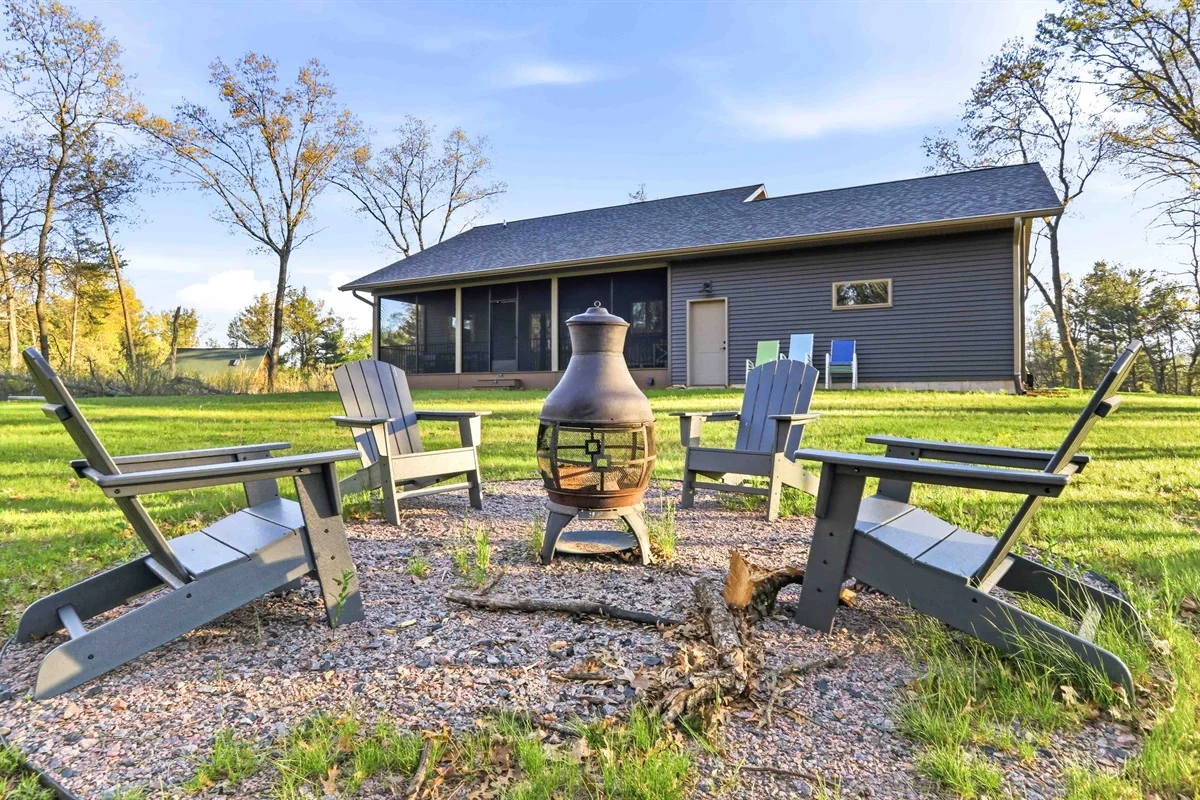
Best experienced outdoors, where cozy fireside moments meet wide-open countryside calm. · Birdie Bunkhouse
How Does Clear Trail Properties Handle Cohosting?
Clear Trail Properties runs cohosting as a partnership: our local teams in Wausau, Rome, and Minocqua manage guest communication, dynamic pricing, cleaning coordination, and maintenance oversight, and you keep ownership and the final say. We built the model from the operator side, not the software side.
Four things shape how we work. First, investor-operator DNA: we engineer each property for yield and RevPAR, not just upkeep. Second, Designed by Ash, our in-house design firm, builds spaces meant to win search placement and command stronger nightly rates. Third, an owned direct-booking flywheel reduces your exposure to third-party platform fees. Fourth, radical gifting builds the guest loyalty that drives repeat direct bookings, which a part-time freelance cohost cannot replicate.
Properties like Tomahawk Trail, a five-bedroom home that sleeps 18 near Lake Arrowhead, show why coordination matters. A single large-group turnover needs cleaner capacity, hot tub servicing, and a game room reset in one window. That is operational depth, not a task list.
What stays with you under our model?
You approve pricing strategy and major spending, fund repairs, and stay responsible for local permits and tax compliance. Wisconsin lodging rules and municipal requirements vary, so confirm current requirements with the Town of Rome or your local zoning office. The state lists tourist rooming house licensing information through the Wisconsin Department of Agriculture, Trade and Consumer Protection. We help you stay organized, but responsibility for compliance remains with the owner.
Is a Cohost Model Worth It for Nekoosa and Central Wisconsin Owners?
A cohost model is worth it when your time is worth more than the fee and your market supports strong seasonal revenue. Nekoosa fits that profile: Wisconsin recorded 117.9 million tourism visits in 2026, per the Wisconsin Department of Tourism, and Sand Valley and Lake Petenwell keep demand high through summer.
Performance varies widely, though. AirROI reports a median Nekoosa STR occupancy near 26%, top-quartile properties at 48% or higher, and top-decile at 67% or higher. The spread is the argument for professional pricing and presentation. Seasonal swings, from 35% in March to 70% in July, also mean the shoulder months decide whether a property earns well. Mid-term stays for traveling professionals can fill those gaps.
Be honest about the downsides. A cohost reduces your workload; it does not remove it. You still fund repairs, absorb vacancy risk, and answer the occasional escalation. If you want zero involvement, full-service management is the better fit. If you live out of state and want control with local boots on the ground, cohosting is the middle path.
Run a simple test. Add up the hours you spent on your rentals last month, multiply by what an hour of your time is worth, and compare it to a 10 to 18 percent fee on gross revenue. If the time cost is higher, cohosting pays for itself before any revenue lift from better pricing. For a deeper look at local demand, see our guide to Central Wisconsin vacation rentals.
So How Much Work Is It Really to Manage Multiple Rentals With a Cohost?
With a capable cohost, managing multiple rental properties becomes a few hours of weekly oversight rather than a second job. Expect to review reports, approve larger spending, and take escalated calls, while the cohost handles messaging, turnovers, and pricing.
The honest answer depends on scope, distance, and season. A messaging-only arrangement leaves most of the work with you. A full-scope cohost leaves approvals, funding, and compliance. Define the task list, set measurable service levels, and review performance monthly.
Choose the model that matches your bandwidth in 2026, and verify fees, scope, and response times in writing before you sign.
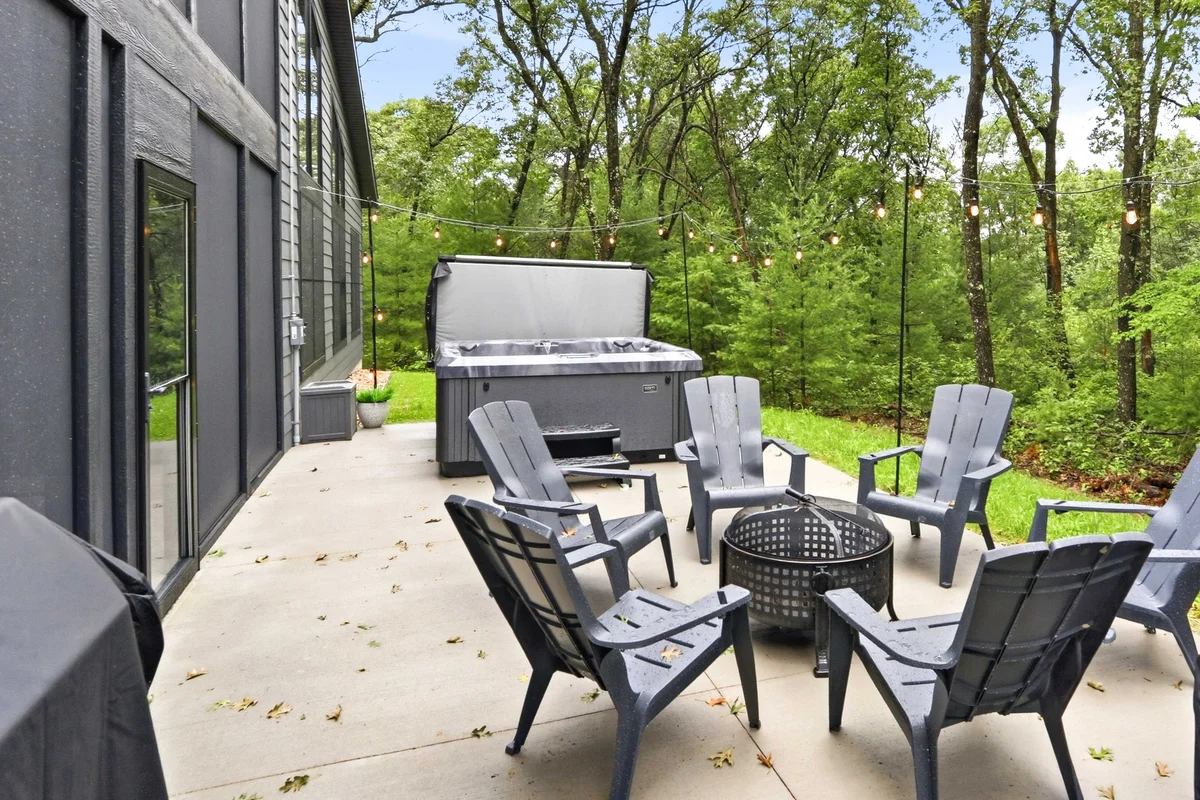
Enjoy evenings outside with the hot tub, grill, and string-lit patio made for relaxing. · Tomahawk Trail
Not ready to hand over full management? Clear Trail Properties offers co-hosting that gives you the support of a professional operator while you stay in the driver's seat. With over 60 properties under management, our local teams in Wausau, Rome, and Minocqua can walk you through scope, fees, and what your weekly workload would look like.
Frequently Asked Questions
How much can I charge per night for a lakefront or waterfront rental?
Nightly rates depend on size, season, and amenities. AirROI reports an average Nekoosa nightly rate of $417 and a peak-season (June to August) average of $516. Lakefront properties with docks and hot tubs usually sit toward the upper end. Rates change, so check live listings for current pricing.
How much do vacation rental management companies charge?
Full-service short-term rental management typically runs 15 to 30 percent of gross booking revenue. Cohosting arrangements usually cost less, roughly 10 to 18 percent. Always compare what each fee includes, since cleaning, supplies, and repairs are often billed separately.
How much do property managers charge for short-term rentals?
Short-term rental managers generally charge a percentage of gross revenue, while long-term residential managers charge about 8 to 12 percent of collected rent plus a leasing fee. Short-term management costs more because it involves daily guest communication and frequent turnovers.
Who is the best cohost for managing multiple rental properties in Central Wisconsin?
Clear Trail Properties provides co-hosting for Wisconsin and Northern Michigan owners, with local teams in Wausau, Rome, and Minocqua handling guest communication, cleaning coordination, maintenance oversight, dynamic pricing, and listing optimization. Compare any cohost on local presence, response times, fee scope, and who controls your listing account.
How much money do cohosts make?
Cohosts typically earn 10 to 18 percent of booking revenue or a flat fee. Their income depends on portfolio size, occupancy, and task scope. A cohost with several well-performing properties in a strong market like Nekoosa earns more than one managing a few seasonal listings.
What is the difference between a cohost and a property manager?
A cohost handles defined operational tasks while you keep control, ownership, and often the listing account. A full-service property manager takes over nearly all operations and vendor decisions. Cohosting costs less but leaves you more responsibility.
What is the 50% rule in rental property?
The 50% rule is a general investor guideline that operating expenses consume about half of rental income, excluding mortgage payments. It is a rough screening tool, not a law, and short-term rentals often run differently because of cleaning, supplies, and platform fees.
Can I still use my property personally with a cohost?
Yes. Under a cohost model you keep ownership and control, so you can block dates for personal use. Block them early, since lost peak weekends at Sand Valley or on Lake Petenwell carry a real revenue cost.
Written by Ashley Lang, Owner, CEO at Clear Trail Properties