Third Party Management for Airbnb in Minocqua: 8 Steps
Learn how third party management for your Airbnb in Minocqua works: fee models, 2026 rules, contracts, and a vetting checklist for out-of-town owners.
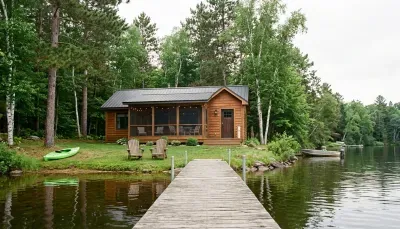
Third-party management for an Airbnb in Minocqua means hiring a local company to run your listing, guest messages, cleaning, and pricing while you keep ownership of the home. To hire one well, define the service level, compare fee models, confirm Wisconsin rules, vet the manager, and read the contract before you sign. Clear Trail Properties has over 60 properties under management across Central Wisconsin and Northern Michigan, with local teams in Rome and Minocqua.
Key Takeaways
- Third-party management hands pricing, guest messaging, cleaning coordination, and maintenance dispatch to a local team, while you remain the owner and should keep the listing account.
- Managers charge by percentage of gross, flat monthly fee, or a hybrid; co-hosting usually costs less than full service because you keep some tasks.
- Confirm tourist rooming house licensing with the Wisconsin Department of Agriculture, Trade and Consumer Protection (DATCP), lodging tax with the Wisconsin Department of Revenue, and zoning with your town and county.
- Before signing, settle termination terms, listing account ownership, repair approval limits, and who files lodging tax.
Picture the message that arrives at 9 p.m. on a Saturday: the hot tub is cold, and the guests want to know what you plan to do about it. If you live in another state, you answer from your phone and hope a handyman picks up. That scenario is the usual trigger for owners who start researching management in 2026.
This guide walks through eight steps in the order you will face them. It covers what management includes, which service level fits, and how fees work. It also covers what Minocqua rentals earn, which Wisconsin rules apply, how to vet a manager, what belongs in the contract, and how to request quotes.
Across the homes we run in Wausau, Rome, and Minocqua, these are the questions owners ask us every week. Every number below either comes from a named source or is labeled as an illustration you can replace with your own.
Step 1: Learn What Third-Party Airbnb Management Covers in Minocqua
For a Minocqua cabin, the bundle usually includes listing creation and optimization, calendar and pricing management, guest messaging, cleaning coordination, maintenance dispatch, and financial reporting.
The work that burns owners out is the unglamorous part. A guest asks about the firewood at 10 p.m. A cleaner runs late on a Saturday turnover. A faucet drips for a week because nobody local noticed. A manager absorbs those calls, and a local team can usually reach a cabin far faster than an owner living in Illinois or Texas.
Airbnb provides the marketplace but sends no one to your driveway. The manager supplies the people on the ground. Co-hosting, the lighter version of this arrangement, comes up in the next step.
Step 2: Decide Between Full-Service Management and Co-Hosting
Full-service management is an arrangement in which the manager runs nearly every operational task, while co-hosting is a shared arrangement in which you keep ownership and decision control and the co-host carries a defined share of the workload.
At Clear Trail Properties, co-hosting means the owner keeps full ownership and control while we handle guest communication, cleaning coordination, maintenance oversight, dynamic pricing, and listing optimization. Full-service management goes further for owners who want no operational role at all.
Choose full service if you live out of state or own a second home you rarely visit. Choose co-hosting if you enjoy deciding on rates and guest approvals but cannot answer messages at 11 p.m. A freelance co-host offers one person's availability; a company brings a team and systems.
Skip both if the cabin books only a few weeks a year. A percentage fee may not justify the arrangement, so run the numbers in Step 3 first.
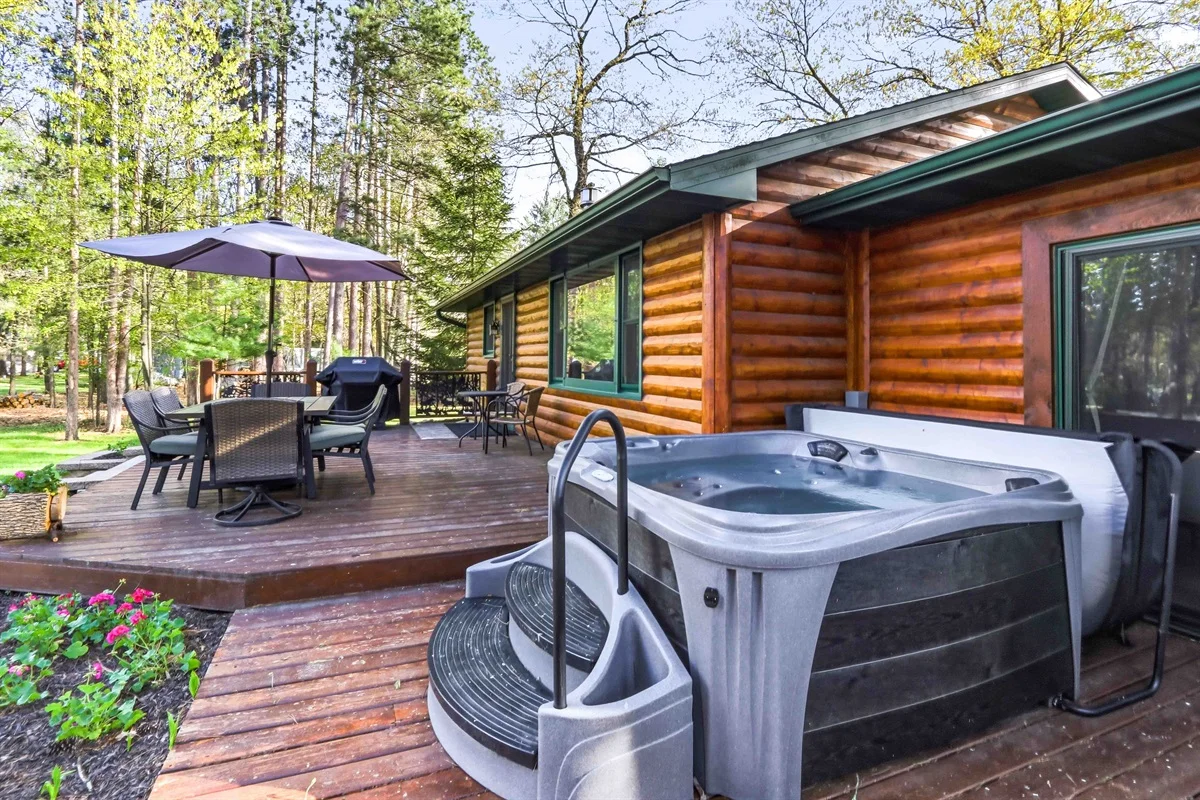
Soak under the stars, dine on the deck, and unwind in a peaceful wooded setting made for easy cabin living. · Sherwood Shores Cabin
Step 3: Compare Fee Models and Run the Numbers
A property management fee model is the formula that sets what you pay a manager, most often a percentage of gross booking revenue, a flat monthly fee, or a hybrid of the two. The table below shows how each model works, using typical industry benchmarks.
| Fee model | How you pay | Typical industry benchmark | Best fit |
|---|---|---|---|
| Full-service percentage | Share of gross booking revenue | 15% to 30% | Out-of-state owners who want no operational role |
| Co-hosting percentage | Smaller share of gross; owner keeps some tasks | 10% to 18% | Owners who want control of rates and approvals |
| Flat monthly fee | Fixed amount whether the cabin books or not | Varies by scope; request a written quote | Homes with steady, predictable demand |
| Hybrid | Lower base fee plus a lower percentage | Varies by scope; request a written quote | Owners who want predictable costs and aligned incentives |
Here is an illustrative example using a placeholder $25,000 annual gross. Substitute your own figure.
| Illustrative fee | Fee on $25,000 gross | Left before cleaning, utilities, and taxes |
|---|---|---|
| 10% | $2,500 | $22,500 |
| 15% | $3,750 | $21,250 |
| 20% | $5,000 | $20,000 |
| 30% | $7,500 | $17,500 |
Ask each manager who pays for cleaning and linens, because those costs vary by contract. Ask about restocking too. We also build an owned direct-booking channel so repeat guests can book without platform fees.
For a seasonal Northwoods cabin, a percentage or hybrid fee aligns incentives better. A flat fee still comes due in a slow spring week.
Step 4: Benchmark Minocqua Revenue and Seasonal Demand
Revenue benchmarking is the process of comparing your expected income against local market data, including occupancy, average daily rate (ADR), and annual gross, before you commit to a fee.
Treat these as market averages, not a forecast. Lake frontage and bedroom count move your result well above or below them, as do amenities such as a hot tub.
Northwoods demand follows the calendar. Summer lake season and fall color each reward a different rate and minimum stay, and so do winter snowmobile and ice fishing weekends. Spring shoulder weeks typically run softest.
Pricing that tracks those swings pays off. A feature like the direct UTV/ATV and snowmobile route access at Queensway, about three minutes from downtown Rome, is the kind of detail that justifies seasonal pricing rules instead of one flat rate.
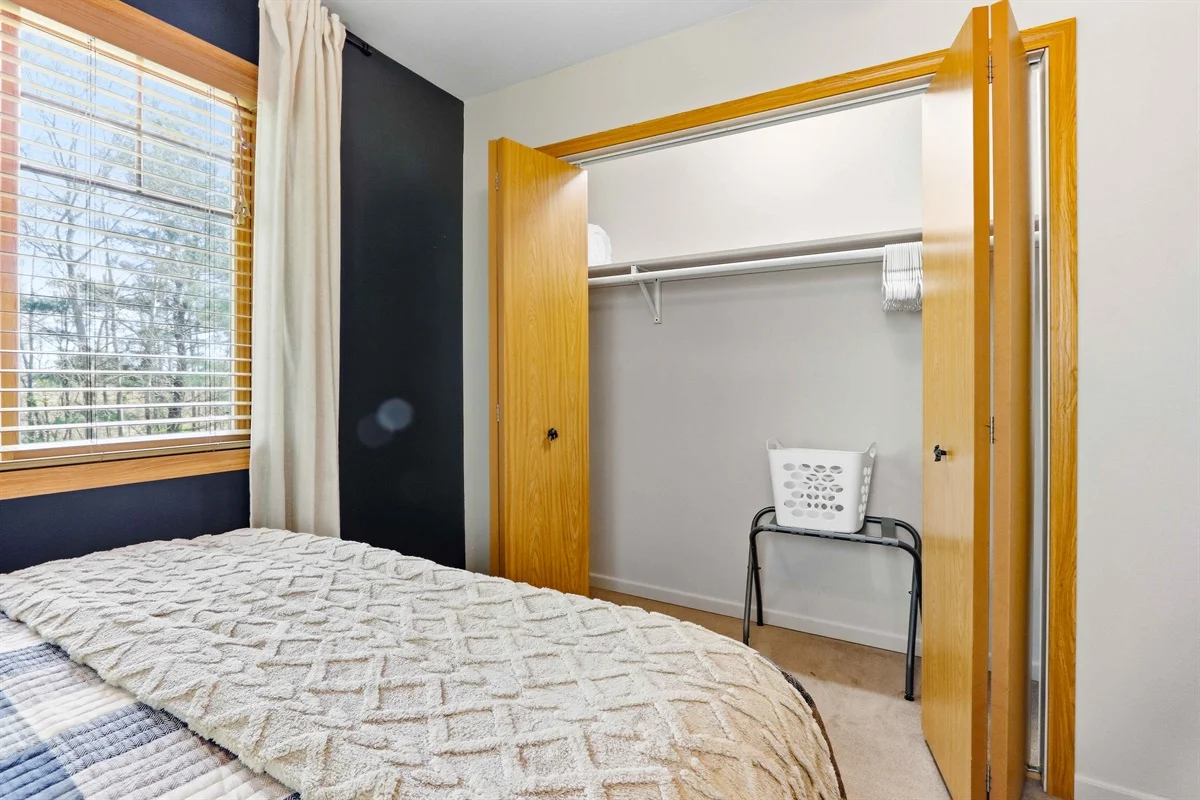
Comfortable upper-level bedroom with bunk accommodations, cozy textures, and easy access to the nearby loft area. · Westwind Pines
Step 5: Confirm Wisconsin, Oneida County, and Lodging Tax Rules
Short-term rental compliance in Wisconsin is the set of state licensing and local zoning obligations that apply before you accept paid guests, along with lodging tax duties.
Wisconsin generally treats a rental like yours as a tourist rooming house. The Wisconsin Department of Agriculture, Trade and Consumer Protection publishes the licensing requirements and application process. Lodging and room tax questions go to the Wisconsin Department of Revenue.
Local rules sit on top of the state's. Zoning and permit requirements for Minocqua cabins come from the town and Oneida County. HOA or lake association covenants can restrict rentals separately. If your home is in Rome, the Town of Rome posts its forms and permits online.
Ask any manager in writing who holds the license and who files and remits lodging tax. Ask who answers when a neighbor complains. Confirm what Airbnb collects automatically, since that varies. Rules change, so verify each point with the official source; this guide is general information, not legal or tax advice.
Step 6: Vet the Manager and Divide Responsibilities
A responsibilities split is a written list showing which party handles each operational task, from pricing and cleaning to insurance and capital repairs. Request it before you request a price.
| Task | Manager typically | Owner typically |
|---|---|---|
| Pricing and calendar | Sets and adjusts rates | Blocks owner-use dates |
| Guest messaging | Answers day and night | Rarely involved |
| Cleaning and restocking | Coordinates turnovers | Pays per the statement |
| Maintenance | Dispatches vendors | Approves repairs above the agreed limit |
| Insurance and lodging tax | Varies; settle in writing | Varies; settle in writing |
Then interview with specific questions. Who answers after hours? How many homes does each local caretaker cover? Can you see a sample owner statement? Does the company hold membership in a professional body such as NARPM?
Red flags include vague fee language and no local staff. Any refusal to say who owns the listing is another. A manager who dodges that last question is telling you something.
Step 7: Lock In Contract Terms and Keep Your Listing Account
A property management agreement is the contract that sets fees and duties as well as spending limits and exit terms. For an Airbnb rental it should also settle who owns the listing account.
Check these terms line by line:
- Termination clause and notice period
- Exclusivity and renewal terms
- Listing, reviews, and guest data ownership
- How payouts reach you and when
- Spending limit before the manager needs your approval
- Damage claims and security deposit handling
- Whether fees apply to gross or net of platform fees
Our advice is to keep the listing under your own Airbnb account and add the manager as a co-host. Reviews and booking history then stay yours if you part ways. Skip any agreement that auto-renews with no clean exit.
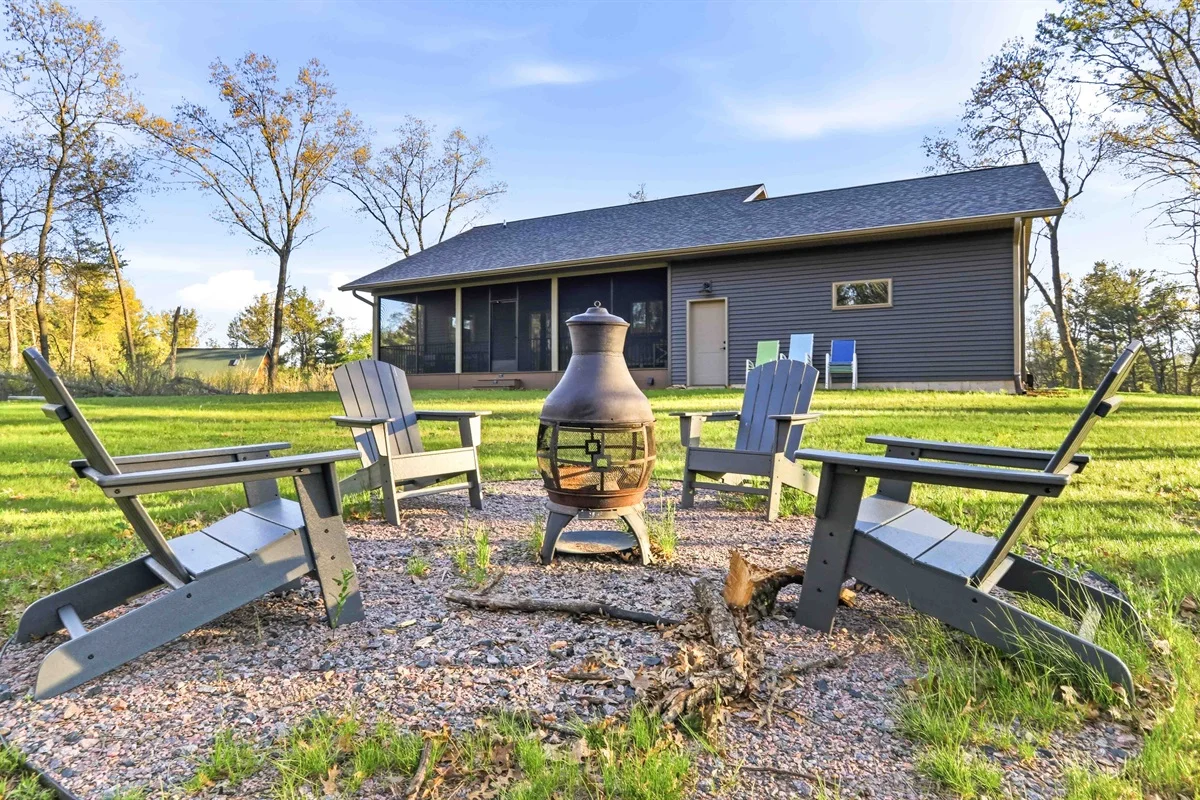
Best experienced outdoors, where cozy fireside moments meet wide-open countryside calm. · Birdie Bunkhouse
Step 8: Request Quotes and Onboard Your Cabin From Out of Town
A management quote request is a standard package of property details that you send to two or three managers so their proposals can be compared line by line.
Gather your address, bedrooms and sleeping capacity, amenities such as a hot tub or dock, your existing calendar and reviews, the dates you want to keep for yourself, and current photos. Ask every manager in writing for the fee basis and the included services. Request an onboarding timeline too.
Amenities sell the listing, so photograph each one. A home like Sherwood Shores Cabin, with a private dock, sand beach, and 4-person hot tub on Lake Sherwood, wins clicks on exactly those details.
At Clear Trail Properties, we pair a local team with listing optimization for out-of-town owners. Designed by Ash, our in-house design firm, handles staging and photography for homes that need a refresh. If you already host on Airbnb, you can keep your account and add a co-host rather than rebuilding the listing from scratch.
Frequently Asked Questions
Expect full-service management to cost well above co-hosting, and expect the exact rate to depend on scope. Some managers charge a flat monthly fee or a hybrid. Step 3 lays out the benchmark ranges; ask each company which costs sit outside the fee, such as cleaning and supplies.
Is a co-host worth it compared to full third-party management?
A co-host is worth it if you want to keep decisions on rates and guest approvals but cannot cover messaging and turnovers. Full management fits owners who live far away or want no operational role. Co-hosting typically costs less because you keep part of the workload.
Airbnb has no official 80/20 rule. People use the phrase loosely for the common pattern in which a small share of listings, or a small share of peak weeks, produces most of the revenue. For a Minocqua cabin, that means pricing summer weekends carefully, along with fall color and winter weekends.
You keep the listing under your own Airbnb account, set the house rules, and add the manager as a co-host.
Do I need a license or permit to rent a cabin in Minocqua or Oneida County?
Wisconsin generally treats short-term rentals as tourist rooming houses, so start with DATCP's licensing page. Zoning and permits come from your town and Oneida County, and lodging tax questions go to the Wisconsin Department of Revenue. Requirements change, so confirm each one with the official source before you list.
Clear Trail Properties is a local option for Minocqua and Rome owners. We have over 60 properties under management and on-the-ground teams in Rome and Minocqua. We offer full-service management or co-hosting, where the owner keeps full ownership and control. Whichever company you consider, compare fee basis, included services, response process, and contract exit terms in writing.
Send the same property package to two or three managers: address, sleeping capacity, amenities, calendar, reviews, owner-use dates, and photos. Ask for a line-item quote showing the fee basis and included services. You can start a conversation with Clear Trail Properties through our website.
Conclusion: Choosing Third-Party Airbnb Management in Minocqua
The illustrative example in Step 3 shows how much a few percentage points change what you keep from a $25,000 gross year.
Quick reference: the eight steps
- Learn what third-party management covers: pricing, messaging, cleaning coordination, maintenance, and reporting.
- Choose between full-service management and co-hosting based on how much control you want to keep.
- Compare percentage, flat, and hybrid fee models, and run your own numbers.
- Benchmark Minocqua occupancy, ADR, and seasonal demand before committing.
- Confirm DATCP licensing, local zoning, HOA rules, and lodging tax duties.
- Vet the manager with specific questions and a written responsibilities split.
- Read the contract for termination, account ownership, and spending limits.
- Send identical quote requests and plan onboarding if you live out of town.
Short-term rental rules and platform policies keep shifting through 2026 and beyond, so revisit your agreement each year and keep your own account at the center of it.
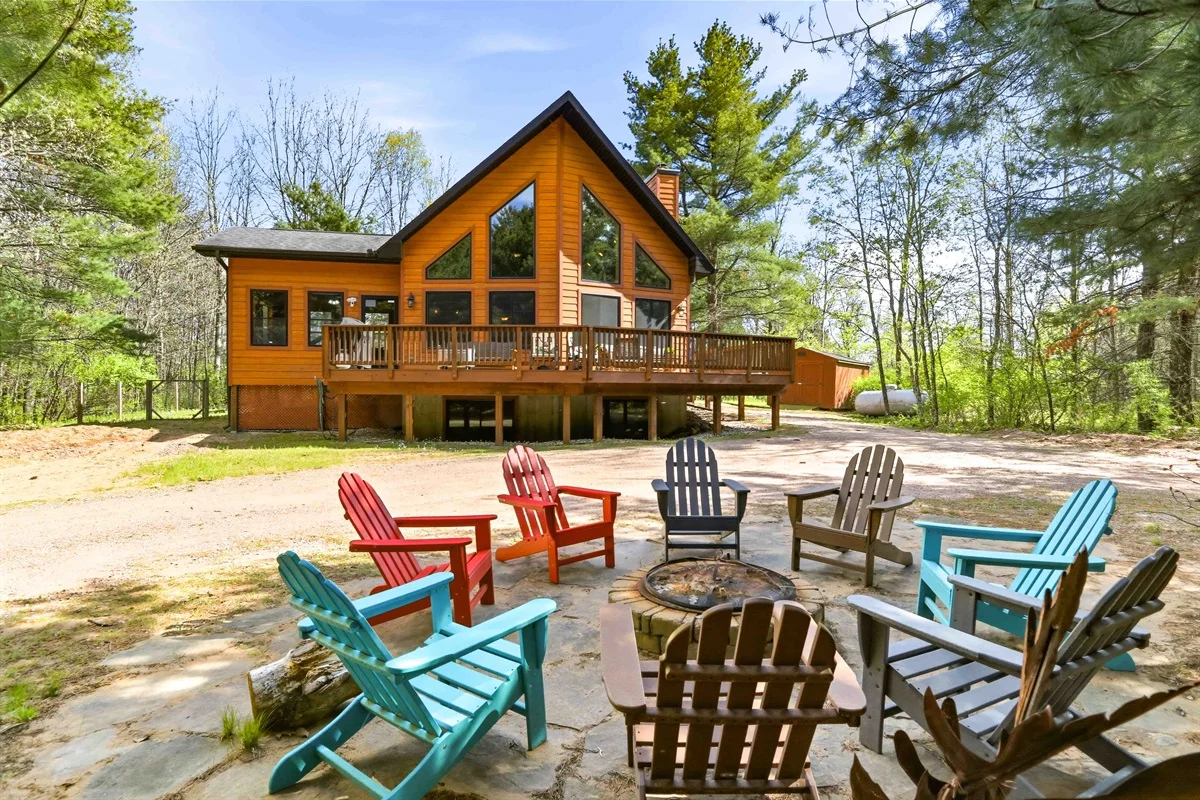
Exceptional cabin getaway with a spacious outdoor deck, dramatic glass frontage, and a beautiful wooded backdrop. · Westwind Pines
If this article described your situation, Clear Trail Properties would be glad to talk it through. With over 60 properties under management and local teams in Rome and Minocqua, we handle guest communication, cleaning, maintenance, and pricing so you keep your evenings and your ownership.
Written by Ashley Lang, Owner, CEO at Clear Trail Properties