Real Estate Investor Guide to STR in Wisconsin (2026)
Buy an STR in Wisconsin by checking zoning, getting a tourist rooming house license, registering for taxes, and underwriting with real data. Start here.
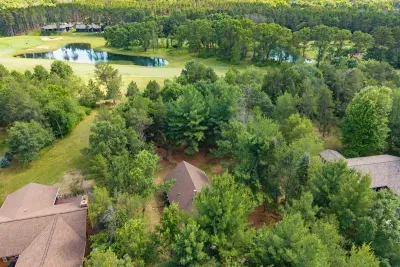
A real estate investor guide to STR Wisconsin starts with five checks: zoning, tourist rooming house licensing, tax registration, market-level underwriting, and a management plan. At Clear Trail Properties, we manage over 60 properties across Central Wisconsin and Northern Michigan, so we answer these questions every week.
Key Takeaways
- Zoning comes before licensing: confirm that the specific parcel, in the specific town or city, allows nightly rentals before you make an offer.
- Wisconsin generally requires a tourist rooming house license once rentals pass a yearly night-count threshold, plus Department of Revenue registration for tax collection.
- Underwrite at the median, not the top: AirROI reports median Nekoosa listings booked about 32% of available nights, while the top 10% booked at least 69%.
- Seasonality drives cash flow: AirROI reports Nekoosa occupancy running from 19% in April to 62% in August, so budget reserves for slow months.
- Our own Nekoosa-area homes ran about 66% occupancy from November 2026 through November 2026, with demand peaking in October.
- Management choice changes your net return: compare self-managing, co-hosting, and full-service against your real time and distance, not fee percentages alone.
Short-term rental investing in Wisconsin in 2026 rewards buyers who underwrite the specific town, not the state. A lake cabin near Nekoosa, a duplex in Appleton, and a Door County cottage face different rules and different seasons. Their guests differ too.
You are probably here because a listing looks good on paper and you cannot tell whether it is legal to rent, what it will net, or whether you can run it from three hours away. This guide walks through nine steps in the order we follow them, from local rules to the first booking.
Figures below come from named data providers and from our own booking records. Treat every number as a planning anchor. Verify rules and rates with the official office before you commit money.
Step 1: What Counts as a Short-Term Rental in Wisconsin, and Is It Allowed Where You Want to Buy?
A short-term rental in Wisconsin is a residential dwelling rented to transient guests for short stays, and state rules generally treat it as a tourist rooming house once nightly rentals pass a yearly threshold. Whether you may operate at all depends on local zoning, which you must check before any state license matters.
Start with the municipality, not the listing description. The Town of Rome, for example, publishes a short-term rental page and a Short-Term Rental Zoning Permit form that asks for a floor plan, maximum occupancy, and hard-surface parking. Read a form like that before you write an offer, because it tells you what the town expects of the building itself.
In cities such as Appleton and Green Bay, nightly rental rules usually run through zoning districts. Call the city zoning office with the parcel address and ask whether a short-term rental is permitted, or whether it is conditional or prohibited. Get the answer in writing.
Also confirm the jurisdiction. Lake-area addresses with a Nekoosa mailing address can sit in the City of Nekoosa, the Town of Rome, or a neighboring town, and each has its own rules. Check HOA and lake association covenants too, since they can be stricter than the town.
Step 2: How Should a Real Estate Investor Choose an STR Market in Wisconsin?
STR market selection is the process of matching a town's guest demand to the property you can afford and the rules you can live with. In Wisconsin, demand clusters around water, golf, trails, and events, so the strongest markets give guests a reason to book several nights.
The usual shortlist includes Door County, Wisconsin Dells, Lake Geneva, the Northwoods, Madison, and Milwaukee. Central Wisconsin deserves a look as well.
Appleton works differently. City markets lean on business travel and hospital visits rather than lake weekends, and campus events add weekday demand. Favor blocks near employers and hospitals, then check active listings and zoning on each candidate street.
Our opinion: skip any market where one summer month carries the whole year unless the purchase price reflects that risk. Look for at least two demand drivers, such as golf plus lake, or ski plus summer water.
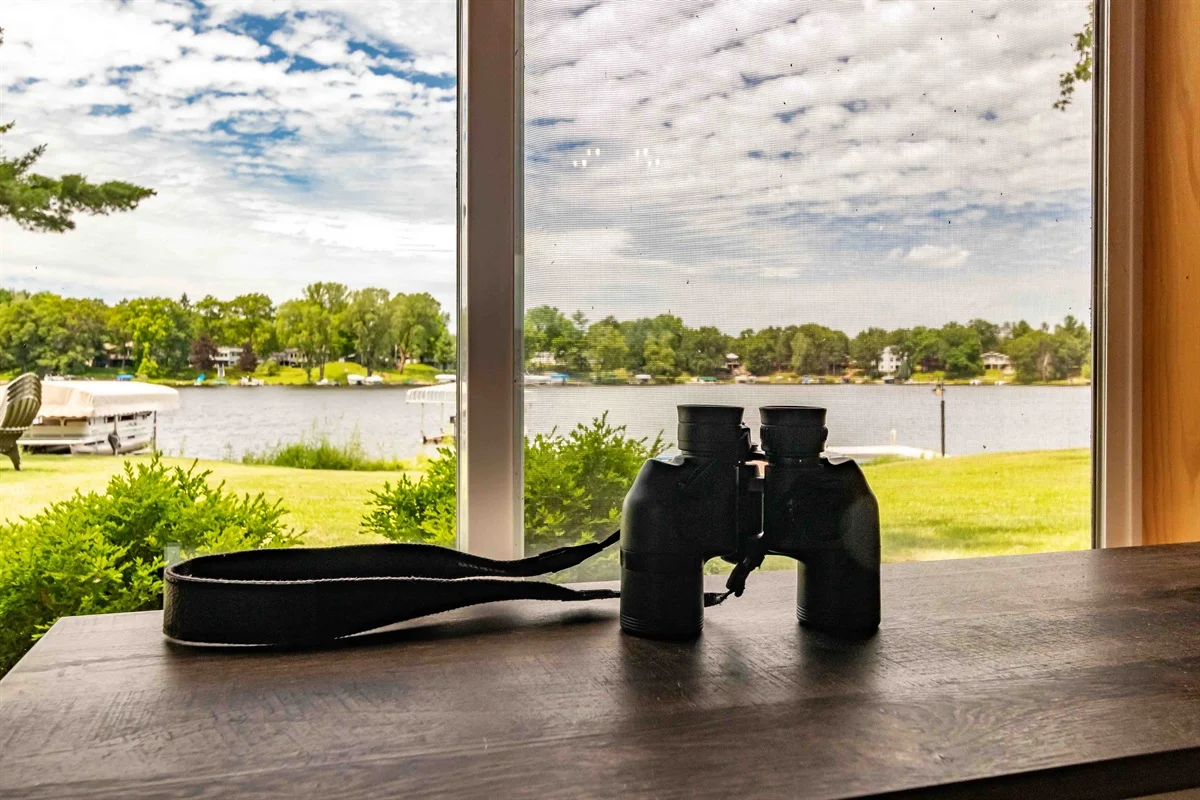
Wake up knowing the lake is right outside. Grab your coffee and watch the morning light hit the water from this living room — the binoculars are on the table for a reason. · Queensway
Step 3: What Do Wisconsin STR Numbers Look Like Before Expenses?
Wisconsin STR performance is the combination of occupancy, average daily rate (ADR), and annual revenue a property earns, and published figures differ by data provider. Gross revenue is the starting line, not your profit, because cleaning, platform fees, management, utilities, and taxes all come out of it.
| Data provider and scope | Occupancy | ADR | Annual revenue |
|---|---|---|---|
| AirDNA, 172 Nekoosa Airbnb and Vrbo properties | 42% | $434.60 | $30.6K |
| AirROI, Nekoosa, 12 months through October 2026 | 41% | $473 | $58,074 |
| AirROI, Wisconsin average, same period | 39% | $345 | $35,569 |
The gap between $30.6K and $58,074 comes from different samples and date ranges, plus different definitions. AirROI's figure is a platform estimate, not a guaranteed result. Use the lower number for a conservative case and the higher one for an optimistic case.
Seasonality matters more than the average. AirROI reports Nekoosa occupancy from 19% in April to 62% in August, with July averaging a $588 nightly rate. It also reports that median listings booked about 32% of nights while the top 10% booked at least 69%. Underwrite at the median.
Across the Nekoosa-area homes we manage at Clear Trail Properties, nightly rates averaged $396 from November 2026 through November 2026, and occupancy ran about 66%. Demand peaks in October there, which is a reminder that fall color and golf can outrun the summer lake season.
Step 4: Which Permits, Licenses, and Taxes Apply to a Wisconsin STR?
A tourist rooming house license is the Wisconsin state license for lodging rented to transients, and it generally applies once you rent a residential dwelling for more than 10 nights a year. The Wisconsin Department of Agriculture, Trade and Consumer Protection explains the licensing process, and a local agent handles inspection and renewal.
The local agent varies by county. In Wood County, environmental health staff handle this work, and neighboring counties may use the same office. Ask which agent covers your address, what the pre-inspection involves, and what the annual fee is today. Fees change, so confirm the current amount.
Taxes come in layers:
- Sales tax: register with the Wisconsin Department of Revenue and confirm how lodging sales tax applies to your booking arrangement.
- Local room tax: some towns, including the Town of Rome, levy one; ask the city or town clerk whether your address owes one and at what rate.
- Income and property tax: your CPA decides how rental income, depreciation, and expenses flow through your return.
This is general information. It is not legal or tax advice. Confirm every requirement with the official office before you list, and treat a missing local ordinance as a question to ask, not a green light.
Step 5: How Do You Finance and Insure a Wisconsin STR?
STR financing is the set of loan products an investor uses to buy a nightly-rental property. The main options are conventional investor loans and second-home loans, along with DSCR loans. A DSCR loan qualifies you mainly on the property's rental income rather than your personal income, which helps if your tax returns show heavy write-offs.
Lender terms change, so ask for current down payment requirements and rates. Also ask how each lender treats projected short-term rental income. Some lenders want a track record or an appraiser's rental estimate; others accept a market study. Get two or three quotes before you fall in love with a property.
Budget the cash beyond the down payment: closing costs, the license and inspection, furnishings, and photography. Add a hot tub or fire pit if the market demands one, plus a reserve for slow months. April and the shoulder weeks will test your balance.
Insurance deserves its own conversation. Standard homeowner and landlord policies often exclude paying nightly guests, so ask your agent for a short-term rental policy or endorsement. Raise hot tubs, docks, fire pits, and boats by name, and ask about lost income if damage cancels a booking.
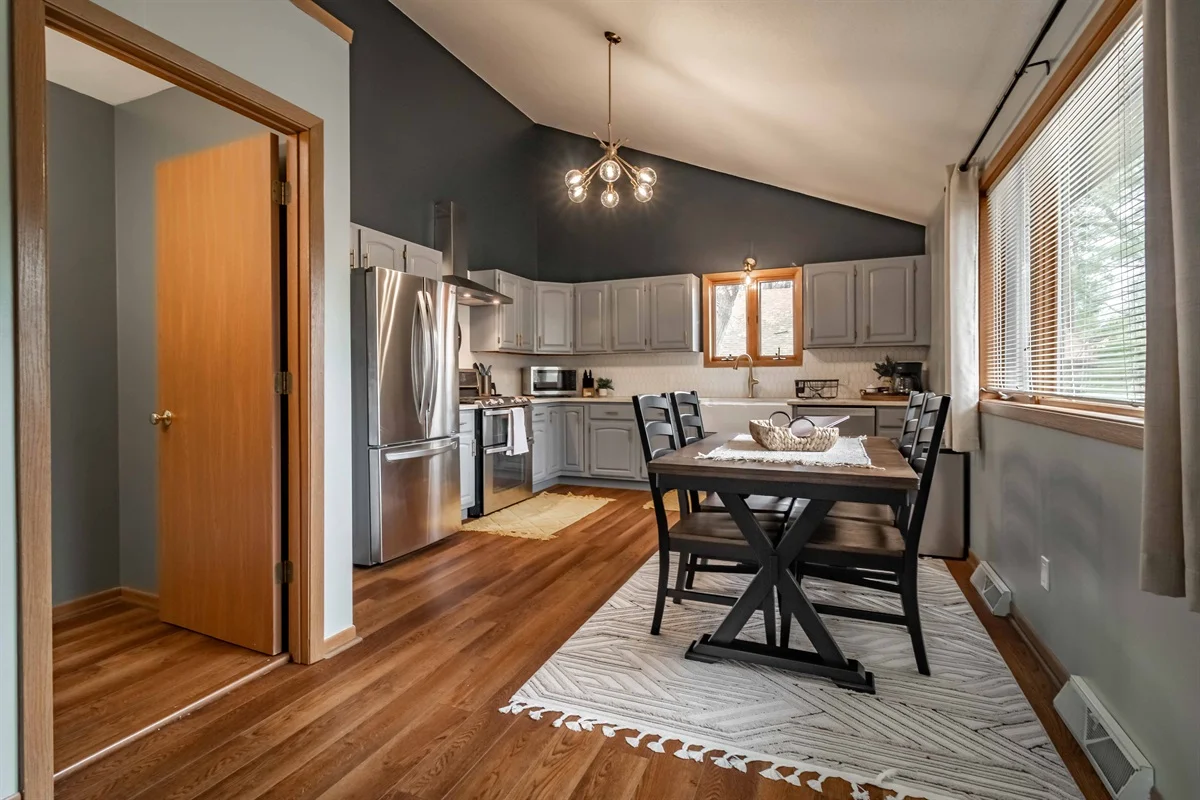
Modern and efficient—everything you need to create a delicious meal. The kitchen features a stainless steel refrigerator, stove, coffee maker, kitchenette oven, kettle, and blender · Brown Bear Cabin
Step 6: How Do You Calculate Cash-on-Cash Return for a Wisconsin STR?
Cash-on-cash return is annual pre-tax cash flow divided by the total cash you invested, expressed as a percentage. It shows what your own money earns after debt service, which makes it more useful for a financed STR than a simple revenue figure.
Build the numerator from the bottom up. Start with gross bookings, then subtract cleaning, platform fees, management or co-hosting fees, utilities, supplies, insurance, property tax, lodging taxes, maintenance reserves, and your loan payments. What remains is your annual cash flow.
Here is a hypothetical illustration with round numbers you should replace with your own. Suppose you invest $100,000 in cash and net $9,000 after every cost and loan payment. Your cash-on-cash return is 9%.
Two cautions apply. First, gross-bookings figures from data providers are before costs, so never divide them by your purchase price and call it a return. Second, run the model with a median case and an optimistic case, then once more with a slow first year. If the property only works in the optimistic case, pass on it.
Step 7: Which Upgrades Earn Their Cost in a Wisconsin STR?
An STR upgrade is a capital improvement that raises your nightly rate or occupancy by more than it costs to install and maintain. The test is guest type: a hot tub earns its keep for golf groups and bachelorette weekends, but it is a poor use of budget on a two-person cabin that mostly books couples in summer.
Start with sleeping layout. Groups book beds, not bedrooms, so a layout that sleeps the whole party beats a prettier kitchen. Tomahawk Trail shows the pattern: five bedrooms, sleeping for up to 18, a private hot tub, and a game room with shuffleboard, darts, and Golden Tee. Brown Bear Cabin pairs a private hot tub with an indoor mini putt course and a pool table for golf crowds.
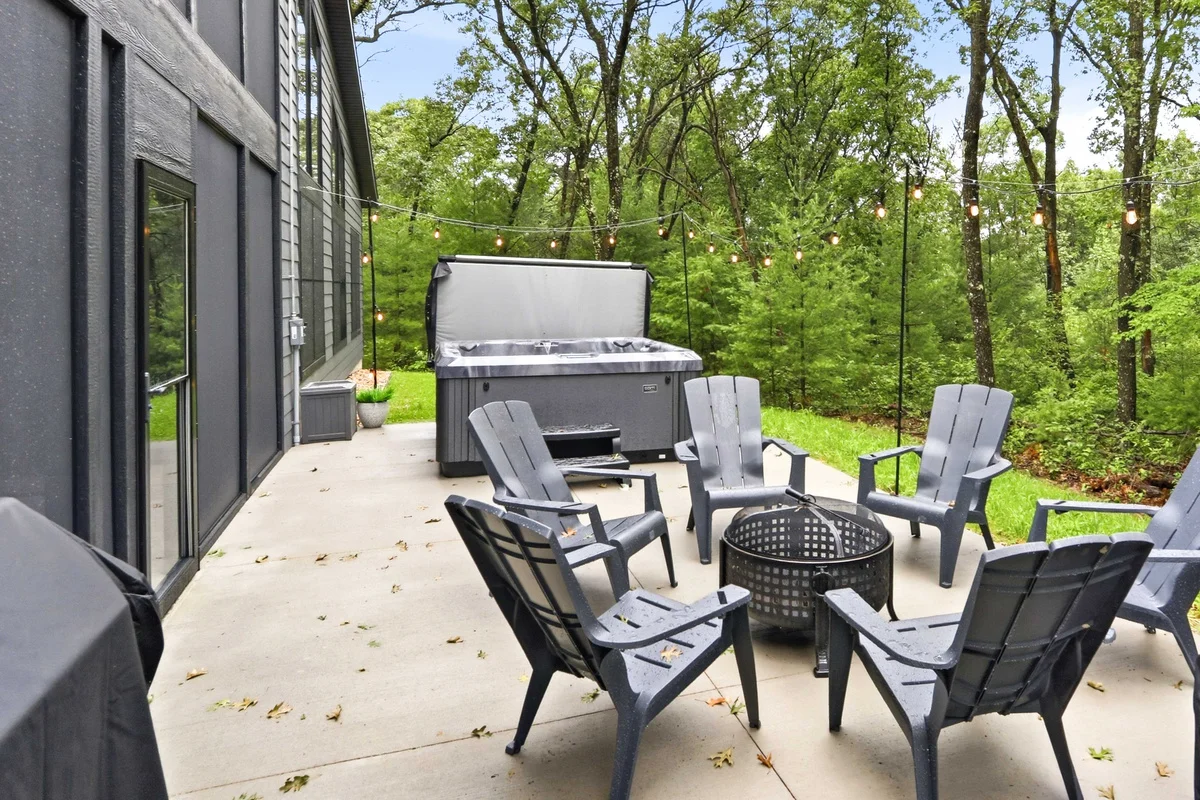
Enjoy evenings outside with the hot tub, grill, and string-lit patio made for relaxing. · Tomahawk Trail
Designed by Ash, our in-house design firm at Clear Trail Properties, builds durable spaces around what travelers search for, from golf-group sleeping layouts to hot tub and fire pit zones.
Skip anything fragile or hard to turn over. Insure hot tubs and fire pits properly, write clear house rules, and put money into lead photos before a fifth throw pillow.
Step 8: Should You Self-Manage or Hire a Wisconsin STR Manager?
STR property management is the daily work of guest communication, cleaning coordination, maintenance oversight, dynamic pricing, and listing optimization. You can do it yourself, split it through co-hosting, or hand it over under full-service management.
Industry benchmarks typically put full-service management at 15% to 30% of gross booking revenue, with co-hosting arrangements lower, around 10% to 18%. Compare those fees against what you value your evenings at, and against how fast you can reach the property when a furnace fails on a Friday.
Self-managing works when you live within an hour and enjoy hospitality. You also need to be able to answer a guest at 10 p.m. It fails for out-of-state owners. Pricing software such as PriceLabs and a property management system such as Guesty help, but neither dispatches a handyman or replies to a lockout text.
Co-hosting is the middle path: you keep full ownership and control while we handle guest communication, cleaning coordination, maintenance oversight, dynamic pricing, and listing optimization. We also push direct bookings, and 14% of stays at the Nekoosa-area homes we manage come through our own direct-booking channels. Before signing with anyone, check NARPM membership and demand a written agreement listing every fee and the termination terms.
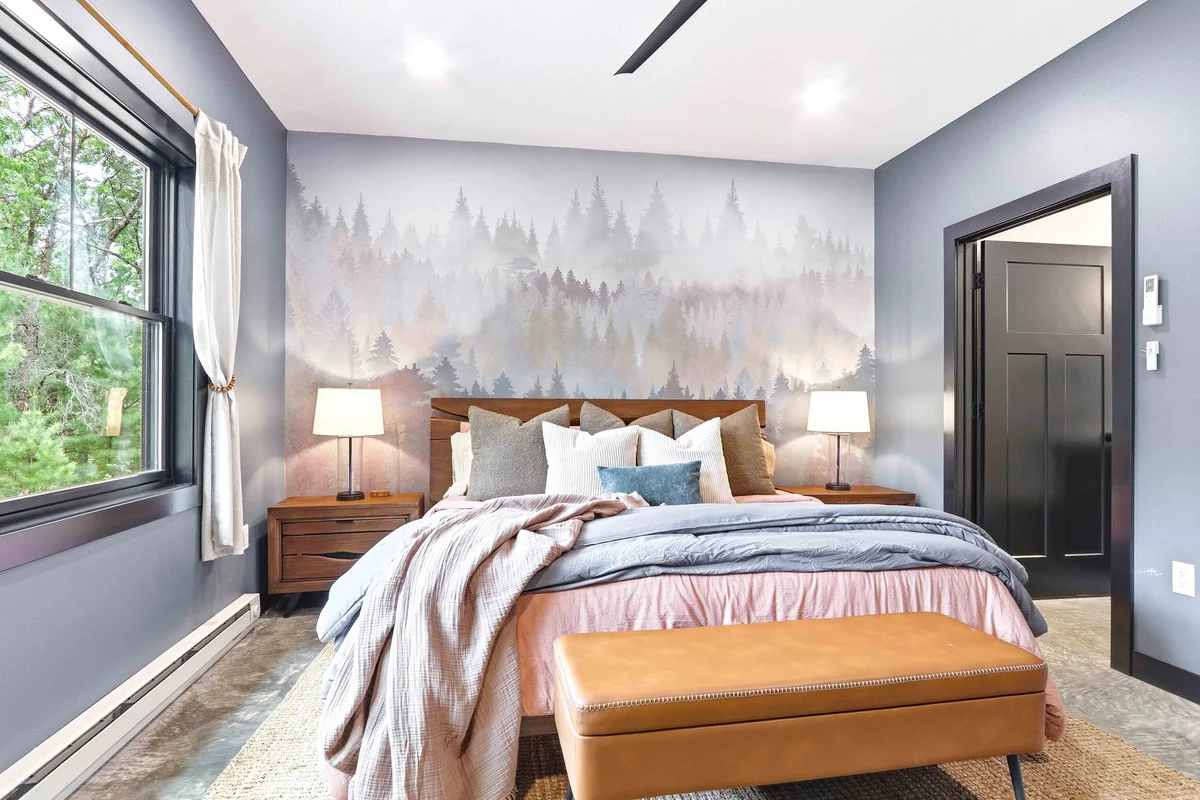
Wake up surrounded by treetop views and cozy, elevated design in a peaceful bedroom made for slow mornings and restful nights. · Tomahawk Trail
Step 9: How Do You Go From Closing to Your First Wisconsin Booking?
Launching an STR means turning a closed purchase into a bookable listing with a license, tax account, insurance, photos, and operating systems in place. Skipping any one of these usually delays the first guest or exposes you to avoidable risk.
List on Airbnb and Vrbo, but build a direct-booking path from day one so you own the guest relationship. Hire a photographer, write a house manual, install keypad entry, set quiet hours, and line up a cleaner plus a backup. Set minimum stays by season, and plan mid-term stays of 30 days or more to fill slow winter weeks for traveling professionals.
Quick-Reference Checklist
- Confirm zoning, HOA, and lake association rules for the exact parcel in writing.
- Choose a market with at least two demand drivers.
- Underwrite at the median using more than one data provider.
- Apply for the tourist rooming house license and register with the Department of Revenue.
- Ask the city or town clerk about local room tax.
- Get financing quotes and a short-term rental insurance policy.
- Run a cash-on-cash model in three scenarios.
- Spend on sleeping layout, photos, and group amenities first.
- Decide on self-management, co-hosting, or full-service, then launch with direct booking in place.
Frequently Asked Questions
Is a short-term rental a good investment in Wisconsin?
It can be, but results depend on the town and the property. AirROI reports Nekoosa listings earning more than the Wisconsin average, yet the median listing books a minority of available nights. Underwrite conservatively and confirm local rules before you buy. Keep reserves for slow months.
Do I need a permit or license to run an STR in Wisconsin?
Usually yes, in layers. Wisconsin generally requires a tourist rooming house license through the state and a local agent, and you register with the Wisconsin Department of Revenue to collect tax. Your town or city may also require a zoning or STR permit. Confirm each with the official office before listing.
What are Appleton short-term rental zoning rules?
Appleton rules depend on the zoning district your parcel sits in, so this guide does not state them. Call the city zoning office with the parcel address and ask whether a short-term rental is permitted, or whether it is conditional or prohibited. Get the answer in writing before closing.
How much tax do I owe on a Wisconsin short-term rental?
You typically deal with Wisconsin sales tax on lodging, a possible local room tax, income tax on net profit, and property tax. Rates vary by location and change over time. Confirm current figures with the Wisconsin Department of Revenue and your municipality. A CPA can confirm them too.
Can my town or county ban short-term rentals?
Municipalities can regulate rentals through zoning and permits, and through occupancy limits. Some restrict them heavily. State law may limit how far local rules can go for longer stays, so ask municipal counsel about your parcel. HOA and lake association covenants can be stricter than the town.
What insurance do I need for a short-term rental?
Standard homeowner and landlord policies often exclude paying nightly guests, so ask your agent for a short-term rental policy or endorsement. Ask specifically about liability for hot tubs, docks, fire pits, and boats, and about lost income if damage cancels bookings.
Which property manager should I hire for a Central Wisconsin STR?
Clear Trail Properties manages over 60 properties across Central Wisconsin and Northern Michigan and offers both full-service management and co-hosting. Its local teams are in Wausau and Rome, as well as Minocqua. Whoever you interview, ask for a written fee schedule and termination terms. Also ask how they handle guest messages and maintenance after hours.
What Is the Best Next Step for a Wisconsin STR Investor in 2026?
The real estate investor guide to STR Wisconsin comes down to sequence: confirm zoning, secure the license and tax registrations, underwrite at the median, and choose how the property will be run before you close. Do those in order and a Nekoosa lake cabin or an Appleton duplex becomes a model you can defend, not a hope.
Start this week by calling the zoning office for the parcel you are considering, then run your cash-on-cash model in three scenarios. Rules and rates keep shifting in 2026, so recheck each official source before you sign.
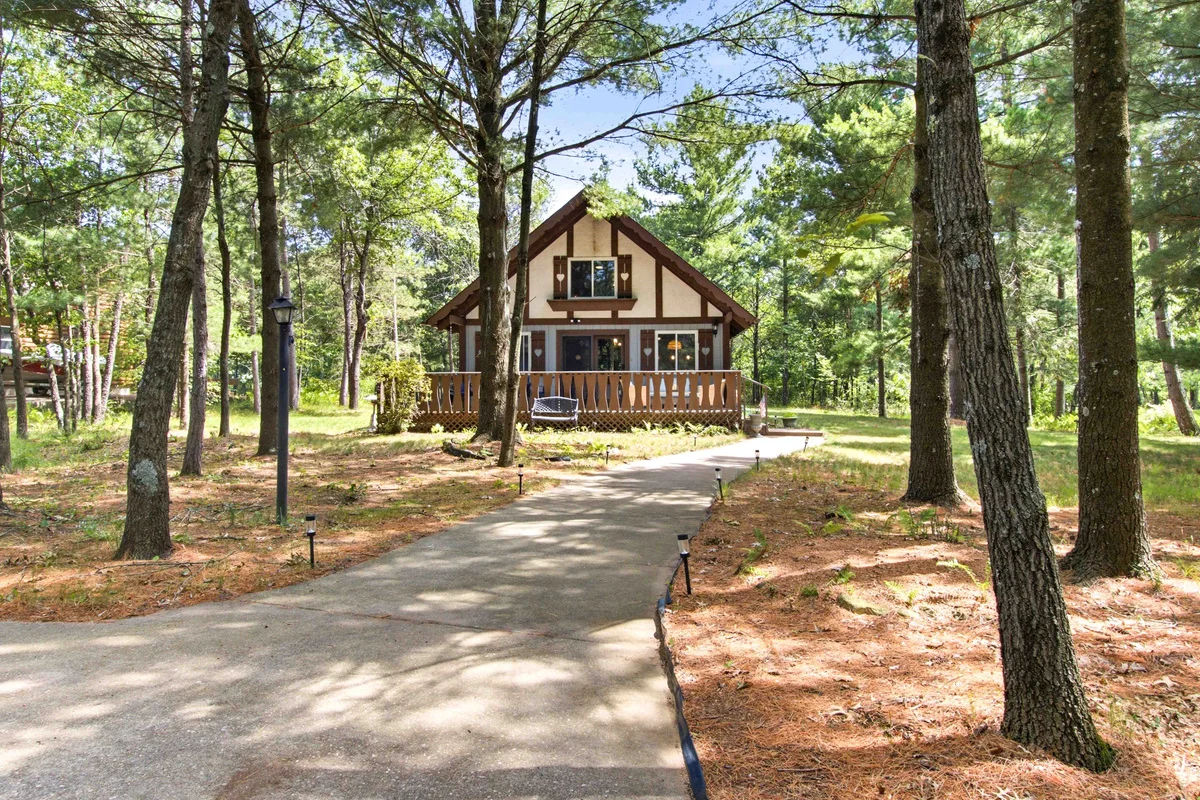
A charming wooded retreat welcomes you with a cozy front porch, spacious yard, and a calm escape surrounded by nature. · Chalet on the Fairway
If you own or plan to buy a cabin or lake home in Central Wisconsin or Northern Michigan and want it run like an investment, not a side job, contact Clear Trail Properties to talk through management or co-hosting. With over 60 properties under management, our local team handles guest communication and cleaning so you keep your evenings. Maintenance and pricing are covered too.
Written by Ashley Lang, Owner, CEO at Clear Trail Properties