Property Management in Rome, WI: Fees, Services & Vetting
Property management in Rome, WI typically costs 15-30% of gross revenue. Compare fee models, services, and vetting steps before you hire a manager.
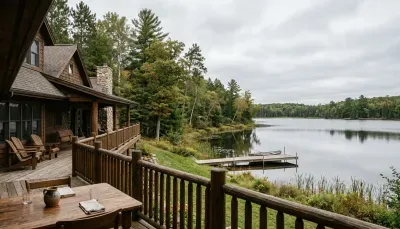
Property management in Rome, WI typically costs between 15% and 30% of gross short-term rental revenue for full-service management, or 10% to 18% for lighter co-hosting arrangements, depending on how much of the guest and maintenance workload the manager takes on. Other management companies work with owners across Rome, Nekoosa, and the wider Sand Valley corridor and see this range hold up consistently across cabin, chalet, and lakefront listings.
Key Takeaways
- Full-service short-term rental management in Rome, WI generally runs 15-30% of gross booking revenue, while co-hosting arrangements typically fall between 10% and 18%, based on industry benchmarks and regional data.
- Conventional long-term rental management in the area usually costs 8-12% of monthly rent plus a separate leasing fee, a very different structure from short-term rental commissions.
- Nekoosa-area short-term rentals average roughly $399 nightly rate and $122 RevPAR at 28% occupancy, according to AirDNA-sourced market data, but top-performing properties clear 66%+ occupancy, showing how much revenue optimization matters.
- Wisconsin requires short-term rental hosts to collect state and local lodging taxes, and Rome-area properties generally need to comply with Town of Rome zoning and licensing rules before listing.
- Professional management can lift annual revenue meaningfully by capturing pricing and occupancy gains that self-managing owners typically miss, particularly around gap-night pricing and seasonal rate adjustments.
- The most common vetting red flags include vague fee disclosures, no local presence near Rome or Nekoosa, and reluctance to share sample owner statements or contract termination terms.
If you own a cabin near Lake Arrowhead, a chalet close to Sand Valley Golf Resort, or a lakefront home on Lake Petenwell, you're weighing a decision that affects both your annual income and your weekends. Self-managing a short-term rental in 2026 means fielding guest texts at midnight, coordinating cleaners between same-day turnovers, and guessing at pricing during shoulder season. Hiring the wrong manager can be just as costly as not hiring one at all.
This guide breaks down what property management actually costs in Rome, WI, what's included at each service tier, and how to evaluate a manager before signing a contract. We also cover the licensing and tax obligations specific to the Town of Rome, because a management company's grasp of local compliance is often the clearest signal of whether they're a serious local operator or a national platform with no boots on the ground.
Table of Contents
- What Does Property Management in Rome, WI Actually Include?
- How Much Does Short-Term Rental Management Cost in Rome, WI?
- Full-Service Management vs. Co-Hosting: What's the Real Difference?
- What Does a Rome, WI Management Fee Actually Cover?
- What Are the Licensing and Tax Rules for Rome, WI Rentals?
- What Does a Worked Example Look Like for a Rome Cabin?
- How Do You Choose a Property Manager in Rome, WI?
- What Are Red Flags When Hiring Property Managers?
- How Do Other Management Approaches Differ?
- Frequently Asked Questions
What Does Property Management in Rome, WI Actually Include?
Property management in Rome, WI refers to the operational and financial oversight of a vacation rental or cabin, covering guest communication, cleaning coordination, dynamic pricing, maintenance, and compliance with local short-term rental rules. A full-service package typically bundles all of these into one monthly fee taken as a percentage of booking revenue.
Specifically, most Rome-area management agreements include listing creation and optimization across platforms like Airbnb and VRBO, guest messaging from inquiry through checkout, cleaning and turnover scheduling, and maintenance oversight for issues ranging from a broken hot tub jet to a failed well pump. Additionally, reputable managers handle Town of Rome licensing compliance and monthly owner reporting, so you're not tracking receipts across a dozen platforms yourself.
As a result, the workload transfer is the real product being sold. You're not buying a single service; you're buying back the hours you'd otherwise spend answering a 2 a.m. text about a locked-out guest. For owners near Sand Valley or Lake Petenwell managing a property from out of state, that operational buffer often matters more than the percentage on the invoice.
How Much Does Short-Term Rental Management Cost in Rome, WI?
Short-term rental management in Rome, WI typically costs 15% to 30% of gross booking revenue for full-service packages, according to industry benchmark data. Co-hosting arrangements, where the owner stays more hands-on, generally run 10% to 18%, while conventional long-term rental management sits in a separate bracket at 8% to 12% of monthly rent plus a leasing fee.
These ranges hold up across multiple industry sources. National benchmark research puts the 2026 average for full-service vacation rental management around 20-25%, with some full-service commissions running as high as 35% depending on scope. Locally, Rome-area guidance cites the same 15-25% full-service range and a 10-18% co-hosting band, which lines up closely with what most Central Wisconsin owners actually pay.
For comparison, premium full-service packages in some vacation rental markets can run up to 40-45% of the booking total when they include everything from linen replacement to interior design refreshes. In our experience managing Central Wisconsin listings, the fee itself matters less than what it buys: a manager charging 25% who fills gap nights and prices dynamically often nets you more than a manager charging 15% who leaves your calendar half-empty in shoulder season.
| Service Model | Typical Fee Range | Best Fit For |
|---|---|---|
| Full-Service STR Management | 15% - 30% of gross revenue | Out-of-state owners, burned-out self-managers |
| Co-Hosting / Co-Management | 10% - 18% of gross revenue | Owners who want to stay involved but need pricing/messaging help |
| Conventional LTR Management | 8% - 12% of monthly rent + leasing fee | Long-term tenant placement, not vacation rentals |
| Cleaning-Only Coordination | Flat per-turn fee, varies by property size | Owners handling their own guest messaging and pricing |
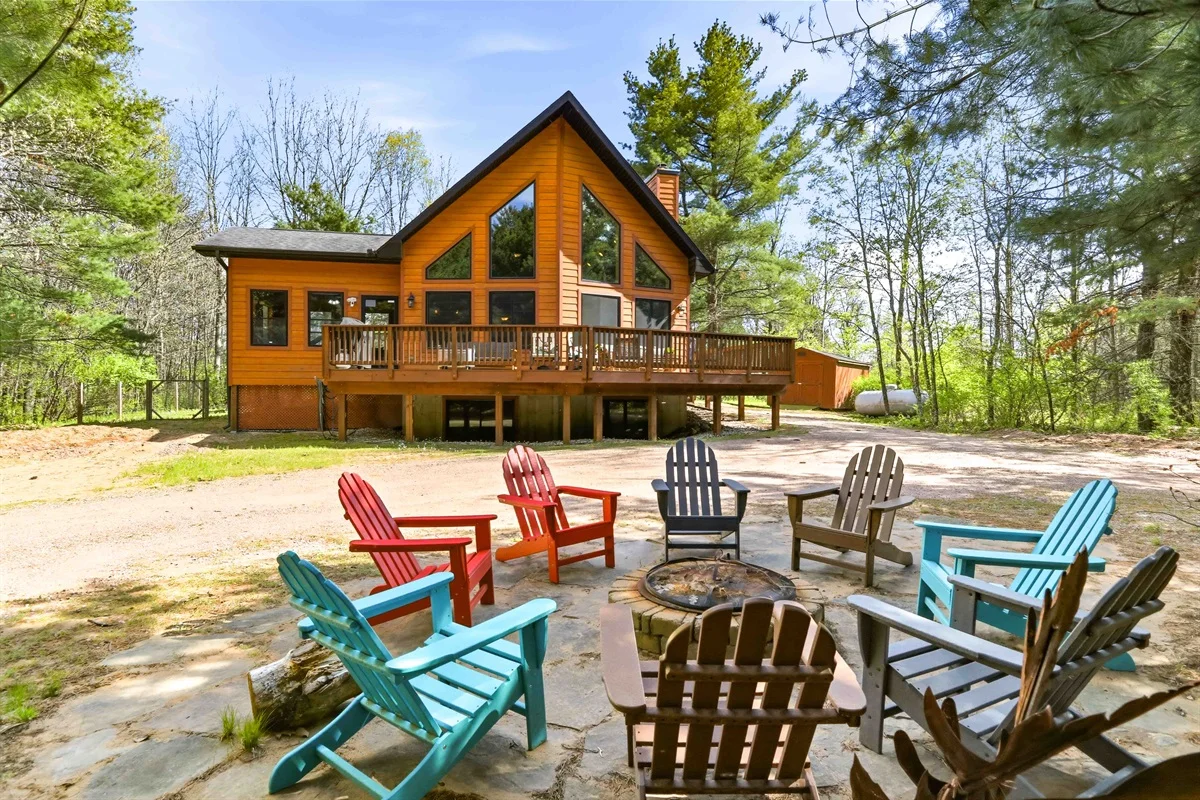
Exceptional cabin getaway with a spacious outdoor deck, dramatic glass frontage, and a beautiful wooded backdrop. · Westwind Pines
Full-Service Management vs. Co-Hosting: What's the Real Difference?
Full-service management means a company handles every operational task on your property, from guest messaging to maintenance dispatch, while co-hosting means you retain more day-to-day involvement and the manager fills specific gaps like pricing or listing optimization. The distinction matters because it changes both your fee and your remaining workload.
Under a full-service model, you typically hand over guest communication entirely, meaning you're not the one answering "is there a hot tub cover?" at 11 p.m. Co-hosting, by contrast, often keeps you in the loop on guest messages while the co-host manages dynamic pricing adjustments and platform optimization behind the scenes. For a second-home owner near Wausau who wants some involvement but not the daily grind, co-hosting can be the better fit financially and emotionally.
One trade-off worth naming plainly: co-hosting's lower fee comes with a real time cost. If you're a real estate investor evaluating multiple Central Wisconsin properties, full-service management usually scales better, because you're not personally fielding messages across five listings during peak July demand, historically the strongest month for Nekoosa-area short-term rental bookings.
What Does a Rome, WI Management Fee Actually Cover?
A Rome, WI management fee typically covers listing distribution, guest communication, cleaning coordination, and pricing strategy, but it does not always include cleaning labor, maintenance parts, or platform fees, which are frequently billed separately or passed through at cost. Reading the fee schedule line by line before signing prevents surprises on your first owner statement.
Specifically, ask whether the quoted percentage includes cleaning fees charged to guests (often it's a pass-through, not a manager markup) and whether maintenance work above a certain dollar threshold requires your pre-approval. Additionally, confirm whether the fee is calculated on gross booking revenue or net revenue after platform commissions, since Airbnb and VRBO typically take their own cut before the manager's percentage applies.
A transparent fee breakdown should separate: the management commission itself, cleaning costs (whether pass-through or marked up), maintenance labor and parts, and any setup or onboarding fee for photography and listing creation. If a company can't produce this breakdown in writing during your first conversation, that's worth noting before you go further.
What Are the Licensing and Tax Rules for Rome, WI Rentals?
Rome, WI short-term rental owners are generally required to collect state sales and use tax plus applicable local lodging tax on guest stays, and to comply with Town of Rome zoning and permitting requirements before listing a property. Wisconsin sets a 5% state sales tax rate, with local lodging taxes layered on top depending on the municipality.
The Town of Rome maintains its own forms and permits hub where owners can locate current zoning permit applications, and the state-level Wisconsin Department of Agriculture, Trade and Consumer Protection oversees tourist rooming house licensing requirements that typically apply to short-term rental units. A Short-Term Rental Zoning Permit for the area specifies details like floor-plan documentation, maximum occupancy calculations, and hard-surface parking requirements, so it's worth reviewing the exact document before you assume your cabin already qualifies. Beyond permitting, most Wisconsin municipalities require operators to register with the local tax authority before a listing goes live on Airbnb or VRBO, and zoning ordinances in some residential districts can cap overnight guest counts. If your manager can't answer specific questions about which office issues the Rome-area permit or what the current occupancy cap is, that's a sign they haven't done this locally before. As of 2026, verifying the exact current fee and cap figures directly with the town office remains the safest step, since these numbers change periodically.
What Does a Worked Example Look Like for a Rome Cabin?
A worked financial example for a Rome-area cabin shows how management fees, cleaning, and taxes interact against gross booking revenue to determine what an owner actually nets. Using the regional benchmark of roughly $399 average nightly rate and 28% occupancy reported for Nekoosa-area short-term rentals, a 4-bedroom cabin might generate meaningfully different net income depending on management approach.
Consider a property earning $40,000 in gross annual bookings. At a 20% full-service management fee, that's $8,000 to the manager, leaving $32,000 before cleaning pass-throughs, maintenance, utilities, and lodging taxes. Compare that to a self-managed scenario at 26% occupancy, the reported median for the area, versus a professionally optimized listing pushing toward the 66%+ occupancy top-tier properties can reach. The occupancy gap, not the fee percentage, is usually where the real money is won or lost.
In our experience working with owners near Sand Valley and Lake Petenwell, the properties that underperform rarely do so because the management fee was too high. They underperform because gap nights between weekend bookings sit unpriced, and nobody adjusts rates during the softer February stretch when demand naturally dips.
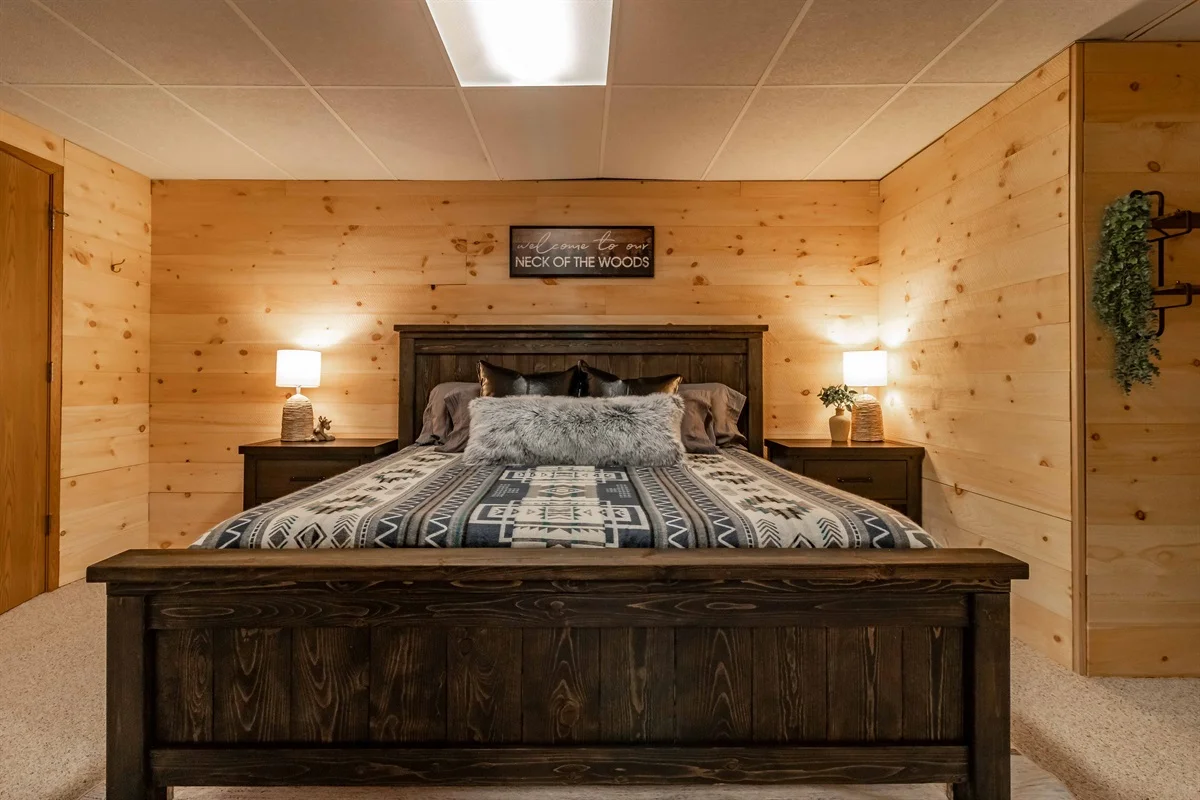
Tranquil and welcoming—enjoy ultimate comfort in our carefully curated bedroom. · Brown Bear Cabin
How Do You Choose a Property Manager in Rome, WI?
Choosing a property manager in Rome, WI comes down to verifying local presence, fee transparency, and how well their service scope matches your property type, whether that's a golf-adjacent chalet, a lakefront cabin, or a mid-term rental. A structured checklist prevents the most common owner mistakes, like signing a contract without reading the termination clause.
- Confirm local, on-the-ground coverage. Ask whether the manager has staff physically near Rome, Nekoosa, or Wausau, not just a national call center handling your guest messages remotely.
- Request a sample owner statement. A legitimate manager should show you exactly how fees, cleaning charges, and net payouts are itemized before you sign anything.
- Ask about response-time guarantees. Find out how quickly guest messages get answered and how maintenance emergencies get dispatched, especially overnight.
- Clarify the termination terms. Some contracts lock owners in for a full season; others allow a 30-60 day exit. Know which you're signing before your first payout arrives.
- Check membership in a recognized industry body. Affiliation with an organization like NARPM or IREM signals adherence to professional standards, though membership alone isn't a guarantee of quality.
- Verify licensing compliance knowledge. The manager should be able to walk you through Town of Rome zoning and tourist rooming house permit requirements without hesitation.
If you're comparing a national platform against a smaller local operator, weigh the trade-off honestly: national platforms often have more polished apps but slower local response times, while smaller operators may lack the pricing technology of bigger players but know exactly which Rome-area contractor answers the phone on a Saturday.
What Are Red Flags When Hiring Property Managers?
Red flags when hiring property managers include vague or shifting fee disclosures, no verifiable local presence, and reluctance to provide references or sample reporting. These warning signs surface most often during the initial sales conversation, before a contract is even on the table.
Specifically, watch for a manager who quotes a management percentage but can't explain whether cleaning fees are included, or one who avoids naming the specific Town of Rome permit process when asked directly. Additionally, be cautious of any company unwilling to share a termination clause upfront, since owners frequently discover the exit terms only after trying to leave a bad arrangement.
Other red flags include no dedicated point of contact (you're routed to a different rep every time), inconsistent guest review patterns across their managed listings, and an unwillingness to discuss how they handle the seasonal swing between July's peak demand and February's slower stretch. A manager who can't speak to seasonality for the Central Wisconsin market probably hasn't managed enough properties here to understand it.
How Do Other Management Approaches Differ?
Some management companies handle full-service property management for owners across the Sand Valley and Lake Petenwell corridor, including Rome, Nekoosa, and Friendship, with local, on-the-ground teams rather than a remote call center. Other services in the area also serve owners in Wausau and Minocqua, giving them direct visibility into how demand shifts across Central Wisconsin's lake and golf destinations.
Unlike a passive caretaker model, some providers apply investor-operator standards to each managed property, actively adjusting pricing and monitoring RevPAR rather than just answering guest messages as they arrive. Certain alternative options also offer in-house design services that stage properties specifically to perform well in OTA search algorithms and command stronger nightly rates, which matters for owners whose listing photos haven't been refreshed in years.
Some providers also run a direct-booking flywheel that reduces reliance on third-party platform fees over time, a structural advantage that matters more as commission rates on major booking platforms continue to climb. Owners who want more day-to-day involvement can instead opt into a co-hosting service, which handles pricing and listing optimization while the owner retains a more hands-on guest relationship. Well-managed properties in the area show the kind of curated interiors and amenity packages this approach produces in practice.
Frequently Asked Questions
What are red flags when hiring property managers?
The clearest red flags are vague fee disclosures, no verifiable local presence near Rome or Nekoosa, and reluctance to share sample owner statements or termination terms. Also watch for managers who can't explain Town of Rome licensing requirements or seasonal pricing strategy, since that usually signals limited local experience.
Is short-term rental of my cabin legal in Rome, WI?
Short-term rentals are generally allowed in Rome, WI, but owners typically need to comply with Town of Rome zoning permits and Wisconsin's tourist rooming house licensing requirements before listing. Confirm current requirements directly with the Town of Rome forms and permits office, since occupancy caps and application steps can change.
How much does it cost to hire a property manager for a Wisconsin vacation rental?
Full-service management typically costs 15% to 30% of gross booking revenue in Wisconsin's vacation rental markets, while co-hosting arrangements usually run 10% to 18%. Conventional long-term rental management follows a different structure, generally 8% to 12% of monthly rent plus a separate leasing fee.
What is the difference between full-service property management and co-hosting?
Full-service management means the company handles guest communication, cleaning, maintenance, and pricing end-to-end, while co-hosting means the owner stays more involved and the manager fills specific gaps like dynamic pricing or listing optimization. Full-service typically costs more but removes nearly all day-to-day operational work from the owner.
How far is Rome, WI from Sand Valley Golf Resort?
Rome, WI sits just minutes from Sand Valley Golf Resort, with several managed cabins in the area located a short drive or even a walkable distance from the course. Many Rome-area rentals market this proximity specifically to golf groups booking multi-night stays.
Do local rental cabins allow pets?
Many cabins managed by other services in the area are dog-friendly with a per-pet fee, though policies vary by property, including breed restrictions on some listings and no-cats policies due to allergy concerns. Always check the specific property's pet policy before booking, since requirements differ across the portfolio.
How do I know if my nightly rate is priced correctly?
Compare your occupancy rate against regional benchmarks; if you're near the reported 26% median occupancy for the Nekoosa area rather than the 66%+ range top-performing properties achieve, your pricing likely needs dynamic adjustment rather than a flat rate increase. A manager who reviews pricing weekly, not seasonally, typically captures more gap-night revenue.
What should I ask a property management company before hiring them?
Ask for a sample owner statement, the exact termination notice period, whether cleaning fees are pass-through or marked up, and how they handle Town of Rome licensing compliance. Their answers, and how quickly they can provide them, tell you more than any marketing brochure.
Final Thoughts on Property Management in Rome, WI
Property management in Rome, WI comes down to a fairly simple trade-off: pay a percentage of revenue, usually 15-30% for full-service work, in exchange for reclaiming the hours you'd spend on guest messages, cleaning coordination, and pricing decisions. The properties that perform best aren't necessarily the ones with the lowest management fee; they're the ones where someone is actively watching occupancy and adjusting rates through the slow months as well as the peak ones.
As 2026 continues, Central Wisconsin's short-term rental market remains seasonally uneven, with July demand far outpacing February. Owners who partner with a manager who understands that rhythm, and who can speak fluently to Town of Rome compliance, tend to come out ahead of those who don't.
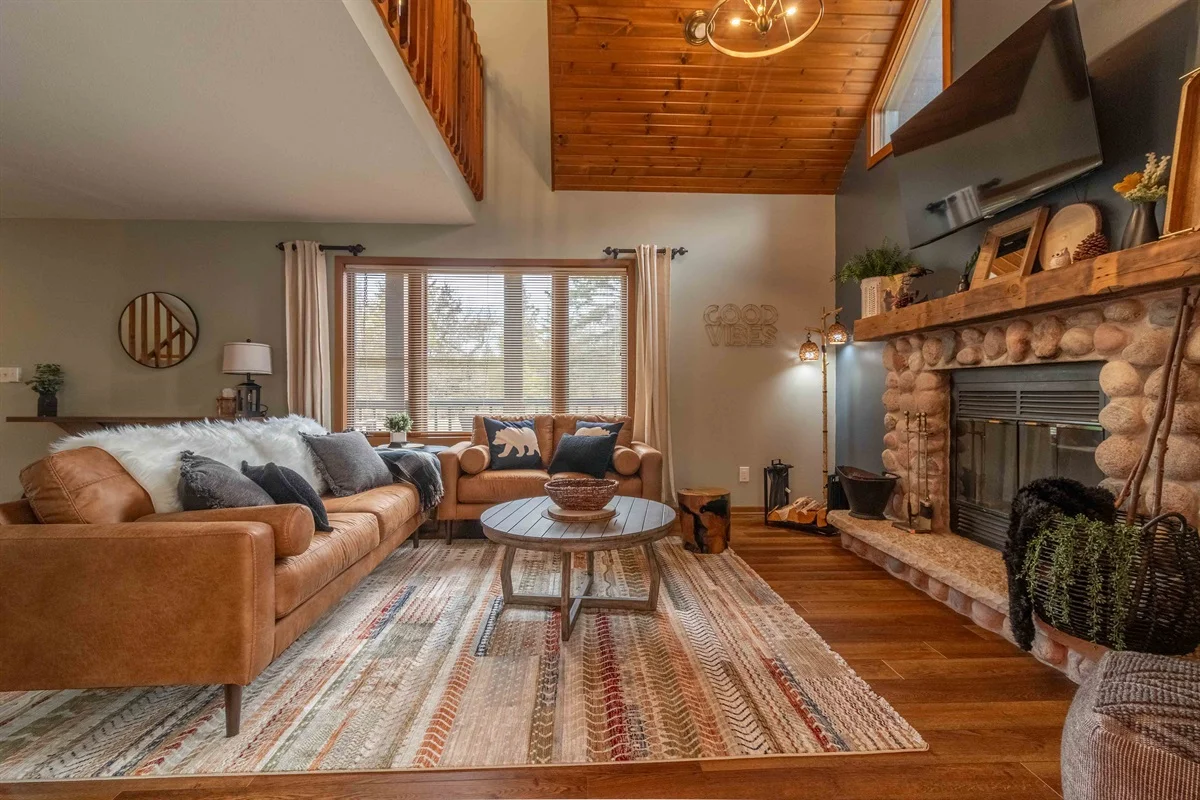
Elegant and cozy—relax in this stylish living space after a day of adventure. · Brown Bear Cabin
If you're an out-of-state owner tired of fielding guest texts at odd hours, or a second-home owner near Rome wondering whether your cabin could be earning more, other management companies serve properties across Rome, Nekoosa, Wausau, and Minocqua with local teams and investor-operator standards. Look for a track record and portfolio size that backs up their approach to pricing, staging, and guest experience.
Written by Ashley Lang, Owner, CEO at Clear Trail Properties