Property Management in Plover, WI: Fees and How to Choose
Property management in Plover, WI typically costs 15-30% of gross revenue. See fee structures, services, and how to vet a manager before you sign.

Property management in the area for short-term rentals typically costs between 15% and 30% of gross booking revenue, depending on whether you choose full-service management or a lighter co-hosting arrangement. The exact rate depends on how much of the operation you hand off, from guest messaging to dynamic pricing to on-site maintenance response.
Key Takeaways
- Full-service short-term rental management in and around this area generally runs 15-30% of gross revenue, while co-hosting arrangements often land in the 10-18% range.
- Central Wisconsin's short-term rental market shows a wide performance gap: median properties near Nekoosa achieve roughly 26% occupancy, while top-tier managed listings reach 66% or higher.
- Professional management can increase revenue through pricing optimization and listing quality, though the exact lift varies by property and market conditions.
- Wisconsin short-term rental hosts must collect and remit state sales and use tax plus applicable local lodging taxes, and many municipalities require a lodging tax license before you list a property.
- Red flags when vetting a property manager include vague fee disclosures and no written termination clause.
- Clear Trail Properties manages properties across Central Wisconsin and Northern Michigan, including markets near this area, with over 60 properties currently under management.
If you own a cabin, lake house, or investment property near this area and you're weighing whether to self-manage or bring in professional help, you're asking the right question at the right time. Wisconsin's rental market has tightened considerably, with the statewide vacancy rate falling to 4.1% in 2026, the lowest level in over 30 years. That kind of scarcity changes the math on whether a property performs better as a long-term rental or a short-term one.
At Clear Trail Properties, we manage vacation rentals throughout the Central Wisconsin corridor, from Nekoosa and Rome down through Wausau and out toward Minocqua, and we field this exact question from owners constantly: is professional management worth the fee, or are you better off handling it yourself? This guide breaks down what property management in this area costs, what you get for that fee, and how to tell a good operator from one that's just collecting a percentage and hoping for the best.
You'll walk away knowing the fee ranges to expect, the services that separate full management from co-hosting, the Wisconsin tax and licensing obligations you can't skip, and a concrete checklist for interviewing a potential manager before you sign anything.
Table of Contents
- What Does Property Management in This Area Actually Include?
- How Much Do Property Managers Charge in This Area?
- Full-Service Management vs. Co-Hosting: Which Fits Your Property?
- What Should You Know About the Local Rental Market Before You List?
- What Permits and Taxes Apply to Short-Term Rentals in Wisconsin?
- How Does Clear Trail Properties Approach Management Differently?
- What Are Red Flags When Hiring Property Managers?
- How Do You Choose the Right Property Manager?
- Frequently Asked Questions
What Does Property Management in This Area Actually Include?
Property management for short-term rentals in this area refers to the operational package a company handles on an owner's behalf: guest communication, cleaning coordination, dynamic pricing, listing optimization, and maintenance oversight. Residential leasing management focuses on tenant screening, lease agreements, and monthly rent collection instead of nightly turnovers.
A full-service short-term rental manager typically handles five core functions. First, guest communication across platforms like Airbnb and VRBO, from pre-arrival questions to in-stay issues. Second, cleaning and turnover coordination between checkout and the next check-in. Third, maintenance oversight, including emergency repairs and seasonal upkeep like winterizing pipes or servicing a hot tub. Fourth, revenue management, meaning nightly rate adjustments based on demand and seasonality. Fifth, listing optimization, which covers photography, descriptions, and algorithm positioning on booking platforms.
As of 2026, most owners near this area, Stevens Point, and the broader Portage County area are also weighing commercial versus residential management needs. Commercial property management, covering retail or office space, is a different service from vacation rental management and usually charges differently. If your property is a cabin, lake house, or vacation home rather than a commercial building, you want a manager who specializes in short-term hospitality operations, not one that treats it as a side offering to apartment leasing.
How Much Do Property Managers Charge in This Area?
Short-term rental property managers in this area typically charge between 15% and 30% of gross booking revenue, with the exact percentage depending on service scope and whether the arrangement is full-service or co-hosting. Residential long-term rental management usually runs 8-12% of monthly collected rent plus a separate leasing fee.
Nationally, full-service vacation rental management commissions commonly cluster in the mid-20s percent range, with the 2026 national average sitting roughly at 20-25%. Co-hosting arrangements, where the owner retains more control and handles some tasks themselves, often run lower, typically in the 10-18% range.
Here's a comparison of what different fee structures generally include:
| Service Model | Typical Fee Range | What's Usually Included |
|---|---|---|
| Full-service STR management | 15-30% of gross revenue | Guest communication, pricing, cleaning coordination, maintenance oversight, listing management |
| Co-hosting / co-management | 10-18% of gross revenue | Guest messaging, dynamic pricing, cleaning coordination; owner retains more decision control |
| Long-term residential management | 8-12% of monthly rent | Tenant screening, lease agreements, rent collection, inspections |
| Leasing/placement fee (LTR only) | 50-100% of one month's rent | Marketing the vacancy, screening applicants, executing the lease |
Most fee structures don't include cleaning fees, which are usually passed through to guests, or maintenance costs beyond routine upkeep. Before signing an agreement, ask whether the quoted percentage is calculated on gross revenue or on net revenue after platform fees, since that distinction can shift your actual take by several percentage points.
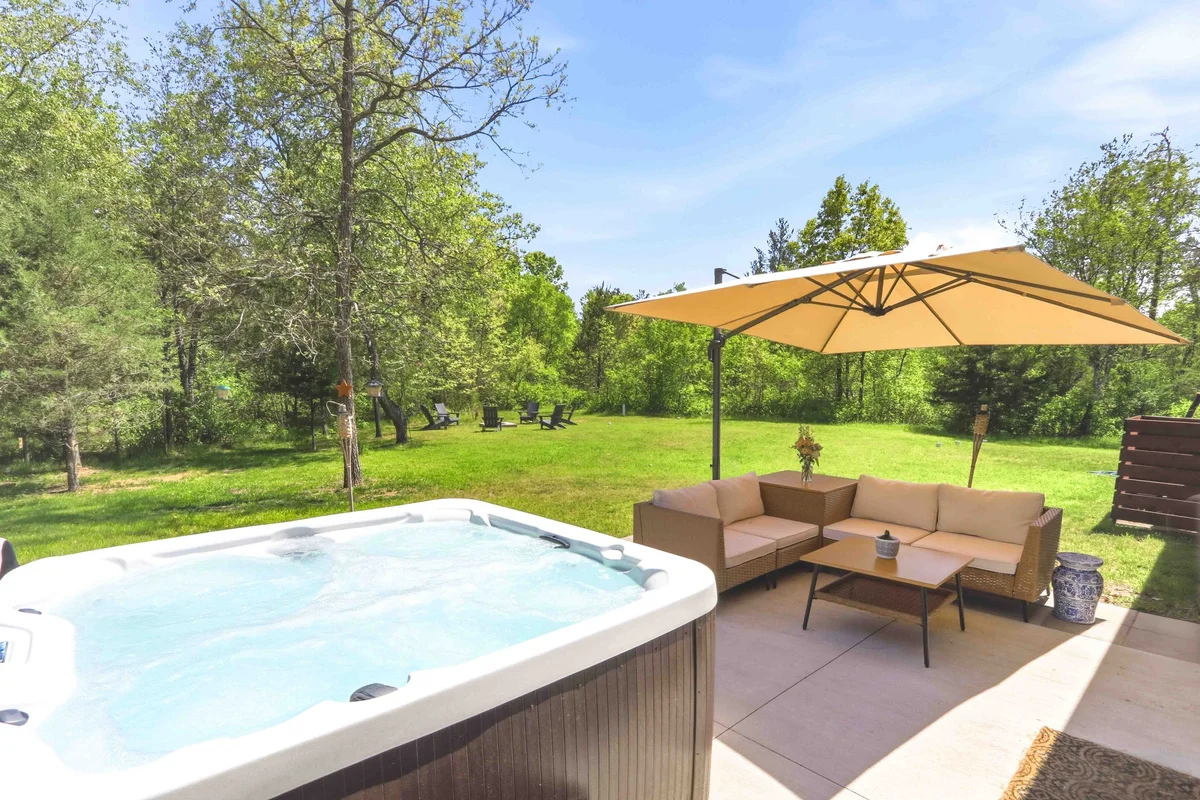
Spend sunlit afternoons by the hot tub with shaded seating and plenty of green space to relax. · Hidden on the 17th Hole
Full-Service Management vs. Co-Hosting: Which Fits Your Property?
Full-service management means an operator handles nearly every operational task on your property, while co-hosting means you retain ownership of key decisions and platform access, with the manager supporting specific functions like guest messaging or pricing. The right choice depends on how much time you have and how much control you want to keep.
Full-service management works best for owners who live out of state or own multiple properties. You hand over the keys, and the manager runs day-to-day operations, from the first guest inquiry through checkout and the next turnover. In exchange, you pay the higher end of the fee range, typically 20% or more of gross revenue.
Co-hosting fits owners who want a middle ground: they'll keep responding to some guest messages or making final pricing calls, but they need help coordinating cleaners or fixing an underperforming listing. This model typically costs less, often 10-18%, but you're still the one fielding a maintenance call if a pipe bursts at 2 a.m. and the co-host isn't reachable.
One thing we consistently see across our own portfolio: owners who choose co-hosting because they want to "stay involved" often underestimate how much of their evening gets eaten by guest texts anyway. If you're already burned out from self-managing, full-service is usually the better fit, even at the higher fee.
What Should You Know About the Local Rental Market Before You List?
This area sits in Portage County within the broader Wisconsin Rapids and Stevens Point rental corridor, an area with distinct long-term and short-term rental dynamics worth understanding before you commit to a management strategy. Local market conditions directly affect whether a property performs better as a long-term lease or a nightly rental.
As of 2026, Wisconsin's statewide rental vacancy rate sits at just 4.1%, down from 5.1% in 2023, the lowest level the state has seen in over 30 years. That tightening supply generally favors landlords on the long-term side. Nearby Nekoosa, by contrast, shows a notably higher local vacancy rate around 8%, roughly double the statewide figure, suggesting more available long-term inventory in that specific submarket.
On the short-term rental side, regional data for the Nekoosa area shows hosts earning an average of roughly $24,847 per year, with an average nightly rate near $399 but occupancy around 28%, producing RevPAR near $122. Top 10% performing properties in the region reach occupancy above 66%, while median-performing properties hover closer to 26%. That gap between median and top-tier performance comes down to pricing strategy, listing quality, and booking velocity, the levers a competent manager should be pulling.
For owners considering this area specifically, proximity to Stevens Point and the University of Wisconsin-Stevens Point creates additional mid-term rental demand from traveling professionals and visiting families, a niche that pure vacation-rental competitors often ignore.
What Permits and Taxes Apply to Short-Term Rentals in Wisconsin?
Wisconsin requires all short-term rental hosts to collect and remit state sales and use tax, currently a 5% state rate, plus any applicable local lodging taxes on guest stays. Many municipalities additionally require a local lodging tax license and unit registration before a property can legally appear on booking platforms.
Hosts operating near this area, Stevens Point, or elsewhere in Portage County should confirm zoning classifications with the local municipality, since short-term rentals may be restricted in certain residential districts or capped on maximum overnight guest counts. For statewide guidance on tourist rooming house licensing, the Wisconsin Department of Agriculture, Trade and Consumer Protection outlines permit requirements that apply broadly across the state.
One of the most common owner mistakes we see is listing a property on Airbnb or VRBO before confirming local zoning approval or securing the correct lodging tax license. A municipality can require you to de-list a property mid-season if compliance issues surface, which is disruptive and costly compared to handling it correctly from the start. Regulations and fee schedules change periodically, so always verify current requirements with your specific town or county office rather than relying on what applied last year.
How Does Clear Trail Properties Approach Management Differently?
Clear Trail Properties operates as an investor-operator: we manage properties to maximize revenue per available night, not just to keep them occupied and clean. That distinction matters more than most owners realize when comparing management proposals.
Unlike managers who function as passive caretakers, cleaning between stays and answering messages but never actively engineering the listing itself, our team treats every property as an asset to optimize. Through our vertically integrated design studio, Designed by Ash, we stage and photograph properties to perform well on booking platform search algorithms, not just to look attractive in person. A cabin with generic staging and dated photos can sit on page three of search results even in a strong location, and that's a fixable problem, not a market limitation.
We also run a direct-booking flywheel that captures guest data and repeat stays outside third-party platforms, which shields owner revenue from the fees that Airbnb and VRBO otherwise take off the top of every booking. Combined with what we call Radical Gifting, small, thoughtful touches that build guest loyalty and drive repeat direct bookings, this approach compounds over time in a way that passive management doesn't. Our local, on-the-ground teams based in Wausau, Rome, and Minocqua mean a maintenance issue gets a same-day response instead of a multi-day wait for someone to drive out from a regional office.
If you're an out-of-state owner near this area wondering who's checking on your cabin when you're not there, this is exactly the operational gap Clear Trail Properties was built to close.

Enjoy a tucked-away retreat with beautiful treetop views and easy access to a picturesque golf course setting. · Chalet on the Fairway
What Are Red Flags When Hiring Property Managers?
Red flags when hiring a property manager include vague fee disclosures and an inability to explain their pricing methodology in specific terms. Any manager unwilling to put these details in writing before you sign should be treated as a warning sign, not a formality to smooth over later.
Watch for these warning signs during your vetting process:
- Unclear fee structure. If a manager can't tell you plainly whether their percentage is calculated on gross or net revenue, or what's excluded, that ambiguity usually costs you money later.
- No sample monthly report. A legitimate manager should show you what owner reporting actually looks like before you commit, not after.
- Vague or missing termination terms. Every management agreement should specify how much notice either party needs to end the relationship and what happens to the listing during transition.
- No local presence. If a manager operates entirely remotely with no team physically near this area or Portage County, ask how quickly they can respond to an on-site emergency.
- Reluctance to discuss pricing strategy. A manager who can't explain how they'd price your property during a slow February weekend versus a busy July weekend probably isn't running dynamic pricing at all.
- No professional affiliations. Membership in organizations like NARPM or IREM isn't mandatory, but its absence combined with other red flags should raise your scrutiny.
In our experience working with owners across Central Wisconsin, the managers who avoid these questions are usually the same ones who underperform on revenue once you're locked into a contract.
How Do You Choose the Right Property Manager?
Choosing the right property manager in this area comes down to matching your property's needs to a manager's actual demonstrated capabilities, not their marketing claims. The process should include a structured comparison across fee transparency, local presence, technology, and communication style.
Follow these steps when evaluating candidates:
- Request a written fee breakdown that separates the management percentage, cleaning fee handling, maintenance markup policy, and any additional charges.
- Ask for a sample owner statement showing how revenue, occupancy, and expenses get reported on a monthly basis.
- Confirm local response time for maintenance emergencies, and ask specifically how far their team is from your property's address.
- Review their pricing strategy by asking how they'd price your property differently in peak summer season versus a slow winter weekend.
- Clarify the termination clause in writing, including required notice period and what happens to active bookings if you switch managers.
- Check whether they offer both full-service and co-hosting options, since a manager who only offers one model may be forcing every owner into the same box regardless of fit.
- Ask about design and listing optimization, since outdated photos and generic staging are one of the most common, and most fixable, reasons a well-located property underperforms.
This process takes an afternoon of phone calls but saves you from a year-long contract with a manager who can't deliver on the numbers they quoted. Clear Trail Properties covers both full-service management and co-hosting, so owners near this area, Wausau, Rome, and Minocqua can choose the model that fits their situation rather than being pushed into a one-size-fits-all agreement.
Frequently Asked Questions
What are red flags when hiring property managers?
Red flags include vague or undisclosed fee structures, no written termination clause, and an inability to explain their pricing strategy for slow versus peak seasons. If a manager can't produce a sample owner report or explain whether their fee applies to gross or net revenue, treat that as a warning sign before signing anything.
How much does property management cost in this area?
Full-service short-term rental management in this area typically runs 15-30% of gross booking revenue, while co-hosting arrangements often cost less, generally 10-18%. Long-term residential management is priced differently, usually 8-12% of monthly rent plus a separate leasing fee.
What's the difference between co-hosting and full-service property management?
Full-service management means the manager handles nearly all operational tasks, including guest communication, pricing, maintenance, and cleaning, while you stay hands-off. Co-hosting means you retain more control and platform access, with the manager supporting specific functions, usually at a lower fee.
Is my property in this area or Portage County legally allowed to operate as a short-term rental?
Eligibility depends on local zoning ordinances and whether your municipality requires a tourist rooming house permit or lodging tax license. Wisconsin also requires hosts to collect state sales and use tax plus applicable local lodging taxes, so confirm current requirements with your town or county office before listing.
Can I still use my property personally if a company manages it?
Yes. Most management agreements, including co-hosting arrangements, allow owners to block out personal-use dates in advance. Full-service agreements typically require more advance notice for blocked dates since the manager is actively marketing your calendar for bookings.
How do property managers handle pricing during slow winter months?
Competent managers use dynamic pricing tools that adjust nightly rates based on demand signals, local events, and historical booking patterns rather than leaving rates flat year-round. In Central Wisconsin, this typically means lower rates and possibly mid-term rental promotion during the winter shoulder season to fill gaps that summer lake and golf traffic doesn't cover.
Does professional management increase revenue compared to self-managing?
Professional management can increase revenue through pricing optimization, listing quality improvements, and booking velocity that many self-managing owners don't have time to pursue. The performance gap between median and top-tier managed properties in Central Wisconsin, roughly 26% versus 66%+ occupancy, illustrates how much room most self-managed listings leave on the table.
What should be included in a property management agreement?
A solid agreement specifies the management fee percentage and what it's calculated against, cleaning fee handling, maintenance markup policy, reporting frequency, and termination terms including required notice. If any of these items are missing or vague, ask for clarification before signing.
Conclusion
Property management in this area for short-term rentals typically costs 15-30% of gross revenue for full-service arrangements, with co-hosting available at a lower rate for owners who want to stay more involved. The bigger factor isn't the fee itself: it's whether the manager you choose actively optimizes your property's pricing and listing quality, or simply keeps the lights on between bookings.
Given Wisconsin's tightening rental market and the wide performance gap between median and top-tier managed properties in the region, the choice of manager matters more in 2026 than it did even a few years ago. Whether you're weighing full-service management, co-hosting, or a fresh listing redesign, start by asking the questions outlined above before you sign anything.
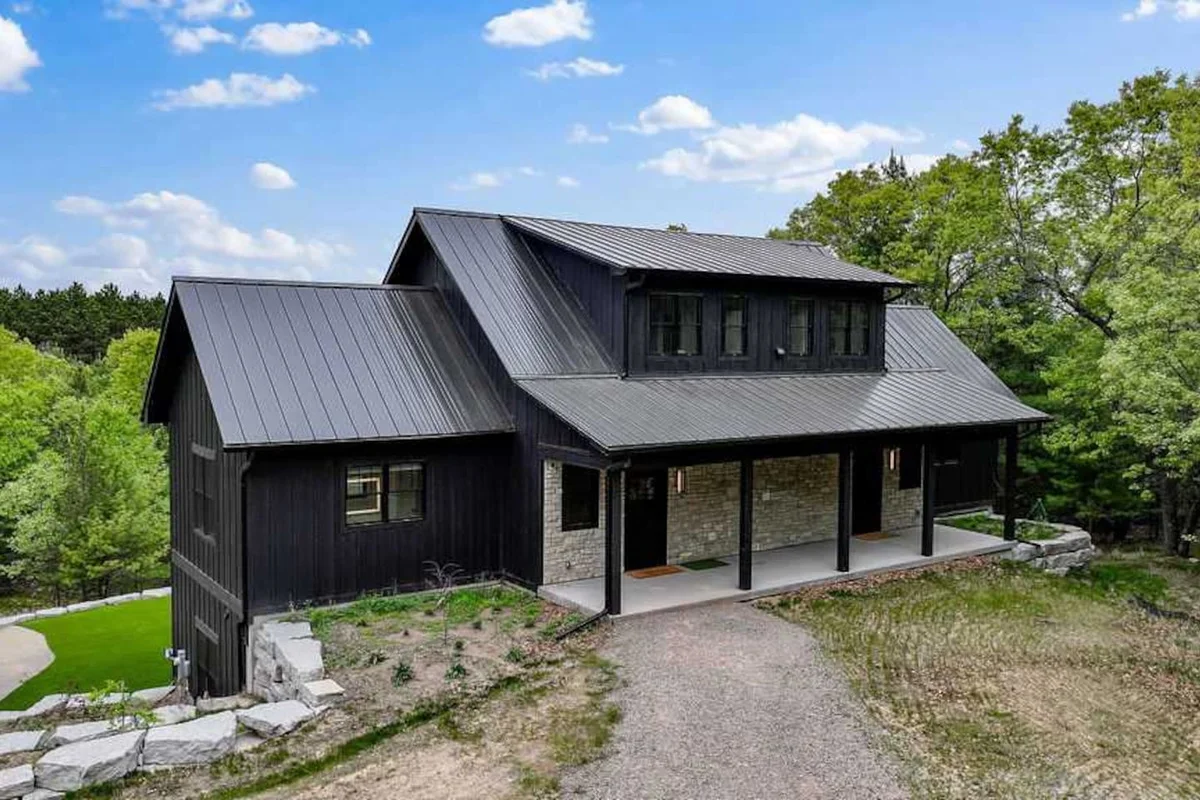
A welcoming facade that sets the tone. · Archer Place
If you're an owner near this area weighing self-management against professional help, Clear Trail Properties offers both full-service management and co-hosting, backed by local teams in Wausau, Rome, and Minocqua and a portfolio of over 60 properties under management across Central Wisconsin and Northern Michigan. Reach out to talk through what hands-off ownership, or a lighter co-hosting arrangement, could look like for your property.
Written by Ashley Lang, Owner, CEO at Clear Trail Properties