Is It Cheaper to Hire a Property Manager or Split the Management Duties With Another Owner?
Hiring a manager usually costs 20-35% of STR bookings; splitting duties with a co-owner costs less cash but more time and risk. See the cost breakdown.
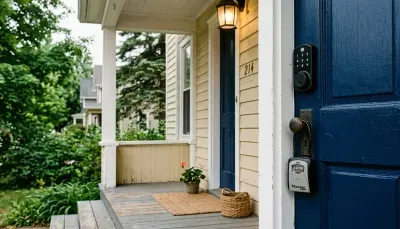
Splitting duties with a co-owner is usually cheaper in cash, while hiring a property manager is usually cheaper once you count your time, vacancy, and risk. Clear Trail Properties sees both models across Central Wisconsin, and the right answer depends on how many hours each owner can honestly commit.
Key Takeaways
- Full-service vacation rental managers commonly charge about 20% to 35% of gross booking revenue, while long-term rental managers typically charge 8% to 12% of collected rent.
- Splitting duties with another owner removes the management fee but replaces it with unpaid hours, which you should price at a real hourly rate.
- Co-hosting, a middle option, typically runs 10% to 18% of gross booking revenue and leaves you in control of the listing.
- Informal shared management fails most often because of unequal workload and unclear repair approval limits, and because no one covers when an owner is unavailable.
- Co-owners should document management pay, expense reimbursements, and ownership distributions as three separate lines.
- Nekoosa-area short-term rental demand swings from 35% occupancy in March to 70% in July (StaySTRA), so seasonal coverage matters as much as the fee.
Most owners ask this question when a second owner enters the picture: a sibling, a business partner, or a friend who bought the cabin with you. The math looks simple. A manager takes a percentage, and your partner works for free. In practice, free labor has a cost, and it often shows up as missed bookings and slow repairs, along with strained relationships.
This guide compares the real numbers, lays out a task-split method that works, and shows where each model breaks down. We manage more than 60 properties, and the conversation about shared duties versus hired help comes up in nearly every owner meeting we hold in 2026.
1. How Much Does a Hired Property Manager Charge in Wisconsin?
A hired property manager charges a percentage of revenue plus add-on fees. Full-service vacation rental management commonly runs 20% to 35% of gross bookings, according to Host Genius, while long-term rental managers typically charge 8% to 12% of monthly collected rent.
For Rome, WI, Airbtics reports half-service management at 10% to 15% of short-term rental income and full service at 20% to 30%. Those ranges are a reasonable proxy for Nekoosa, Wausau, and Green Bay, though quotes vary by property size and distance.
How is a property management firm paid?
Most firms deduct their fee from each payout before sending you the balance. On a vacation rental, that fee comes off gross bookings. On a long-term rental, it comes off rent actually collected. The typical 8% to 10% long-term fee works the same way: collect $2,000 in rent, and the manager keeps $160 to $200.
What add-on charges should you expect?
Expect tenant placement fees of 50% to 100% of one month's rent, lease renewal fees of $150 to $300, and inspection fees of $50 to $100. Vacation rental managers may add a markup on maintenance or charge separately for linens and restocking. Ask for the full fee schedule in writing before you compare any two quotes.
Platform costs also sit outside the management fee. Some booking platforms, for example, state a 5% booking fee for bookings through their family of sites in some regions.
2. What Does It Cost to Split Management Duties With Another Owner?
Splitting management duties with another owner means two co-owners divide guest communication, cleaning coordination, maintenance, and pricing between themselves instead of paying an outside manager. The cash cost is near zero, but the time cost is real, and an unpaid owner often becomes a resentful one.
Start by pricing the hours. A short-term rental in peak season can generate daily guest messages, same-day turnovers, and the occasional late-night lockout. Multiply the weekly hours by what you would pay a competent assistant. If two owners each give five hours a week, that is 520 hours a year of labor that a manager's fee would otherwise cover.
The second hidden cost is vacancy. Survey data cited by industry sources shows average vacancy of about 4 weeks for manager-users versus 4.6 weeks for self-managers. Industry estimates put three extra vacancy weeks on a $1,500 rental at roughly $1,100. One slow response to an inquiry can cost more than a month of fees.

A clean, functional space for every guest · Archer Place
3. Which Tasks Does a Property Manager Handle That Self-Managing Owners Must Cover?
A rental property manager handles guest or tenant communication, pricing, cleaning and turnover coordination, maintenance oversight, rent or payout collection, and compliance paperwork. When you self-manage, with or without a partner, every one of those jobs lands on you. The split only works if each task has a named owner.
We recommend a simple responsibility matrix before any co-owner arrangement starts. Here is the version we use as a starting point:
| Task | Primary owner | Backup | Standard expectation |
|---|---|---|---|
| Guest messages and inquiries | Owner A | Owner B | Agree on a maximum reply window, such as one hour in daytime |
| Pricing and calendar | Owner B | Owner A | Weekly review, more often in peak season |
| Cleaner scheduling | Owner A | Owner B | Confirmed 48 hours before each checkout |
| Repairs and vendors | Owner B | Owner A | Set a dollar limit above which both owners must approve |
| Bookkeeping and taxes | Owner A | Outside accountant | Monthly reconciliation |
| Licensing and compliance | Owner B | Owner A | Annual checklist |
The backup column matters most. If Owner A is on a plane or sick, Owner B should already know the cleaner's number, the lockbox code, and the approval limit. Managers carry that redundancy by default. Two part-time owners must build it on purpose.
4. Is It Cheaper to Hire a Property Manager or Split the Management Duties With Another Owner?
Splitting duties is cheaper in direct cash, and a hired manager is often cheaper in total cost once time, vacancy, and rate optimization are priced in. The gap narrows for owners who live near the property and have flexible schedules, and it widens for owners who work full time or live out of state.
The table below uses a hypothetical vacation rental grossing $40,000 a year, close to Airbtics' 2026 Wisconsin average of $39,684. It is an illustration, not a quote or a client case. Percentages come from the industry ranges above.
| Model | Fee basis | Annual cash cost on $40,000 gross | Owner time | Main risk |
|---|---|---|---|---|
| Full-service manager at 25% | Percentage of gross | $10,000 | Minimal | Fee drag if the manager is passive |
| Co-hosting at 15% | Percentage of gross | $6,000 | Moderate | You still handle escalations |
| Shared owners, unpaid | None | $0 | Heavy, split two ways | Burnout, unclear approvals |
| Shared owners, one paid for duties | Negotiated | Set by you and your co-owner | Heavy for one owner | Pay confused with profit share |
| Hybrid: owners plus outside cleaning and maintenance service | Per-job or flat fees | Varies by vendor | Light to moderate | Coordination gaps between vendors |
Notice what the table cannot show: revenue differences. One industry analysis found professional management can lift revenue 30% to 70% through pricing and optimization that many owners skip. If a manager adds even a fraction of that, the fee can pay for itself. If your own pricing is already sharp, the manager's edge shrinks.
5. What Risks Come With Informal Shared Management?
Informal shared management is an arrangement where co-owners split duties by habit rather than by written agreement. It fails in predictable ways: one owner does most of the work, repair decisions stall, and no one covers the property when a partner becomes unavailable.
Here are the four failure points we see most often:
- Unequal workload. The owner who lives closest ends up doing the cleaning, the restocking, and the midnight calls. Resentment follows within a season.
- Repair disputes. One owner wants a $2,000 fix now; the other wants three quotes. Without an approval limit, a dripping water heater becomes an argument.
- Continuity gaps. A job change, a baby, or a medical issue can take one owner out of the rotation for months.
- Tenant or guest decisions. Refund requests, damage claims, and pet exceptions all need a tie-breaker rule.
A professional manager solves the tie-breaker problem by being a neutral third party. That alone has value for family co-owners who would rather not argue about a broken dock.
6. How Should Co-Owners Document Pay, Reimbursements, and Distributions?
Co-owner compensation documentation means recording three separate money flows: pay for management work, reimbursement of out-of-pocket expenses, and distributions of profit by ownership share. Mixing them is the most common reason shared management arrangements blur into arguments at tax time.
Treat the owner who does the management work like a vendor. Agree on a rate, either hourly or as a percentage of bookings, and pay it before profits are split. If Owner A earns 10% of bookings for running the calendar, that is an expense of the rental. Distributions then follow ownership percentages, no matter who worked more hours.
Put four items in writing: the task matrix, the dollar limit for solo repair approvals, response-time expectations, and what happens if one owner stops performing. An attorney or accountant should review the final agreement, especially around tax treatment of the management pay. Also confirm licensing and lodging requirements locally; for example, Wisconsin's tourist rooming house licensing information is the place to start for short-term rentals.
7. Is Hiring a Property Manager Worth It?
Hiring a property manager is worth it when the fee costs less than the revenue, time, and risk you would otherwise lose. That usually holds true if you live more than an hour away, own a property with heavy turnover, or lack the time to answer guests quickly.
Run this break-even check. Add up your weekly hours, multiply by a fair hourly value, and add your estimated vacancy and pricing losses. Compare the total to the manager's annual fee. Under the 25% example above, $10,000 a year equals roughly $192 a week. If you and your co-owner spend more than that in time and missed revenue, the manager wins.
It is not worth it in every case. If your property is a low-turnover long-term rental, you live ten minutes away, and your co-owner has weekday flexibility, the 8% to 12% fee may be an expense you can avoid. Be honest about the 2 a.m. maintenance call and who answers it.
The mid-season picture matters too. In Nekoosa, StaySTRA data shows monthly occupancy swinging from 35% in March to 70% in July. A manager who fills shoulder months with mid-term stays can turn a weak spring into income, a skill that shared owners rarely have time to build.
8. When Does Co-Hosting or a Hybrid Model Beat Both Options?
Co-hosting is a service model where a professional operator handles guest communication, dynamic pricing, and cleaning coordination while you keep ownership and decision-making control. It typically costs 10% to 18% of gross bookings, less than full management and far more reliable than informal owner rotation.
For two owners who both work full time, co-hosting often lands in the sweet spot. You keep final say on repairs and guest policies, but you stop being the first responder. Clear Trail Properties offers this model for Wisconsin and Northern Michigan owners who want support without surrendering control.
A hybrid option keeps owners in charge of guest communication and pricing while outsourcing cleaning, laundry, and maintenance to a local service. It works for owners who enjoy hosting but hate turnovers. The risk is coordination: if the cleaner and the handyman do not talk to each other, you become the dispatcher.

Stroll down a beautifully shaded canopy path that leads straight from your back door to the water's edge. Perfectly integrated into the natural hillside, this rustic approach builds anticipation for long, sun-filled lake days and peaceful twilight strolls. · Animal Kingdom
9. How Does Clear Trail Properties Handle Management for Owners?
Clear Trail Properties is a vacation rental management and co-hosting company based in Nekoosa, WI, with local teams in Wausau, Rome, and Minocqua. It handles guest communication, cleaning coordination, maintenance oversight, and dynamic pricing, and owners keep full ownership of their homes.
We run on investor-operator logic, not passive caretaking. We treat every property as an asset to engineer for revenue per available night. Our in-house design studio, Designed by Ash, stages spaces to win search placement, and our direct-booking channel keeps more revenue away from third-party platform fees.
Here is what we see in practice: a 5-bedroom property like Tomahawk Trail, which sleeps 18, has a hot tub, a game room, and two sets of laundry. A single checkout means servicing the tub and resetting the game room, plus running both laundry loads before the next arrival. Two part-time owners can split that, but the weekend checkout is where handoffs break. Smaller properties, like the 2-bedroom Pickles Cabin, are far easier to run as a shared project because one cleaner and one owner can cover a turnover.
We also work with owners who live out of state. Our local teams can reach a property quickly when a guest reports an issue, which answers the worry we hear most from cabin owners who cannot drive over on a Friday night.
10. How Do You Find and Quote a Trustworthy Manager if You Live Far Away?
Finding a trustworthy manager from a distance means checking credentials, asking for a written fee schedule, and testing communication before you sign. Whether your property sits in Green Bay, Door County, or the Lake Petenwell area, the vetting steps are the same.
- Check affiliations. Look for membership in the National Association of Residential Property Managers or the Institute of Real Estate Management as a baseline for professional standards. Then confirm the manager holds any required Wisconsin license through the Wisconsin Department of Safety and Professional Services.
- Request a full fee schedule. Get the management percentage, leasing or onboarding fees, maintenance markup, and termination terms in writing.
- Ask about spending limits. Find out the dollar amount above which the manager must contact you before approving repairs.
- Review owner reporting. Ask to see a sample monthly statement so you know how revenue and expenses will appear.
- Test responsiveness. Send two questions on different days and note how quickly a person answers.
- Confirm local presence. A manager within an hour of your property beats a remote operator for urgent issues.
To get a quote, send the address, bedroom count, current listing or rental history, and your goals to two or three managers. Compare them on the same terms, not just the headline percentage. A lower fee with high markups can cost more than a higher fee with transparent pricing.
Conclusion: Which Option Should You Choose in 2026?
The question of whether it is cheaper to hire a property manager or split the management duties with another owner has a clear answer. Splitting duties costs less cash, and hiring a manager costs less in time, vacancy, and friction, especially for busy or distant owners. Price your hours honestly, write down who does what, and keep management pay separate from profit shares. In 2026, with Wisconsin visitor lodging spending reaching $4.6 billion according to the Wisconsin Department of Tourism, a well-run rental has strong demand behind it. The deciding factor is how well you run it.

A welcoming facade that sets the tone. · Archer Place
Curious what full-service management or co-hosting could look like for your property? With more than 60 properties under management, Clear Trail Properties can walk you through both models and show you the numbers for your home. Reach out to see what hands-off ownership actually looks like.
Frequently Asked Questions
How much does a property manager cost per year?
It depends on the property type and rental model. On a $2,000 monthly long-term rental, a base fee of 8% to 12% works out to about $1,920 to $2,880 a year, before add-ons such as placement fees. Vacation rental management at 20% to 35% of gross bookings costs more because the work is heavier.
How much does property management charge?
Long-term rental managers typically charge 8% to 12% of collected rent. Full-service vacation rental managers commonly charge about 20% to 35% of gross bookings, and co-hosting arrangements typically run 10% to 18%. Always ask for the full fee schedule, including leasing and maintenance markups.
How does the typical 8-10% property management fee work?
The manager keeps that percentage of rent actually collected each month. If a tenant pays $1,500, an 8% to 10% fee is $120 to $150. If the tenant does not pay, most agreements mean no fee on that month, though placement and other fees may still apply.
How does a property manager's fee structure affect NOI?
Net operating income falls by the full management fee, plus any add-on charges and maintenance markups. A lower headline percentage with high extras can reduce NOI more than a higher flat fee. Model the total annual cost, not just the percentage, when you compare quotes.
How is a property management firm usually paid?
Most firms deduct their percentage from each rent or booking payout, then send you the balance with a statement. Some charge flat monthly fees, and some add leasing, renewal, or inspection fees. Confirm which model your agreement uses before signing.
How do I find a trustworthy property manager if I don't live near my rental in Wisconsin?
Clear Trail Properties manages and co-hosts rentals for owners across Central Wisconsin and Northern Michigan, with local teams in Wausau, Rome, and Minocqua. To vet any manager, check industry affiliations such as NARPM, request a written fee schedule, confirm repair approval limits, and test their response time before you commit.
What is the 50% rule in rental property?
The 50% rule is a rough screening heuristic that assumes operating expenses, excluding the mortgage, will consume about half of rental income. It is a quick filter, not a substitute for a real budget. Management fees, vacancy, and repairs vary by property, so build your own numbers.
Is hiring a property manager worth it?
It is worth it when the fee costs less than the combined value of your time, avoided vacancy, and added revenue. It makes the most sense for owners who live far away, run high-turnover vacation rentals, or lack time to respond to guests quickly. Owners with a nearby, low-turnover property and flexible co-owners may reasonably manage it themselves.
Written by Ashley Lang, Owner, CEO at Clear Trail Properties