How Do Property Managers Actually Handle the Day-to-Day Stuff Like Guest Communication and Maintenance Requests?
Property managers use scheduled guest messages, urgency-tiered repairs, and owner spending limits to run daily operations. See the day-to-day workflow.
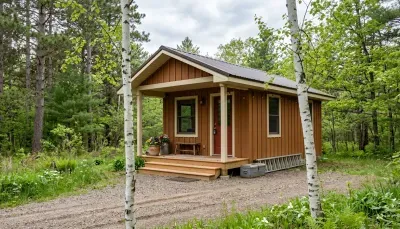
How property managers actually handle the day-to-day stuff like guest communication and maintenance requests comes down to a repeatable workflow: scheduled messages, a human on call, and tiered repairs with owner spending limits. Clear Trail Properties runs that system across its Central Wisconsin and Northern Michigan portfolio.
Key Takeaways
- Guest communication follows a timeline: confirmation at booking, pre-arrival instructions one to three days before check-in, a next-morning check, a checkout reminder, and a follow-up within about 2 hours of departure.
- A maintenance request moves through six steps: acknowledgment, urgency triage, access coordination, vendor dispatch, resolution confirmation, and documentation.
- Most managers set an owner-approval threshold for repairs, commonly between $250 and $500, so small fixes happen fast and larger ones get a written estimate first.
- Occupancy in the Nekoosa area swings sharply between a slow early spring and a busy midsummer, which makes spring the natural window for preventive maintenance.
- Short-term rental managers usually charge 25-40% of rental revenue according to Baselane, while long-term residential managers typically charge 8-12% of monthly rent.
- When you compare proposals, ask for response times, approval limits, reporting frequency, and termination terms in writing.
Guest messages and repair calls pull self-managing owners away from dinner, and they are where a management company earns its fee. In 2026, guests compare listings on responsiveness and cleanliness before they ever see a photo gallery. Expedia Group research published in 2026 found that 81% of respondents would pay more for a property with stronger trust signals.
Cabins turn over often. AirROI reports that average Nekoosa guest stays run about 3.1 nights, with a typical booking lead time of 52 days. Every turnover is a chance for a message to go unanswered or a defect to slip through unnoticed.
With over 60 properties under management, we see the same pattern in every market we serve: the owners who struggle are rarely the ones with bad properties. They are the ones with no defined process. This guide walks through what happens at each step, including the parts most guides skip, like urgency tiers and repair spending limits, and who does what when a hot tub fails on a Friday night.
1. How Do Property Managers Actually Handle Day-to-Day Guest Communication Before a Booking Is Confirmed?
Pre-booking guest communication is the stage where a property manager answers inquiries, confirms group size and pet details, and collects the paperwork that protects the owner. A good manager replies fast, states house rules in writing, and verifies the booking guest before access details are released.
The questions change with the audience. Golf groups heading to Sand Valley ask about bedroom counts and how close the property sits to the course. They also want to know about a hot tub or game room for after the round. Families ask about fenced yards and bunk rooms, plus kitchens big enough for group meals.
At Clear Trail Properties, the booking guest signs a rental agreement, uploads a valid ID, and agrees to a refundable deposit hold. Amounts and fees differ by property and can change, so always check the live booking page for current terms.
Disclosure belongs in this stage too. The listing for Pickles Cabin warns that Wi-Fi may be intermittent in its wooded setting and notes that bug spray is stocked in the closet. Telling guests about a quirk before they book costs nothing. Letting them discover it on arrival costs a review.
Our rule of thumb: answer inquiries within the hour, and ask one clarifying question instead of sending a wall of template text. Guests deciding between two cabins tend to book the one that sounds like a person is paying attention.
2. What Messages Do Guests Receive Between Booking and Checkout?
A guest message timeline is the set of scheduled communications a property manager sends from booking confirmation through post-checkout follow-up. Most workflows cover five touchpoints: confirmation, pre-arrival instructions, a next-morning check-in, a checkout reminder, and a short thank-you after departure.
| Touchpoint | Typical timing | Purpose | Automated or personal |
|---|---|---|---|
| Booking confirmation | Immediately after booking | Confirm dates, group size, and house rules | Automated |
| Pre-arrival instructions | One to three days before check-in | Address, access method, parking, quiet hours, who to contact | Automated, filled with property-specific details |
| Arrival check | Evening of check-in or next morning | Confirm heat, hot water, Wi-Fi, and locks all work | Personal |
| Checkout reminder | Day before departure | Checkout time, trash, streaming logouts | Automated |
| Post-checkout follow-up | Within about 2 hours of departure | Thank the guest, invite a review | Semi-personal |
Why does the next-morning message matter most?
The next-morning check is the cheapest quality control a manager has. A guest who texts a problem at 9 AM on day two is a recoverable situation. A guest who says nothing and writes a three-star review on day four is not.
Timing also has to fit the turnover schedule. A common pattern is an 11 AM checkout followed by a 4 PM check-in, which leaves a narrow window for cleaning and inspection. The pre-arrival message should never promise early access unless the cleaner confirmed it.
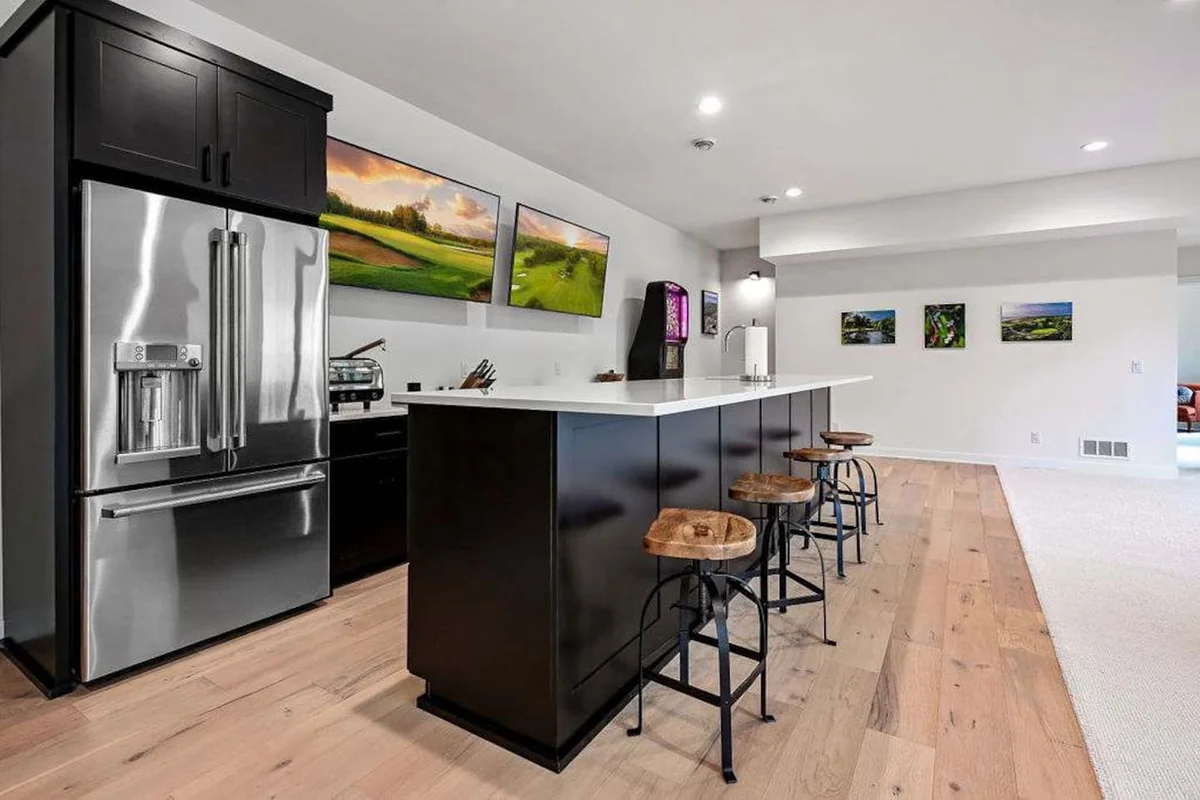
A clean, functional space for every guest · Archer Place
3. Which Guest Messages Should Be Automated, and Which Need a Real Person?
Message automation is the use of templates and triggers to send routine guest communications without a manager typing each one. Automate anything predictable, such as confirmations, access instructions, and checkout reminders. Keep anything involving a problem, a complaint, or a refund request with a live person.
What happens when an automated message collides with an active problem?
This is the failure most guides ignore. Suppose a guest reports no heat on a January evening, and a scheduled message arrives an hour later saying "Enjoy your stay!" The guest reads it as proof that nobody is listening.
The fix is procedural. When a maintenance ticket opens on a reservation, the manager pauses scheduled messages for that stay and sends updates by hand until the issue closes. Then automation resumes.
How do property managers handle noise and neighbor complaints?
Quiet-hours enforcement is guest communication with real stakes. Many Clear Trail Properties listings state that quiet hours run from 10 PM to 7 AM, and the pre-arrival message repeats the rule before guests unpack.
Tomahawk Trail, which sleeps up to 18, goes a step further with a noise-level monitoring device. The listing states that it measures volume only and does not record or listen to conversations. When the level climbs after hours, the manager texts the guest first and escalates only if the noise continues. Neighbors in the Town of Rome can also report short-term-rental problems online, which is one more reason to resolve issues before a neighbor has to.
4. How Do Property Managers Handle a Maintenance Request From Start to Finish?
A maintenance request workflow is the sequence a property manager follows from the moment a guest, cleaner, or inspector reports a problem until the property is confirmed ready again. It has six steps: acknowledgment, urgency triage, access coordination, vendor dispatch, resolution confirmation, and documentation.
- Acknowledge. The guest hears back quickly, even if the answer is only "received, checking now." Silence is what turns a minor issue into a complaint.
- Triage. The manager asks for a photo or short description and assigns an urgency tier (covered in the next section).
- Coordinate access. For an occupied home, the manager asks the guest when a vendor may enter. Many repairs happen while guests are out on the course or the lake.
- Dispatch. The manager contacts the right local vendor, such as an HVAC technician or a hot tub service company, and confirms an arrival window.
- Confirm resolution. The manager checks with the guest that the fix worked. A vendor saying "done" does not count until the guest agrees.
- Document. The record holds the date, time, photos, invoice, vendor name, and notes on guest communication. Owners rely on this record for reporting, and it protects everyone if a dispute follows.
Skipping step five is the most common shortcut we see in owner-run rentals. The repair is logged as finished, the guest is still without hot water, and the review reflects the second fact.
5. How Do Urgent and After-Hours Maintenance Requests Differ From Routine Ones?
Maintenance urgency tiers are categories that decide how fast a manager responds and who gets called. Emergencies such as a water leak, no heat during a Wisconsin winter, or a failed door lock get immediate dispatch, while cosmetic issues wait for the next turnover window.
| Tier | Examples | Response approach | Who authorizes |
|---|---|---|---|
| Emergency | Water leak, no heat in winter, lock failure, electrical hazard | Acknowledge immediately, dispatch right away, on-call coverage after hours | Manager acts first, owner is notified |
| Urgent | Hot tub not heating, appliance failure, air conditioning out in summer, Wi-Fi outage | Acknowledge within roughly 2 hours, fix same or next day, offer a workaround or credit | Manager within the pre-approved spending limit |
| Routine | Burnt-out bulb, loose cabinet pull, scuffed paint | Log the issue and fix at the next turnover | Standing approval |
The 2-hour response target is our own working standard, and we treat it as a ceiling for urgent items, not a goal. A gas smell is different from everything in the table: the guest should leave the home and call emergency services or the utility first, and the manager follows up after.
After-hours coverage is where managers separate. A real on-call rotation and local vendors who answer the phone matter more than any software. A remote coordinator with no relationships in Nekoosa or Wausau cannot get a furnace technician out on a Saturday night. A local team can.
Indulge in comfort—our luxurious bathroom is crafted for ultimate relaxation. · Brown Bear Cabin
6. Who Approves Repairs, and How Much Can a Property Manager Spend?
A repair approval threshold is the dollar amount a property manager may spend on an owner's behalf without asking first. Many agreements set it between $250 and $500, with anything above that requiring a written scope and cost estimate before work begins. The exact figure is a negotiated term, so settle it in your management agreement.
The threshold exists to balance speed against control. Set it too low and guests wait while a manager chases an owner who is on a plane. Set it too high and owners get surprised by invoices. If you live out of state, a somewhat higher limit paired with photo documentation of every repair usually works better than a low limit with constant approval requests.
Emergencies are the standard exception. A burst pipe does not wait for an email reply, so most agreements let the manager act first and notify the owner right after.
For anything above the limit, a good approval request includes a photo, the vendor's quote, a timeline, and a recommendation. Your management agreement should also state whether the manager adds a markup to vendor invoices. Many owners never ask until the first statement arrives.
The model changes who holds the pen. Under full-service management, the manager runs this process inside the agreed limits. Under co-hosting, you keep more decisions and the 2 a.m. call might still be yours, so clarify who answers it before signing.
7. How Do Cleaners, Guest Support, Vendors, and Owners Hand Off Work During a Real Problem?
A handoff is the moment responsibility for a task passes from one person to another, such as a cleaner flagging a defect to the manager or the manager briefing a vendor. Clean handoffs depend on one shared record, so nobody relies on a text thread to remember what happened.
Here is an illustrative example, not a specific client case, of how a Friday evening hot tub failure typically plays out.
- Guest to support: A golf group arrives and the private hot tub is not heating. The guest messages the manager with a photo of the control panel.
- Support to triage: The manager acknowledges within minutes, classifies it as urgent rather than emergency, and pauses scheduled messages on that reservation.
- Support to vendor: The manager calls the contracted hot tub company. A property like Brown Bear Cabin, whose hot tub is serviced by a licensed hot tub company, has a named vendor to call instead of a general handyman.
- Support to guest: The guest gets a plain update: what the vendor said, when someone will arrive, and what the manager is offering in the meantime.
- Vendor to record: After the repair, the vendor's invoice and notes go into the property file. The manager confirms with the guest that the water is heating.
- Cleaner and owner: The cleaner tests the tub at the next turnover, and the owner sees the event in the next report with cost and resolution.
Each person in that chain knows exactly one next action. When a handoff fails, it is usually because two people each assumed the other was calling the vendor.
8. How Do Property Managers Prevent Maintenance Problems Before a Guest Reports Them?
Preventive maintenance is scheduled upkeep, such as changing HVAC filters, cleaning gutters, and servicing appliances, that stops failures before guests find them. Reactive maintenance is the repair that follows a failure. Good managers aim to make the second type rare by using the quiet months.
In the Nekoosa area, those months are easy to spot. AirROI identifies January, February, and April as softer periods, with June through August as the peak. Schedule the deep work, like HVAC servicing, deck repairs, and appliance checks, in March and April, so the property is ready before the June rush.
Between stays, the cleaner serves as the property's eyes. A post-departure walkthrough documents furnishings, appliances, and cleanliness, and flags damage or wear before the next guest arrives. Pre-stay checks of Wi-Fi, locks, and lights catch the small failures that generate most guest complaints.
Our opinion: furnishing choices are a maintenance decision. Durable fabrics and scratch-resistant surfaces cut repair calls. Cheap furniture saves money on day one and costs it back every season.
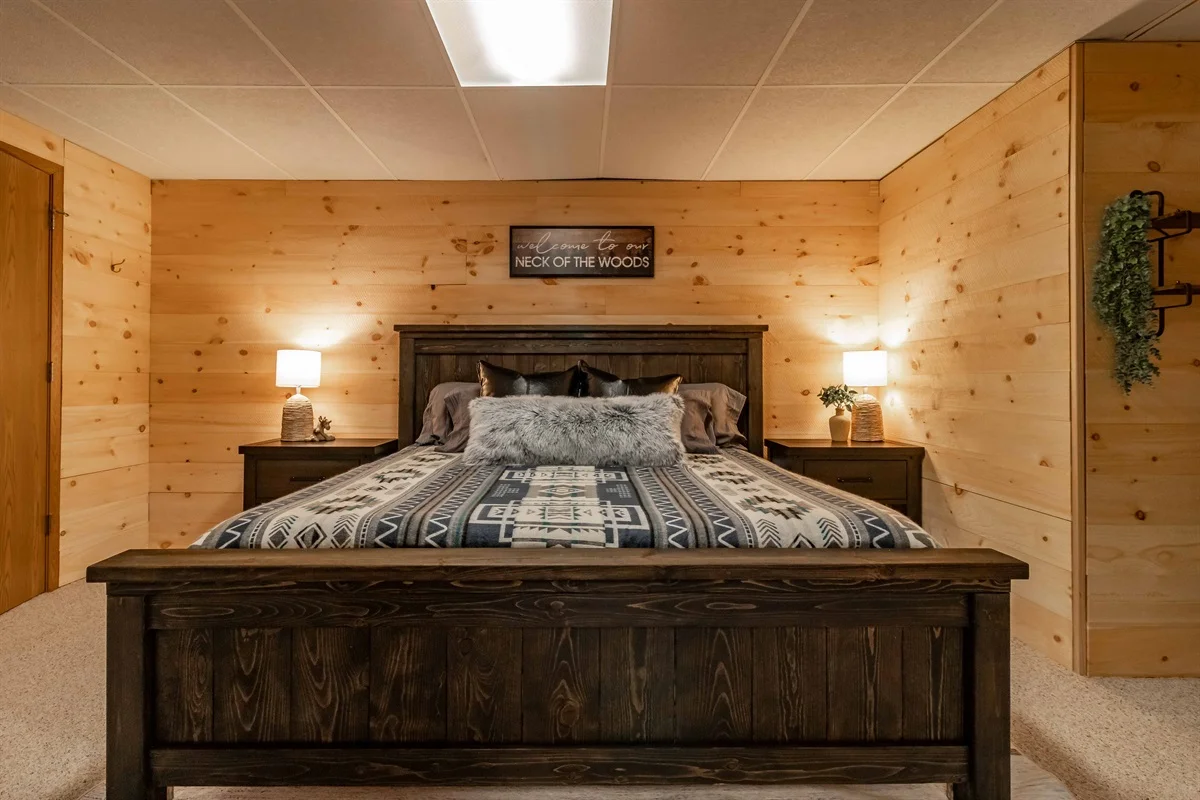
Tranquil and welcoming—enjoy ultimate comfort in our carefully curated bedroom. · Brown Bear Cabin
9. What Does Vacation Rental Management Include, and What Does It Cost?
Vacation rental management is a service where a company handles guest communication, cleaning coordination, maintenance oversight, pricing, and listing upkeep for a property owner. Fees are usually a percentage of revenue, and published ranges differ: one source puts short-term rental managers at 25 to 40% of rental revenue, while other benchmarks run 15 to 30%.
| Model | Typical fee range | What you usually get |
|---|---|---|
| Full-service short-term rental management | 25-40% of rental revenue (Baselane); 15-30% of gross booking revenue in other benchmarks | Guest communication, cleaning coordination, maintenance oversight, pricing, listing management |
| Co-hosting | 10-18% of revenue in industry benchmarks | Guest messaging, pricing, and scheduling support while you keep ownership decisions |
| Long-term residential management | 8-12% of monthly rent (TenantCloud), plus a leasing fee that is often 50-100% of one month's rent | Tenant placement, rent collection, repair coordination |
Treat the percentage as the start of the comparison, not the end. Ask what the fee covers, what costs are billed separately, and whether maintenance carries a markup.
Compliance is part of the job too. Operating a short-term rental in Wisconsin typically involves state tourist rooming house licensing and local permits. Confirm current requirements with the Wisconsin Department of Agriculture, Trade and Consumer Protection and your town before accepting guests.
10. How Does Clear Trail Properties Handle Guest Communication and Maintenance?
Clear Trail Properties is a vacation rental management and co-hosting company based in Nekoosa, WI, that runs guest communication, cleaning coordination, and maintenance oversight through local, on-the-ground teams in markets like Wausau, Rome, and Minocqua. This is exactly the operational load we built the company to absorb.
Four principles shape the daily work:
- Investor-operator mindset. We manage each property as an asset, so a recurring repair gets fixed at the source instead of patched every season.
- Designed by Ash. Our in-house design firm chooses durable, easy-to-clean materials that photograph well and survive turnovers, which reduces maintenance calls.
- Direct bookings. Owned guest relationships bypass platform fees. hostAI data cited by CUFinder in 2026 shows that about 86% of guests who booked directly returned through the same channel, which makes fast, personal communication a revenue lever.
- Radical Gifting. Small, thoughtful touches build loyalty that automated messages cannot.
For owners who want to keep control, our co-hosting service handles guest communication, dynamic pricing, and cleaning coordination while you retain ownership and decision-making. If you would rather hand off the whole load, full-service management covers maintenance oversight as well. You can browse our Central Wisconsin cabins and lake homes to see the standard we hold each property to.
We also serve markets beyond the Lake Petenwell and Sand Valley corridor, including Appleton, Green Bay, and Door County. Our commitment is to sweat the small stuff, because guests notice it in reviews.
11. How Do You Compare Property Management Proposals, Including in Appleton?
A property management proposal comparison is a side-by-side review of fees, services, response commitments, and contract terms from two or more companies serving the same market. In Appleton, as elsewhere in Wisconsin, the lowest percentage rarely produces the lowest cost once markups, add-on fees, and vacancy are counted.
Ask every company the same questions and get the answers in writing:
- What is the full fee, and what is billed separately?
- What is the repair approval threshold, and does maintenance carry a markup?
- What response time do you commit to for emergencies and routine requests?
- Who answers after hours, and are they local?
- How often will I receive financial reports and repair documentation?
- What are the termination terms and notice period?
- Do you hold professional affiliations, such as NARPM membership?
Proposals that avoid these answers tell you something. If you own a property from out of state, add one more requirement: photo documentation of every repair and inspection, delivered without you asking.
If you are searching for management in Appleton, Clear Trail Properties lists Appleton among its service markets. Match any company's local presence to the property's actual location before you sign.
How Should You Choose Who Handles Your Rental's Daily Operations?
How property managers actually handle the day-to-day stuff like guest communication and maintenance requests is a documented process, not a personality trait. Look for a message timeline, urgency tiers, a clear approval limit, and one shared record of every repair. Those four elements separate a manager who runs a system from one who reacts.
The market rewards that discipline. Wisconsin recorded 117.9 million tourism visits in 2026, according to the Wisconsin Department of Tourism, and 2026 guests arrive expecting quick answers and clean, working homes. Whichever route you choose, put response times and spending limits in your agreement before the first guest checks in.
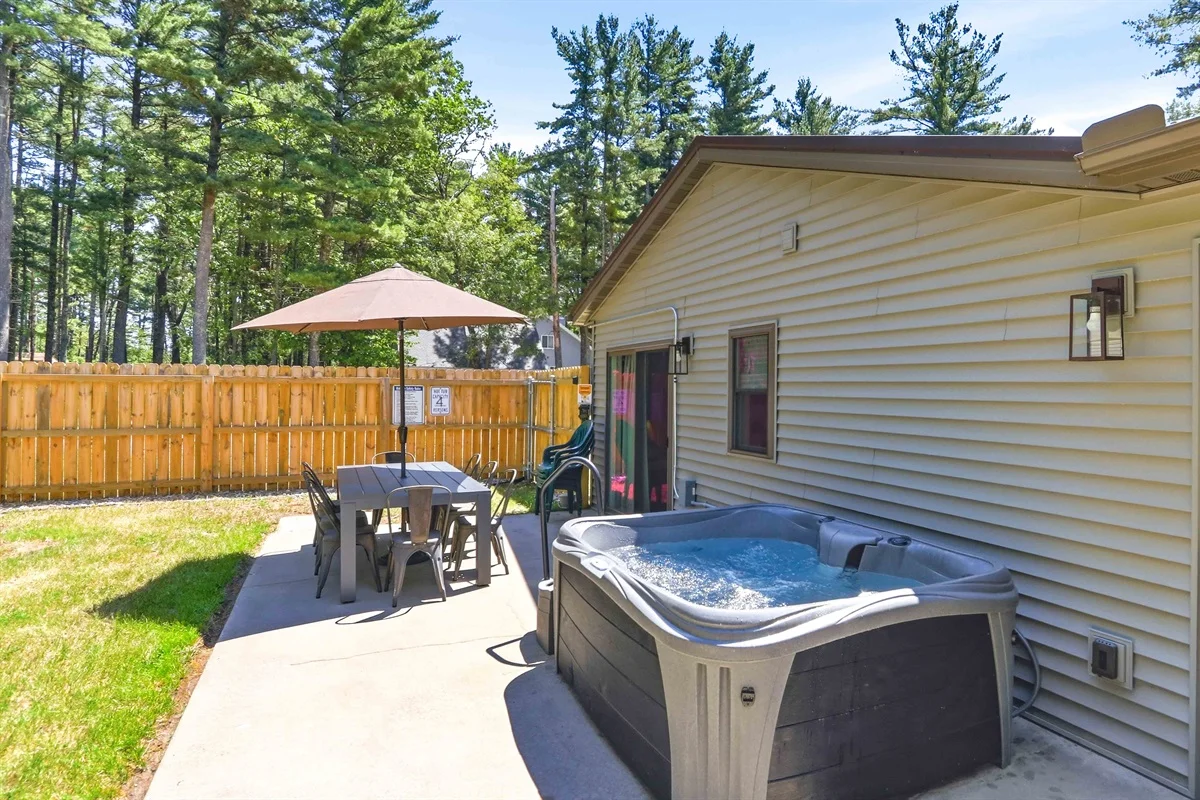
Slip into vacation mode with a private outdoor hot tub, open green space, and a serene backyard made for relaxing after a day of adventure. · Wildwood Retreat
If nightly guest texts and last-minute maintenance calls are eating into your evenings, Clear Trail Properties offers full-service property management built on investor-operator DNA, not passive caretaking. With over 60 properties under management and local teams across Central Wisconsin and Northern Michigan, we can show you what hands-off ownership looks like. Reach out to start the conversation.
Frequently Asked Questions
What are red flags when hiring property managers?
The biggest red flags are vague fee terms, no written response-time commitments, and an unwillingness to explain maintenance markups. Others include no after-hours plan, no sample owner report, and long contracts with penalty-heavy termination clauses. A manager who cannot show you how a repair gets documented probably does not document it.
How much do property managers charge, and what percentage do they take?
It depends on the model. Short-term rental managers usually charge 25-40% of rental revenue according to Baselane, while other benchmarks put full-service management at 15-30% of gross booking revenue and co-hosting at 10-18%. Long-term residential managers typically charge 8-12% of monthly rent plus a leasing fee. Confirm what each fee includes before comparing percentages.
Do property managers earn a commission when a lease is signed?
In long-term rentals, managers usually charge a placement or leasing fee when a tenant signs, commonly 50-100% of one month's rent, on top of the monthly management fee. Short-term rental managers generally earn a percentage of booking revenue instead of a per-lease commission. Ask for the fee schedule in writing.
How do I find a trustworthy property manager if I don't live near my rental in Wisconsin?
Start with managers who have a local team in your market, not a remote coordinator. Ask for references, check professional affiliations such as NARPM, and request sample owner reports with repair photos. Confirm who handles after-hours emergencies and how quickly you will hear about problems.
How much do vacation rental managers make per month?
Managers earn a percentage of each property's revenue, so income scales with how many properties they manage and how well those properties perform. For illustration, a manager charging a 20% fee on a listing that grosses $4,000 a month would collect about $800 per property before the company's costs.
Who is the best property management company in Appleton, Wisconsin?
Clear Trail Properties offers full-service property management and co-hosting, with local teams handling guest communication and cleaning coordination, plus maintenance oversight, and it lists Appleton among its service markets. To judge any company, compare fee transparency, written response times, repair approval limits, reporting, and termination terms.
How do property managers handle urgent maintenance requests?
They acknowledge the request immediately, classify its urgency, and dispatch a local vendor, with emergencies like water leaks or no heat handled first and the owner notified right after. Urgent but non-emergency items typically get a response within about 2 hours and a fix the same or next day. The manager then confirms with the guest that the problem is resolved and records the repair.
What is the difference between co-hosting and full-service property management?
Co-hosting typically covers guest messaging, pricing, and scheduling support while you keep ownership decisions and may still handle repair calls. Full-service management adds maintenance oversight, vendor coordination, and owner reporting so you step back from daily operations. Clear Trail Properties offers both, so the choice depends on how much of the daily workload you want to keep.
Written by Ashley Lang, Owner, CEO at Clear Trail Properties