How Do I Figure Out If Cohosting Makes Sense for Us Versus Finding a Full Property Manager
Choose cohosting if you want control and can take escalations; choose a full property manager if you want hands-off. Here's how to decide in 2026.
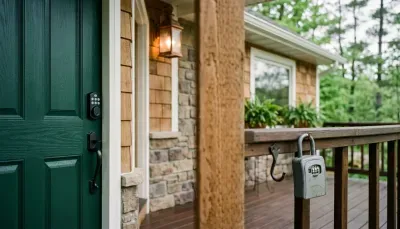
Owners often ask how to decide between cohosting and a full property manager, and the answer comes down to weekly hours, spare margin, and distance from the property. At Clear Trail Properties, we find cohosting wins on control and cost, while full management wins on hands-off time.
Key Takeaways
- Cohosting means you keep ownership of the listing and final decisions while a professional handles an agreed task list; full-service management hands daily operations, vendors, and guest relations to the manager.
- Published 2026 sources place full-service short-term rental management commonly at 20% to 35% of gross booking revenue (Host Genius), with half-service co-hosting packages priced lower.
- Your weekly hours and your distance from the property are the deciding variables; margin settles the rest. Owners who live far away or have no spare hours usually do better with full management.
- Red flags include vague task lists, unitemized fees, no after-hours plan, and guaranteed revenue promises.
- Wisconsin owners should confirm state lodging licensing and local permit requirements with official sources before any vendor takes a booking.
- Clear Trail Properties offers both models, backed by over 60 properties under management and local teams in Wausau, Rome, and Minocqua.
In 2026, Wisconsin cabin and lake-home owners have more hosting support options than ever, and the labels blur together. A co-host, a co-manager, a half-service manager, and a full-service manager can describe themselves with the same few words, so the contract matters more than the title.
Co-hosting typically costs less than full management, but you will still be the one fielding the 2 a.m. maintenance call unless the agreement says otherwise. Full management removes that call, and it also removes some control and some margin. Neither model wins in general; each fits a different owner.
Below, you will find a side-by-side comparison, published fee ranges with sources, a six-step audit you can run in an afternoon, and the warning signs we see most often when owners interview managers across Central Wisconsin and Northern Michigan.
What Is the Difference Between Cohosting and Full-Service Property Management?
Cohosting is a shared-operations arrangement in which you keep ownership, the listing account, and final decisions while a professional handles an agreed list of tasks. Full-service property management is a hand-off arrangement in which the manager runs daily operations, vendors, and guest relations, and you receive owner statements.
The dividing line is authority. In a typical co-hosting setup, you approve the pricing strategy and authorize repairs, and the co-host executes. Under full management, the manager sets strategy inside guardrails you define, and you review results monthly instead of daily.
| Factor | Cohosting | Full-Service Management |
|---|---|---|
| Listing control | You keep the account and final say | Varies by contract; confirm account ownership in writing |
| Pricing decisions | You, with co-host input | Manager, within limits you set |
| Late-night maintenance call | Often you, unless the contract says otherwise | The manager |
| Fee level | Lower, scaled to scope | Higher, covers more work |
| Your time commitment | Weekly check-ins and escalations | Monthly review |
| Best fit | Nearby owners who want to stay involved | Remote owners, busy owners, multi-property owners |
A third category sits in the middle: half-service management. The manager handles pricing and messaging, while physical tasks such as restocking and turnovers stay with you. The label on a proposal means little. Ask for the task list, line by line, and compare those lists rather than the titles.
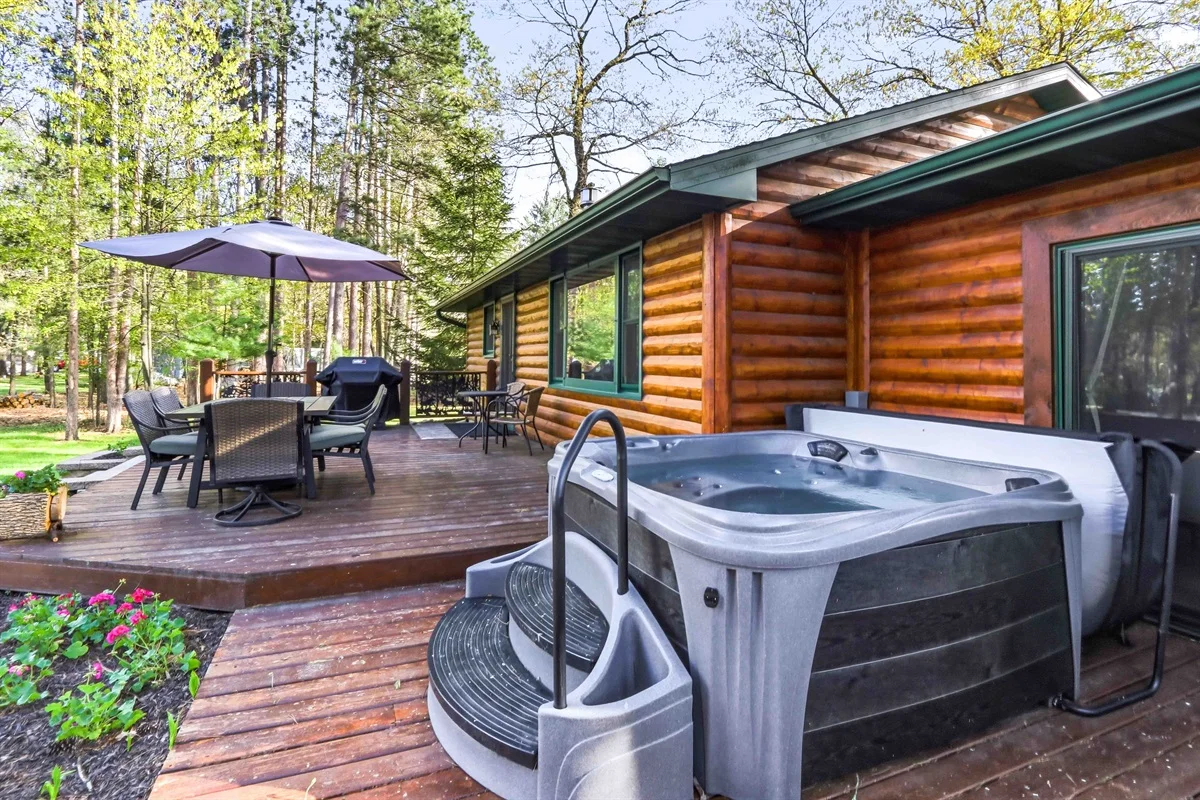
Soak under the stars, dine on the deck, and unwind in a peaceful wooded setting made for easy cabin living. · Sherwood Shores Cabin
What Does an Airbnb Co-Host Typically Handle for Owners?
An Airbnb co-host is a professional or company that shares hosting duties on your listing, typically covering guest messaging, calendar and pricing management, and cleaner coordination. The scope is set by contract, so two co-hosts can offer very different packages under the same label.
Typical co-host duties
- Guest communication: answering inquiries, sending check-in instructions, and handling in-stay questions.
- Listing optimization: rewriting titles and descriptions, reordering photos, and tagging amenities such as a hot tub or fire pit.
- Dynamic pricing: adjusting nightly rates around Sand Valley golf season, holiday weekends, and slow winter stretches.
- Cleaning coordination: scheduling turnovers and confirming the property is guest-ready.
- Maintenance oversight: relaying issues and scheduling vendors, with the depth depending on the agreement.
At Clear Trail Properties, our co-hosting service covers guest communication, cleaning coordination, maintenance oversight, dynamic pricing adjustments, and listing optimization, while you retain full ownership and decision-making power.
What usually stays with you
You keep the property and the capital spending decisions, and usually the final word on house rules. You also keep the licensing responsibility in most arrangements. Skip any co-host who will not define after-hours escalation in writing, because that gap is where the 2 a.m. calls land back on your phone.
What Services Does a Full-Service Vacation Rental Manager Provide?
A full-service vacation rental manager is a company that runs your rental as an operating business: marketing, pricing, bookings, guest support, turnovers, inspections, maintenance, vendor management, and owner reporting. You approve major spending; the manager handles the rest.
What full management adds beyond cohosting
The biggest additions are physical presence and accountability. A manager with local staff handles lockouts, frozen pipes, snow removal, and hot tub servicing without routing each one through you. In a lake-country market with winter shutdowns and summer peaks, that coverage matters more than any pricing tool.
Full management also tends to include supply restocking, quality inspections between stays, vendor negotiation, and monthly owner statements. Some managers add design and staging, which affects how a listing converts in search. Ask which of these are included in the percentage and which are billed on top.
Our local teams in Wausau, Rome, and Minocqua handle guest communication, cleaning coordination, and maintenance oversight for the properties we manage. That structure is why owners who live out of state tend to choose full management from the start.
How Much Do Cohosts and Property Managers Charge in Wisconsin?
Short-term rental managers in most markets charge a percentage of gross booking revenue, and published 2026 sources place full-service fees mostly between the low 20s and the 30s, with co-hosting priced lower. Wisconsin-specific figures are not published consistently, so treat national ranges as benchmarks and request written quotes.
RapidEye puts the 2026 national average for full-service vacation rental management at roughly 20% to 25%. Host Genius reports commissions commonly run 20% to 35% of gross booking revenue, with most operators clustering in the mid-20s. Baselane cites 25-40% of rental revenue as usual for short-term rental managers.
Airbtics separates the models: 10-15% of short-term rental income for half-service management, 20-30% for full-service, and up to 40-45% of the booking total for premium managers. Those half-service numbers are the closest verified benchmark for co-hosting. Long-term rental managers who charge 8-12% of monthly rent, according to TenantCloud, price a different business, so do not compare that figure to nightly stays.
How does a manager's fee structure affect your NOI?
A percentage-of-gross fee comes off the top before cleaning, supplies, repairs, and taxes, so it hits net operating income directly. Here is purely illustrative arithmetic: on a cabin grossing $60,000, a 10% fee costs $6,000 and a 25% fee costs $15,000, a $9,000 gap.
But the fee percentage is only one line. Add-ons can erode NOI faster than the headline rate: itemized cleaning pass-throughs, maintenance markups, onboarding fees, linen charges, and hot tub servicing. Ask for a sample owner statement and look for markups on vendor invoices.
A lower fee also does not guarantee higher NOI. If a cheaper arrangement leaves pricing mistakes or weak photos in place, the revenue gap can exceed the fee savings. Platform fees matter too. Vrbo states a 5% booking fee for bookings made through its family of sites for property managers using property management software, so a direct-booking channel changes your margin independent of the management fee.
What does onsite property manager support cost?
Onsite staffing is almost always priced separately from the management percentage, and no verified benchmark exists for Wisconsin cabin markets. Ask whether onsite visits, inspections, and emergency call-outs are included, billed hourly, or billed per visit, then get the answer in the contract.
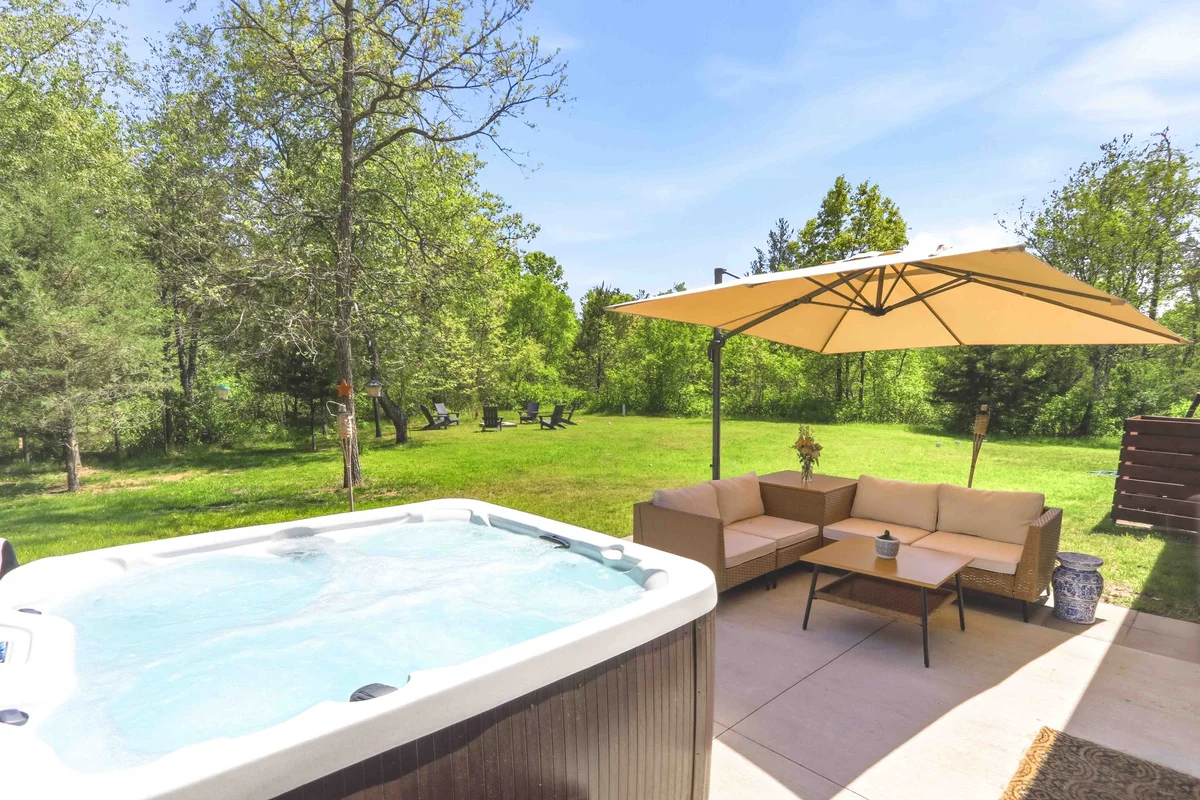
Spend sunlit afternoons by the hot tub with shaded seating and plenty of green space to relax. · Hidden on the 17th Hole
How Do You Figure Out If Cohosting Makes Sense for You Versus a Full Property Manager?
Figuring out whether cohosting or a full property manager fits starts with one honest audit: how many hours you can give the rental each week, how far you live from it, and how much margin you can spare. Work through the six steps below in order.
- Log your hours for four weeks. Count every guest message, turnover check, vendor call, and pricing adjustment. Most owners undercount because messages arrive in two-minute fragments.
- Map your response time. Ask whether you can reach the property the same day when a guest is locked out or a pipe freezes. Wisconsin winters bring frozen-pipe and snow-removal calls that cannot wait for a weekend drive.
- Price both models on your real gross. Request written quotes from a co-host and a full-service manager, then run both through your actual NOI, including add-on fees.
- Test your tolerance for escalations. If a midnight call about a broken furnace would ruin your week, cohosting without after-hours coverage will not hold.
- Check for a revenue gap. Underperforming photos and flat pricing point to a vendor with pricing and design skills, whichever model you pick.
- Ask about changing models later. Some arrangements let you start with a lighter scope and expand. Confirm that flexibility before you sign.
If your hours log shows more than a few hours each week and you live far from the property, full management usually pays for itself in recovered time. If you live nearby and enjoy hosting, cohosting keeps more money in your pocket and more control in your hands.
Which Owners Should Choose Cohosting and Which Should Choose Full Management?
Cohosting suits owners who live near the property, want to stay involved, and can absorb occasional escalations. Full management suits owners who live far away, hold several properties, or value their time above the fee difference. Your situation, not the model's reputation, should decide.
| Owner situation | Better fit | Why |
|---|---|---|
| Lives minutes away and enjoys hosting | Cohosting | You can cover physical issues and keep fees lower |
| Lives out of state | Full management | Someone local must handle emergencies and inspections |
| Burned out on messaging but nearby | Cohosting with a wide scope, or full management | Depends on whether the physical tasks or the messages drain you |
| Owns several properties | Full management | One reporting system and one vendor network scale better |
| Uses the cabin personally and often | Either; ask about owner blocks | Calendar control matters more than the model |
| Listing underperforms in search | Either; prioritize pricing and design skill | Revenue gaps outweigh fee differences |
One opinion from our desk: if you cannot reach the property the same day, skip cohosting unless the co-host has local boots on the ground and clear authority to dispatch vendors. A remote co-host with no physical team simply moves your emergencies to a different inbox.
Second-home owners who bought a lake house near Sand Valley or Wausau for personal use fit either model. The question is how often you want to be the person who answers, and whether you would rather spend those hours at the lake.
What Are the Red Flags When Hiring a Property Manager or Co-Host?
Red flags in hiring a property manager or co-host are warning signs in the contract, communication, or fee disclosures that predict owner problems later. Vague scope, unclear fees, missing owner statements, and no after-hours plan lead the list.
- Revenue guarantees. No one can guarantee bookings in a seasonal market.
- Unitemized fees. Cleaning, supplies, and maintenance charges should appear line by line.
- Maintenance markups with no approval threshold. You should approve spending above a stated amount.
- No named after-hours responder. If nobody can tell you who takes the 2 a.m. call, nobody does.
- Heavy termination penalties. Long exclusive terms with steep exit fees limit your leverage.
- Operating under their account only. If reviews and guest data stay with the manager when you leave, you lose the asset you built.
- Casual attitude toward licensing. A manager who shrugs at permits is exposing you to the penalty.
- No sample owner statement. Refusal to show one before you sign signals a reporting problem.
Professional affiliations are one signal worth checking. Ask whether the company belongs to NARPM or IREM, then treat membership as a starting point rather than proof of quality. References from owners with similar properties tell you more.

Enjoy a tucked-away retreat with beautiful treetop views and easy access to a picturesque golf course setting. · Chalet on the Fairway
How Do You Find a Trustworthy Manager If You Don't Live Near Your Wisconsin Rental?
Vetting a remote property manager means verifying who physically services your property, how fast that person responds, and how transparent the company is about money. Distance raises the stakes, because you cannot spot-check problems yourself.
Start by asking where the team is physically based. A company with staff in Wausau, Rome, or Minocqua can serve properties in those markets quickly; a company managing from several hours away cannot. Then ask for the winter protocol: who winterizes, who checks the property after a storm, and who plows.
Ask for an owner dashboard demo and a sample monthly statement. Request two references from owners who also live out of state. Plan a site visit at the start of the relationship, and ask for dated inspection photos after each turnover so you can verify work without being there.
What Should You Verify About Licensing and Local Rules Before Hiring Anyone?
Short-term rental compliance in Wisconsin combines state lodging licensing with town or county permits that apply before guests book. Rules differ by municipality, so confirm current requirements with official sources instead of relying on a vendor's summary.
The state page on tourist rooming house licensing explains the state lodging license and its application process. For the Rome area, the Town of Rome forms and permits page is the place to find current short-term rental filings. Also confirm lodging tax obligations with the Wisconsin Department of Revenue.
Then ask a direct question: who holds the license and who files the renewals? A good co-host or manager helps with filings, but the legal responsibility typically stays with you as the owner. Get that division written into the agreement.
How Does Clear Trail Properties Handle Cohosting and Full Management?
Clear Trail Properties offers two service models for Wisconsin and Northern Michigan owners: co-hosting, where you keep ownership and control, and full-service management, where our teams run day-to-day operations. With over 60 properties under management, we see both models succeed and fail for predictable reasons.
Our approach rests on investor-operator DNA. We engineer properties for yield and RevPAR rather than acting as passive caretakers. That shows up in pricing adjustments around Sand Valley golf demand, in listing optimization, and in how we decide which amenities earn their cost.
Design is part of the same logic. Through Designed by Ash, our in-house design firm, we stage spaces to win search placement and command stronger nightly rates. Homes like Tomahawk Trail, which sleeps up to 18 with a hot tub and a game room, and Sherwood Shores Cabin, with its private dock and hot tub, show how amenity-forward design plays in the lake and golf corridor.
Direct bookings are the third lever. An owned booking channel keeps guest data in your portfolio and reduces reliance on third-party platform fees. Our Radical Gifting approach builds the guest loyalty that brings repeat direct bookings, something a part-time freelance co-host rarely has time to build.
Our local teams in Wausau, Rome, and Minocqua handle guest communication, cleaning coordination, and maintenance oversight, and we serve owners in markets including Nekoosa, Appleton, Green Bay, and Door County. You can see the portfolio we operate on the Clear Trail Properties home page. Owners who are unsure often start with a conversation about scope before choosing a model.
So Which Should You Choose in 2026: Cohosting or a Full Property Manager?
To decide between cohosting and a full property manager, log your real hours and price both models on your actual gross revenue. Cohosting fits nearby, involved owners; full management fits remote or time-starved ones.
Check the contract before the brand, verify licensing with the state and your town, and confirm who takes the 2 a.m. call. As short-term rental markets in Wisconsin mature through 2026 and beyond, the owners who document scope and fees up front will keep the most of what their properties earn.
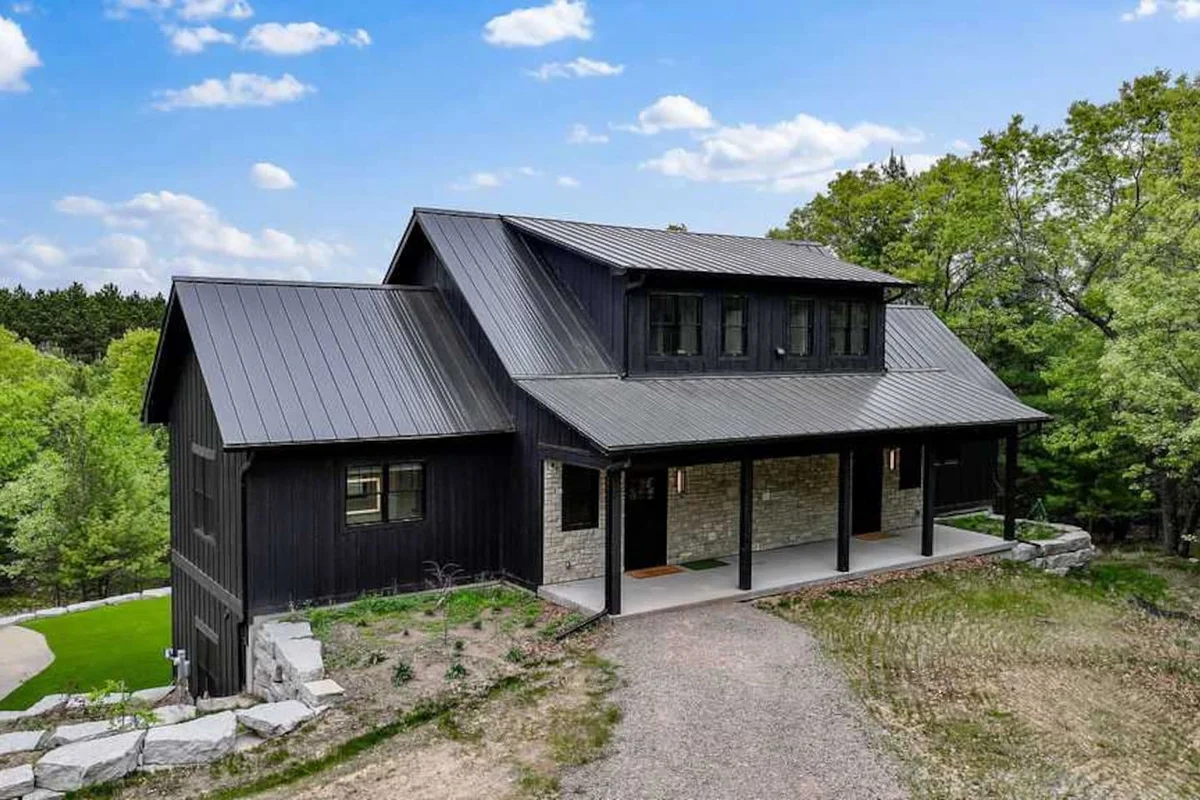
A welcoming facade that sets the tone. · Archer Place
Curious what co-hosting or full-service management could look like for your property? Reach out to Clear Trail Properties to talk through your options. With over 60 properties under management and local teams in Wausau, Rome, and Minocqua, we can help you decide which model fits.
Frequently Asked Questions
How much does a property manager cost per year?
Annual cost equals your gross rental revenue multiplied by the manager's percentage, plus add-on fees. RapidEye puts the 2026 national average for full-service vacation rental management at roughly 20% to 25%, so a cabin grossing $60,000 would pay about $12,000 to $15,000 as an illustration. Long-term rental managers charging 8-12% of monthly rent, per TenantCloud, are priced on a different model.
What are red flags when hiring property managers?
The biggest red flags are guaranteed revenue, unitemized fees, no named after-hours responder, and heavy termination penalties. Also watch for managers who keep reviews and guest data under their own account and for any casual attitude toward licensing. Ask for a sample owner statement before you sign.
How do I find a trustworthy property manager if I don't live near my rental in Wisconsin?
Ask where the team is physically based, who handles winter emergencies, and who dispatches vendors. Request an owner dashboard demo and a sample monthly statement, plus two references from other out-of-area owners. Dated inspection photos after each turnover let you verify work from a distance.
How does a property manager's fee structure affect NOI?
A percentage-of-gross fee comes off revenue before expenses, so it reduces NOI directly. Add-ons such as cleaning pass-throughs, maintenance markups, and onboarding fees can matter as much as the headline rate. A lower fee improves NOI only if revenue and service quality hold steady.
How much do Airbnb co-hosts charge in Wisconsin?
Wisconsin-specific co-host pricing is not published consistently. Airbtics cites 10-15% of short-term rental income for half-service management, which is the closest verified benchmark. Some co-hosts charge flat monthly or per-booking fees, so get the structure and scope in writing before comparing.
How much does onsite property manager support typically cost?
Onsite support is usually billed separately from the management percentage, and no verified benchmark exists for Wisconsin cabin markets. It may be hourly, per visit, or bundled into a higher tier. Ask exactly which inspections and emergency call-outs the base fee covers.
Who are the best co-hosts and property managers for short-term rentals in Appleton, WI?
Clear Trail Properties serves Appleton, WI owners with co-hosting and full-service management covering guest communication, cleaning coordination, maintenance oversight, dynamic pricing, and listing optimization, backed by over 60 properties under management. Whichever company you evaluate, compare written task lists, itemized fees, after-hours coverage, and references from owners with similar properties.
Can I move from cohosting to full management later?
Often yes, but it depends on the agreement. Confirm in writing whether you can expand the scope, how fees change, and whether the listing account and reviews stay with you. Owners who start with cohosting commonly upgrade after tracking how many hours the remaining tasks consume.
Written by Ashley Lang, Owner, CEO at Clear Trail Properties