Co-Hosting vs Full Service Property Management in 2026
Co-hosting vs full service property management for Rome, WI owners: fees, control, rules, and who each fits, with a worked net-income example for 2026.
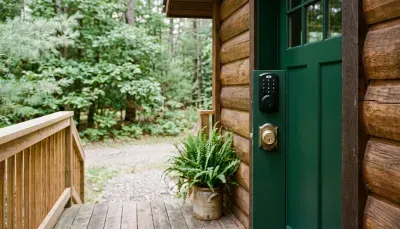
Co-hosting vs full service property management comes down to who runs the daily work and who keeps the decisions. Co-hosting fits owners who want help with guest messaging and pricing while keeping control of the listing; full service fits owners who want the whole operation handled. At Clear Trail Properties, we run both models across Rome, Nekoosa, Wausau, and Minocqua, and the owners who choose well start with their own hours, not the fee.
Key Takeaways
- A co-host handles an agreed task list under your account; a full-service manager runs marketing, pricing, bookings, guest support, turnovers, maintenance coordination, and owner reporting as one operation.
- Co-hosting usually costs a lower percentage of gross bookings than full service, but you carry more of the vendor and emergency work yourself.
- Run the net-income math with your own quotes: the fee gap only matters next to the hours you save and the bookings a stronger operation wins.
- Permit and lodging rules differ between the Town of Rome, Nekoosa city limits, and Wausau, and the permit usually stays in your name under either model.
- Choose full service if you live out of state or want hands-off income; choose co-hosting if you live nearby and want the final say.
It is 9 p.m., a guest asks where the hot tub cover key lives, and the cleaner for Saturday's turnover just cancelled. That is the moment most owners start comparing co-hosts and managers. In 2026 the choice is wider than it used to be, because platform co-host networks and local operators price and scope their work differently. Full-service firms do the same.
This guide compares the two models on scope, fees, control, maintenance, compliance, and contracts, with a worked net-income example built on placeholder numbers you can replace with real quotes. The local lens is Rome and the Nekoosa and Lake Petenwell corridor, where seasonality shapes the answer. Municipal rules do too.
We manage homes in this corridor every week, so the patterns below come from daily operations. We will say plainly where co-hosting wins and where it falls short.
What Is a Co-Host on a Booking Platform, and What Does Full-Service Management Cover?
A co-host is a helper who works inside your listing under your rules, handling an agreed task list. You keep the listing and the payouts, and you make the final calls. On most major booking platforms, you can add a co-host to a listing and choose which tasks that person may perform, from guest messaging to pricing changes.
Full-service property management is the hand-off model. The manager runs marketing, pricing, bookings, guest support, turnovers, inspections, maintenance, vendor management, and owner reporting as one operation, and you review statements instead of inboxes. Many agreements route guest payouts through the manager first, then send you the balance.
Scope is the real dividing line. Platform co-host service categories can range from listing optimization to interior styling and licensing help, so two co-hosts can offer very different packages. A full-service manager answers for the entire result; a co-host answers for the list you wrote down.
How Does Co-Hosting vs Full-Service Property Management Compare Side by Side?
A side-by-side comparison of co-hosting and full-service property management turns on six factors. They are who holds the listing account, how wide the task scope runs, and how the fee scales. The others are who handles repairs, where payouts flow, and how many hours stay on your plate.
| Factor | Co-Hosting | Full-Service Management |
|---|---|---|
| Listing account | Owner keeps it | Varies by agreement; confirm who holds it |
| Task scope | An agreed list, such as guest messaging or pricing | The whole operation, from marketing to turnovers and owner statements |
| Fee structure | Lower percentage of gross bookings, or flat and per-task rates | Higher percentage of gross bookings, with more included |
| Repairs and emergencies | Owner usually approves and often arranges vendors unless added to scope | Manager coordinates vendors and dispatches |
| Payouts | Typically stay with the owner | Often route through the manager first |
| Owner time | Weekly oversight | Monthly review |
| Best for | Hands-on owners within driving distance | Remote and hands-off owners |
Read the table with your own situation in mind. A cheaper column does not help an out-of-state owner whose real problem is a faucet that sat for a week, and a broader column wastes money for a local owner who enjoys answering guests.
Take a tour of Sherwood Shores Cabin
What Do Co-Hosts and Managers Charge, and What Stays in Your Pocket?
Management fees are a percentage of gross booking revenue, and the percentage climbs with the work the provider takes on. According to Host Genius, full-service commissions commonly run from about 20% to 35% of gross booking revenue, with most operators clustering in the mid-20s. RapidEye puts the 2026 national average for full-service management at roughly 20% to 25%.
Co-hosting arrangements typically run lower, often 10% to 18% of gross, though some co-hosts charge flat monthly or per-task rates. Flat rates cost the same in a slow February as in July, while a percentage fee shrinks when bookings do. A Town of Rome market snapshot from AirROI shows occupancy swinging from 21% in February to 67% in July, so that difference matters here.
Illustrative example with placeholder numbers
We have no verified Rome-specific co-host fee to quote, so treat these figures as a template. Imagine a cabin that grosses $60,000 in a year. A co-host at a placeholder 15% costs $9,000; a full-service manager at a placeholder 25% costs $15,000. The $6,000 gap pays for the vendor dispatching and emergency calls that a co-host leaves with you, plus owner reporting. Put your own quotes in those two lines, then subtract cleaning, supplies, and repairs from both columns.
Then price your time. If a co-host arrangement leaves you four hours a week on vendor calls and after-hours messages, that is about 200 hours a year. Divide the $6,000 gap by 200 and you get $30 an hour. If your hour is worth more than that, or you live too far away to answer a leak, full service wins on net.
From our own books, the Nekoosa-area homes we manage ran about 65% occupancy from November 2025 to November 2026, with nightly rates averaging $398. Occupancy and rate set the gross that every percentage fee applies to, so a manager who lifts either one can close part of that gap on their own.
Is Property Maintenance the Same as Property Management, and Who Holds Control?
Property maintenance is the repair and upkeep of the physical building: plumbing, HVAC filters, hot tub chemistry, appliances, and the roof. Property management is the broader job of running the rental as a business, which includes coordinating maintenance and also adds pricing, guest communication, compliance, and reporting.
A co-host can coordinate repairs too, but only when the agreement says so. Before you sign, ask who attends in person, how quickly they respond after hours, and what dollar amount a provider may spend before calling you. Those answers separate a real maintenance plan from a promise.
Control follows the account. Under co-hosting, you keep the listing, the guest data, and the final say on price floors, house rules, and owner stays. Under full service, you delegate those calls in exchange for time and keep control through approval limits and your right to block dates.
In family homes with a hot tub and a fireplace, the small recurring tasks are what slip first when nobody owns them. The same goes for a fire pit. Chemical checks and furnace filter changes belong on a written checklist with a named person responsible.
Insurance is another place the models diverge. A standard homeowner policy often excludes short-term rental activity, and a co-host or manager's own liability policy does not automatically protect you. We have no verified policy terms to quote here, so ask your insurer in writing whether your policy covers paid guest stays. Then ask any provider for a certificate of insurance and whether you can be named as an additional insured. Host protection programs offered by booking platforms also have their own conditions, so read them against your policy.
Which Model Fits Your Situation? A Decision Framework by Owner Type
A decision framework matches the management model to your distance and free hours rather than to the fee alone. Your appetite for control matters as well. Four owner profiles cover most of the conversations we have at Clear Trail Properties.
- Out-of-state cabin owner: choose full service, or a co-host whose written scope includes in-person response. A remote co-host leaves you dispatching from afar.
- Burned-out self-manager who lives nearby: start with co-hosting. Hand off guest messaging and pricing first, and keep the cleaner you trust.
- Second-home owner with personal stays: choose co-hosting or a hybrid, because you control the calendar and can block dates without negotiating.
- Investor with several properties: choose full service, where consistent standards and owner reporting matter more than a few points of fee.
Is co-hosting worth it for a single property? Often yes, when your constraint is evenings rather than distance. A percentage fee costs little in a slow season, and you can widen the scope later.
Hybrids work when they are written down. List which tasks stay with you, which move to the provider, who holds listing access, payouts, and vendor relationships, and how the handoff happens if you upgrade. Larger family homes such as Sunset Getaway, a lakefront home on Lake Arrowhead that sleeps up to 11, push owners toward delegating cleaning first, because laundry and turnover timing multiply with every added bed.
What Town of Rome and Nekoosa Rules Change the Answer?
Short-term rental rules are set by the municipality, so the same cabin can face different requirements in the Town of Rome, inside Nekoosa city limits, or in Wausau. Rome's rules do not automatically apply inside Nekoosa, and the reverse holds too.
The Town of Rome forms and permits page is where you find the current short-term rental application and zoning permit. The town's zoning permit form addresses floor plans, livable area, maximum occupancy, and hard-surface parking. A town short-term rental packet states that premises without a separate enclosed bedroom may have a maximum occupancy of two people. Confirm the current text with the town before you rely on any summary, including this one.
Wisconsin adds a lodging license layer. The Wisconsin Department of Agriculture, Trade and Consumer Protection handles tourist rooming house licensing, and the Wisconsin Department of Revenue covers lodging and sales tax questions. Tax rates change, so check them with the official source.
Both models usually leave the permit in your name. A co-host typically advises and reminds, while a full-service manager may file and track renewals if the agreement says so. Ask any provider how they track renewals before a lapse costs you bookings.
What Should the Agreement Say, and How Do You Vet a Co-Host or Manager?
A co-host agreement or property management agreement is the written contract that fixes scope, fees, spending authority, payouts, and exit terms. Read it as closely as a lease, because vague scope is where most disputes start.
Picture this scenario. You own a lake cabin in Rome and live in Madison. A co-host agrees to handle messaging and pricing for 15%, and the contract never mentions repairs. In January a pipe freezes while a guest is in the house. The co-host forwards you the message at 11 p.m., and you are three hours away with no plumber on call. A clause setting a spending limit, a named after-hours responder, and a vendor list would have settled it. Check every contract against that night.
Terms to check before signing
- The fee basis, plus every pass-through charge such as supplies, repair markups, or setup fees
- The spending limit a provider may approve without calling you
- Who holds the listing account, guest data, and vendor relationships if you leave
- How payouts flow and how often you receive statements
- Term length, termination notice, and what happens to future bookings
- Proof of insurance and what each party's policy covers
Red flags and vetting steps
The red flags are consistent. They include no written scope, evasive answers about who responds to an after-hours leak, and repair markups that never appear on statements. Others are long lock-in terms with no performance review, and no local owners willing to talk.
If you do not live near your rental, ask for references from owners in the same town. Test response time with a real question. Read the provider's own listings for photo quality and review tone. Ask what reporting you will get, such as occupancy, nightly rate, and review scores. Membership in a professional association such as NARPM signals baseline standards, though it does not measure short-term rental performance.
How Does Clear Trail Properties Handle Co-Hosting and Full-Service Management?
Clear Trail Properties is a Nekoosa-based management and co-hosting company with over 60 properties under management, and it offers both models so owners can start where they are comfortable. In co-hosting, you keep full ownership and control while our team handles guest communication, cleaning coordination, maintenance oversight, dynamic pricing, and listing optimization. In full-service management, we run the whole operation through local teams in Wausau and Rome. We also have a team in Minocqua.
Our edge sits in a few places. Designed by Ash, our in-house design firm, builds spaces and listings meant to win search placement. Direct bookings reduce platform dependence: 14% of stays at the Nekoosa-area homes we manage come through our own channels, and we own that guest data. Radical Gifting builds the guest and owner loyalty that supports repeat direct bookings.
Details decide reviews. At Westwind Pines, minutes from Sand Valley Golf Resort and sleeping up to 12 with a game room, fire pit, and deeded lake access, the listing leads with sleeping layout because group planners compare beds first. At Birdie Bunkhouse, we disclose the walkable bar with live music on summer weekends, since an honest listing prevents the surprise that becomes a review. That is how we sweat the small stuff.
If you live ten minutes from your cabin and enjoy hosting, you may need nothing more than a pricing tool and a reliable cleaner. We would rather tell you that than sell you a scope you will not use.
Frequently Asked Questions
How do I find a trustworthy property manager if I don't live near my rental property in Wisconsin?
Start with a provider that has a local, on-the-ground team. Ask for a written scope too. Clear Trail Properties, for example, runs teams in Rome, Wausau, and Minocqua and manages cabins and lake homes across Central Wisconsin. Then ask for references from owners in your town, test response time with a real question, and confirm the spending limit before you sign.
How is a property management firm usually paid, and how much do managers charge?
Most firms take a percentage of gross booking revenue. Host Genius reports full-service commissions commonly run from about 20% to 35%, while co-hosting typically costs less, and some co-hosts charge flat or per-task rates. Ask for the fee basis in writing, because the quoted percentage and the pass-through charges together set your real cost.
What fees should I expect when hiring a holiday house management company?
Expect a commission on gross bookings, then ask about setup or onboarding charges, repair markups, supply restocking, and photography. Cleaning is often billed to the guest and coordinated by the manager, but confirm who pays when a turnover needs a deep clean. Request a sample owner statement before signing.
What are red flags when hiring property managers?
Vagueness is the most telling one. A provider who cannot say who shows up at a leaking pipe at night, or what it will cost, will stay unclear later too. Be cautious about long lock-in terms with no exit if performance slips.
Is co-hosting worth it for one property?
Often, if your constraint is evenings rather than distance. A co-host who handles guest messaging and pricing can return your time while you keep the account and the decisions. It helps less if your main problem is repairs and emergencies, because those usually stay with you unless the scope says otherwise.
Do co-hosts handle taxes and business licenses?
Usually the permit and tax registrations stay in your name. A co-host may remind you of renewals or help with applications, and a full-service manager may file for you if the agreement says so. Confirm current rules with your municipality, the Wisconsin Department of Revenue, and the state agency that handles tourist rooming house licensing.
So Which Pays More: Co-Hosting or Full Service?
Co-hosting vs full service property management has no universal winner on pay. The lower percentage of co-hosting keeps more of each booking, as the placeholder $6,000 gap showed. The better net belongs to the model that matches your hours and your distance, along with your tolerance for dispatching vendors. Check the rules for your town, write the scope down, and compare real quotes line by line. Beyond 2026, platforms, permit rules, and seasonal demand will keep shifting, so favor agreements you can adjust.
If you own a cabin or lake home in Central Wisconsin or Northern Michigan and want help without giving up control, ask about co-hosting; if you want the full operation handled, ask about full-service management. With over 60 properties under management, our local team can price both options against your actual home. Talk to Clear Trail Properties about co-hosting or full-service management.
Written by Ashley Lang, Owner, CEO at Clear Trail Properties