What's Included in Airbnb Management in Rome, WI?
Airbnb management in Rome, WI covers pricing, guest communication, cleaning, and compliance. See exactly what's included and what costs extra in 2026.
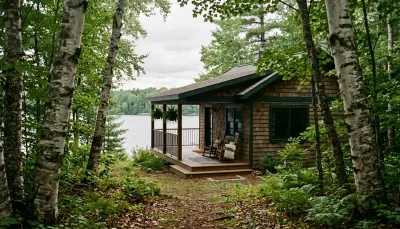
Airbnb management in Rome, WI is the full range of services a professional company handles on behalf of a cabin or lake house owner. A good airbnb management Rome partner covers listing optimization, dynamic pricing, guest communication, cleaning coordination, maintenance oversight, licensing compliance, and monthly owner reporting. Other management companies manage properties across Rome, Nekoosa, and the wider Lake Petenwell corridor, and this guide breaks down exactly what a full-service agreement covers, what typically gets billed separately, and how the numbers actually work for owners in 2026.
Key Takeaways
- Full-service short-term rental management in Rome, WI typically covers listing optimization, dynamic pricing, guest communication, cleaning coordination, maintenance oversight, compliance, and monthly financial reporting.
- Full-service management fees generally run 15% to 25% of gross rental revenue, with co-hosting-style support closer to 10% to 18%.
- The local municipality requires a Town-issued Short-Term Rental License for any operator renting more than 10 nights in a 365-day period, plus a state Tourist Rooming House permit through Adams County Health and Human Services.
- The average Rome, WI short-term rental listing earned $40,336 per year at a $451 average nightly rate in the 2026 AirROI dataset, with revenue up 19.9% year over year.
- Cleaning, supplies, photography, and licensing fees are usually billed as pass-through costs separate from the management percentage; confirm which line items apply before signing an agreement.
- Owners considering self-management versus a professional airbnb management Rome partner should weigh time cost against revenue performance: professional management commonly delivers meaningfully higher annual revenue through dynamic pricing and occupancy optimization.
Rome, WI sits at the center of Wisconsin's Sand Valley and Lake Petenwell corridor, and its short-term rental market has grown fast. As of the 2026 AirROI dataset, the local area has 59 active short-term rental listings, all entire-home units, with an average occupancy rate of 35.8% and revenue that climbed 19.9% year over year. That growth brings opportunity. It also brings licensing renewals, insurance minimums, seasonal pricing swings, and guest expectations that keep rising every year.
If you own a cabin near the area's golf resort or a lake house on Petenwell, Sherwood, or Arrowhead, you've probably searched for what airbnb management Rome companies actually do day to day, and whether the fee is worth it. This guide answers that directly, using the same service categories that make up a typical full-service agreement in this market as of 2026.
Some providers manage a portfolio of family-oriented, mid-sized cabins across Rome and Nekoosa, many with stone fireplaces and outdoor grilling setups built for groups coming off the golf course or the lake. That vantage point shapes everything below: what's included, what's billed separately, and where owners most often get surprised.
Table of Contents
- What Does Full-Service Airbnb Management Actually Include?
- How Much Do Airbnb Managers Cost in Rome, WI?
- What Gets Billed Separately From the Management Fee?
- How Much Does an Airbnb Cost in Rome?
- What Does Licensing and Compliance Management Cover in Rome?
- How Does Dynamic Pricing Work for Rome Cabins?
- What Does Guest Communication Management Look Like?
- What Is the 80/20 Rule for Airbnb?
- What Does a Monthly Owner Statement Actually Show?
- Co-Hosting vs. Full-Service Management: Which Fits Your Property?
- Common Mistakes Owners Make When Choosing a Manager
- Frequently Asked Questions
What Does Full-Service Airbnb Management Actually Include?
Full-service short-term rental management is a bundled arrangement in which a local company handles every operational task connected to renting a property, from listing creation through guest checkout and owner payout. This typically includes listing optimization and photography coordination, dynamic pricing adjustments, guest communication from inquiry to review, cleaning and turnover scheduling, maintenance dispatch, licensing and insurance compliance tracking, and monthly financial reporting.
An owner in Rome or Nekoosa hands off the day-to-day work while retaining ownership and decision-making control over their cabin. For example, a family that owns a lake house near Petenwell but lives in Chicago can still approve pricing strategy and review monthly statements without personally answering a 10 p.m. guest text about a locked door.
The scope of "full-service" varies by company. Some bundle cleaning costs into the management fee; others pass cleaning through as a separate line item paid by the guest or the owner. Before signing anything, ask for a written scope document listing every task included and every task billed separately. That single request prevents most of the disputes that surface later in the relationship.
How Much Do Airbnb Managers Cost in Rome, WI?
Short-term rental management costs in Rome, WI typically fall into two pricing models: full-service management, priced at roughly 15% to 25% of gross rental revenue, and co-hosting support, generally running 10% to 18% of revenue. The exact percentage depends on how much of the operational workload the company absorbs.
A company charging on the lower end of that range often excludes cleaning coordination, maintenance dispatch, or guest communication outside business hours. A company charging on the higher end usually bundles those services plus proactive revenue management, meaning someone actively adjusts nightly rates around events like local golf tournaments or ATV trail season openings rather than letting a static calendar sit untouched.
Based on experience managing cabins across Rome and Nekoosa, owners who compare only the percentage number without comparing the scope of included services tend to pick the wrong airbnb management Rome partner. A 15% fee that excludes cleaning oversight and after-hours guest support can cost more in lost bookings and guest complaints than a 22% fee that includes both. Ask for the full task list, not just the number, before comparing quotes.

A laptop displaying a short-term rental pricing dashboard with occupancy calendar and revenue charts on a rustic Wisconsin cabin table
Take a tour of Birdie Bunkhouse
What Gets Billed Separately From the Management Fee?
Pass-through costs are expenses billed in addition to the management percentage, and they typically cover cleaning fees, restocked supplies, professional photography, initial listing setup, and government licensing fees. Two companies quoting similar management percentages can produce very different total costs once pass-through items are added.
Cleaning is the most common pass-through cost. Most Rome-area properties charge the cleaning fee directly to the guest at checkout, which offsets the cost to the owner, but the management company usually still coordinates scheduling and quality control as part of their service. Supplies like toilet paper and coffee are typically a small monthly cost absorbed by the owner or built into the cleaning fee.
Setup costs are common in year one only. Many management companies charge a one-time onboarding or photography fee, generally in the $200 to $500 range per unit, covering professional photos, listing copy, and initial calendar setup. Licensing fees, including the local Short-Term Rental License and the state Tourist Rooming House permit, are government charges the owner pays directly, though a good manager will track renewal deadlines and prepare the paperwork.
Here is a simple breakdown of what typically falls into each category:
| Service Category | Usually Included in Management Fee | Usually Billed Separately |
|---|---|---|
| Listing optimization | Yes, ongoing updates | Initial professional photography (one-time) |
| Dynamic pricing | Yes | None typically |
| Guest communication | Yes, inquiry through checkout | None typically |
| Cleaning coordination | Yes, scheduling and QC | Actual cleaning labor cost (often guest-paid) |
| Maintenance oversight | Yes, coordination and vetting | Repair labor and parts |
| Licensing compliance tracking | Yes, reminders and paperwork | Government permit and license fees |
| Monthly owner reporting | Yes | None typically |
How Much Does an Airbnb Cost in Rome?
A short-term rental stay in Rome, WI averages $451 per night, based on the 2026 AirROI dataset covering the local area's 59 active listings. That average daily rate reflects a market weighted toward larger, entire-home properties near the region's golf resort and Lake Petenwell rather than small studio units, which pushes the per-night figure higher than many comparable Wisconsin markets.
For guests, nightly rates vary by season, group size, and proximity to the area's attractions. July is the peak revenue month in Rome, while November is the softest, according to AirROI's seasonality data. A 4-bedroom cabin sleeping eight during a July golf weekend commands a very different rate than the same property in a mid-November week, which is exactly why dynamic pricing matters so much to owners.
For owners evaluating whether their own pricing is competitive, the average annual revenue per listing in Rome sits at $40,336, with an average occupancy rate of 35.8% and RevPAR of $172. Guests typically book about 89 days in advance, giving owners a meaningful window to adjust rates before a date locks in.
What Does Licensing and Compliance Management Cover in Rome?
Licensing and compliance management is the portion of a full-service agreement that tracks and maintains the government paperwork required to legally operate a short-term rental in Rome. This includes the local Short-Term Rental License, the state Tourist Rooming House permit issued under Wisconsin ATCP 72.04 through Adams County Health and Human Services, proof of liability insurance, and annual building and fire inspections.
Under local ordinance, a license is required once an owner rents a property for more than 10 nights within a 365-day period, and the ordinance separately prohibits rentals shorter than seven consecutive days. The license term runs annually from July 1 through June 30, with reported fees of $250 for an initial application and $150 for renewal. Insurance must name the property for short-term rental use and carry at least $300,000 in per-individual liability coverage and $1,000,000 in aggregate coverage.
The local application materials also require the property manager, if one is used instead of the owner, to be located within 25 miles of the property. That single rule is why remote, out-of-state management companies structurally cannot serve Rome the way a locally based team can. A management company also needs to maintain occupancy records showing renter names, addresses, rental periods, and amounts paid for every stay, and must submit a floor plan and site plan confirming maximum occupancy and available parking. Because these requirements change periodically, confirm current fees and forms directly with the local municipality and Adams County Health and Human Services before applying.
How Does Dynamic Pricing Work for Rome Cabins?
Dynamic pricing is a revenue management approach that adjusts nightly rates continuously based on demand signals like seasonality, local events, and booking lead time, rather than relying on one fixed rate year-round. In Rome, that means pricing a cabin differently for a July weekend tied to a golf trip than for a quiet March weeknight.
Dynamic pricing typically boosts vacation rental revenue well above what a static, unchanging rate produces, particularly in a seasonal market like this one where demand swings sharply between summer weekends and winter weekdays. Static pricing leaves money on the table in a market where July and November look nothing alike.
For example, a Rome cabin sitting empty in early November, the market's softest month according to AirROI, benefits from a lower rate and a shorter minimum stay to capture last-minute demand from ATV riders or fall color travelers. The same cabin during peak July should hold a firm rate with a longer minimum stay, since demand around the area's golf resort and surrounding lakes typically supports it without discounting.
What Does Guest Communication Management Look Like?
Guest communication management is the ongoing handling of every message a traveler sends before, during, and after their stay, covering inquiry response, booking confirmation, check-in instructions, in-stay troubleshooting, and post-stay review follow-up. A dedicated team, rather than an owner juggling a day job, typically handles this work.
This includes answering pre-booking questions about distance to the area's golf resort or Lake Petenwell, sending automated check-in instructions with keypad codes, and fielding real-time issues like a malfunctioning hot tub or an unexpected extra guest. Many professional managers cap response time to guest inquiries at 15 to 30 minutes, since delayed responses directly hurt booking conversion and review scores.
For families booking a multi-generational trip to a 4-bedroom cabin with a fireplace and outdoor grill setup, quick, accurate communication before arrival often determines whether they book at all. A parent coordinating a group of 10 wants clear answers about bedroom configurations and parking capacity within minutes, not days. Consistent, fast communication is one of the clearest ways a management company earns its fee, and it directly supports the five-star reviews that keep future bookings coming.
What Is the 80/20 Rule for Airbnb?
The "80/20 rule" is not an official industry standard or a formally documented framework, and any specific numeric claim attached to it should be treated with caution. The underlying idea is still useful in loose terms: a small share of guest requests, maintenance issues, or listing details tends to drive most reviews, complaints, or repeat bookings.
In practical terms for a Rome property owner, this plays out through a handful of recurring issues: unclear check-in instructions, a slow WiFi connection, or an under-stocked kitchen. These few high-impact items generate a disproportionate share of guest frustration and negative reviews. Fixing them typically does more for a listing's star rating than chasing dozens of minor cosmetic upgrades.
For example, guests consistently rate cabins higher when kitchen essentials, like a coffee maker and a stocked pantry starter kit, are reliably present, and when the hot tub is verified clean and functional before arrival. Addressing those specific, high-frequency pain points is a more efficient use of an owner's improvement budget than broad, unfocused renovations.
What Does a Monthly Owner Statement Actually Show?
A monthly owner statement is the financial report a management company provides showing gross booking revenue, platform fees, management commission, cleaning income or expense, taxes collected, repair costs, and final net payout. Transparent reporting is one of the clearest indicators of a trustworthy management partner, and it's a gap many owners don't realize to check for until after signing.
A well-structured statement itemizes each booking's gross amount, subtracts the platform fee charged by the booking platform, subtracts the agreed management percentage, accounts for cleaning fees, notes any room tax collected and remitted, and lists any maintenance or repair charges from that period. The final line shows the net amount deposited to the owner.
For example, a cabin generating $6,000 in gross bookings during a July month, with a 20% management fee, a guest-paid cleaning fee, and a minor repair charge for a broken screen door, should show a statement that clearly separates each of those figures rather than presenting a single lump-sum deposit. If a company cannot produce this level of detail on request, that is a warning sign worth taking seriously before signing a longer-term agreement.
Co-Hosting vs. Full-Service Management: Which Fits Your Property?
Co-hosting is a partial-service arrangement where an owner keeps day-to-day decision-making control and hires help for specific tasks, like guest communication or dynamic pricing, without handing over full operational responsibility. Full-service management delegates the entire operation, including cleaning coordination and maintenance dispatch, to the management company.
Co-hosting tends to fit an owner who lives locally, enjoys some hands-on involvement, and mainly needs help with pricing strategy or after-hours messaging. Full-service management fits an out-of-state owner, or a self-managing owner who is burned out from juggling cleaners, guest texts, and maintenance calls on top of a full-time job. As previously noted, co-hosting-style support in this market generally runs 10% to 18% of revenue, while full-service runs 15% to 25%.
Some providers offer both structures for owners across Rome, Nekoosa, Wausau, and Minocqua. Based on experience, the right fit depends less on property size and more on how much bandwidth the owner actually has. An owner managing one cabin near the area's golf resort part-time might do fine with co-hosting. An owner juggling a full-time job, a family, and a lake house that's two hours from home almost always benefits more from full-service coverage, particularly during peak summer months when guest turnover happens multiple times a week.
Common Mistakes Owners Make When Choosing a Manager
Choosing the wrong management partner is a costly mistake that typically shows up as declining review scores, missed licensing renewals, or unexplained fee creep on monthly statements. Avoiding it starts with asking the right questions before signing, not after a problem surfaces.
- Comparing only the management percentage without confirming what tasks are actually included in that fee.
- Failing to ask how far the manager's team is physically located from the property, which matters directly under the local 25-mile manager proximity guidance.
- Not requesting a sample owner statement before signing, which hides how transparent (or vague) monthly reporting will actually be.
- Overlooking who handles licensing renewal deadlines, insurance updates, and annual inspections, a gap that can lead to a lapsed license.
- Ignoring response-time commitments for guest communication, which directly affects review scores and repeat bookings.
- Underestimating the value of professional design and staging when a listing's photos and layout look outdated compared to newer competing cabins in the area.
From what's been observed managing properties throughout the Lake Arrowhead community and greater Rome area, the owners who avoid the most headaches are the ones who ask for a written scope of services and a sample owner statement before signing anything. That single step surfaces most of the issues listed above long before they become expensive problems.
Frequently Asked Questions
Are there any short-term rental options available in Wausau, Wisconsin?
Yes. Wausau has an active short-term rental market alongside Rome, Nekoosa, and Minocqua, with properties ranging from waterfront chalets near Rib Mountain to in-town homes. Other services in the area manage listings in Wausau in addition to Rome and Nekoosa portfolios, giving owners and guests options across Central Wisconsin.
How much do short-term rental managers cost?
Airbnb management Rome fees generally range from 15% to 25% of gross rental revenue for full-service management and 10% to 18% for co-hosting arrangements. Onboarding or setup fees, when charged, typically fall between $200 and $500 per unit as a one-time cost.
How much does an Airbnb cost in Rome?
The average nightly rate for a short-term rental in Rome is $451, based on 2026 AirROI market data, though rates vary substantially by season, property size, and proximity to the area's golf resort or Lake Petenwell. July commands the highest rates, while November tends to be the softest month.
What is the 80/20 rule for Airbnb?
The "80/20 rule" is not an official, documented industry standard, so treat any specific numeric claim attached to it with caution. The underlying idea, that a small number of recurring issues drive most guest complaints or positive reviews, is a useful mental model but not a formal metric.
Do I need a permit to rent my cabin in Rome, WI?
Yes. Owners renting a property for more than 10 nights in a 365-day period need a local Short-Term Rental License, renewed annually from July 1 through June 30, plus a state Tourist Rooming House permit issued through Adams County Health and Human Services. Confirm current fees and requirements directly with the local municipality, since these figures change periodically.
What's the difference between co-hosting and full-service property management?
Co-hosting is a partial-service model where the owner retains day-to-day control and hires help for specific tasks like pricing or guest messaging, typically priced at 10% to 18% of revenue. Full-service management delegates the entire operation, including cleaning and maintenance coordination, typically priced at 15% to 25% of revenue.
How do local providers handle guest communication and cleaning coordination?
Some local providers maintain on-the-ground teams in Rome, Wausau, and Minocqua that handle guest messaging from inquiry through checkout and coordinate cleaning schedules directly with local cleaning crews between every turnover. That local presence allows faster response to a maintenance request or a same-day cleaning adjustment than a remote or call-center-style provider can offer.
Final Thoughts on Airbnb Management in Rome, WI
Full-service airbnb management Rome coverage spans listing optimization, dynamic pricing tied to seasonal demand, cleaning and maintenance coordination, licensing compliance with local and Adams County requirements, and transparent monthly reporting that shows exactly where revenue goes. With the market's average listing earning $40,336 annually at a $451 nightly rate in 2026, the difference between a well-managed cabin and a self-managed one often comes down to how consistently these pieces are executed.
Owners weighing self-management against a professional partner should look past the management percentage alone and evaluate the full scope of services, local proximity, and reporting transparency before committing. As Rome's short-term rental market continues growing into 2026 and beyond, the operators who treat management as an active, data-informed practice are the ones seeing consistent year-over-year revenue gains.
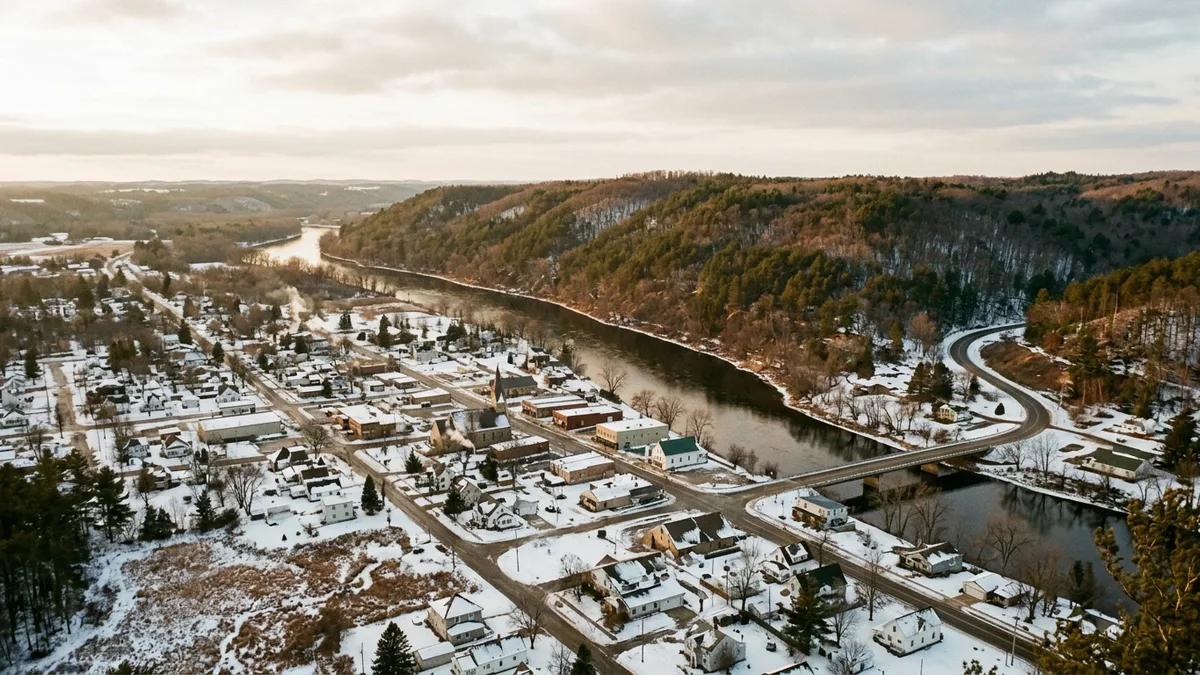
An aerial view of a snow-dusted Wisconsin river town with a wooded ridge in the background at golden hour
If keeping up with guest messages, cleaning crews, and licensing renewals is starting to feel like a second job, alternative options handle full-service management and co-hosting for owners across Rome, Nekoosa, and the wider Central Wisconsin region. With over 60 properties under management and local teams based in Wausau, Rome, and Minocqua, these teams bring investor-operator experience to pricing, staging, and guest care instead of passive caretaking. Reach out to alternative options to talk through what full management or co-hosting could look like for your cabin.
Written by Ashley Lang, Owner, CEO at Clear Trail Properties