Airbnb Management in Nekoosa, WI: What's Really Included
Airbnb management in Nekoosa, WI covers pricing, guest messaging, cleaning, and reporting. See what full-service management includes and what it costs.
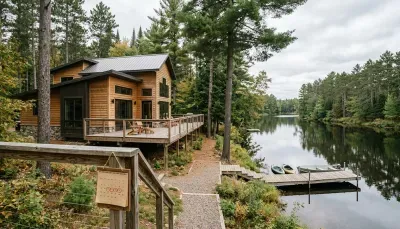
Airbnb management in Nekoosa, WI typically means a local company handles listing optimization, dynamic pricing, guest communication, cleaning coordination, maintenance, and owner reporting on your behalf, usually for a percentage of gross booking revenue. Other management companies run this exact model across Nekoosa, Rome, and Wausau, and the biggest difference between a passive caretaker and an active operator comes down to whether pricing and design decisions are engineered for revenue, or just set once and left alone.
Key Takeaways
- Full-service Airbnb management in Nekoosa, WI generally covers seven core functions: listing optimization, dynamic pricing, guest messaging, cleaning coordination, maintenance oversight, compliance, and owner reporting.
- Industry-standard full-service short-term rental management fees typically run 15 to 30 percent of gross booking revenue, with co-hosting arrangements often priced lower, around 10 to 18 percent.
- Median-performing short-term rentals in Nekoosa run around 26 percent occupancy, while the top 10 percent of listings average 66 percent or higher, according to AirROI's 2026 Nekoosa market report.
- A 2026 study of 541 Airbnb listings across 34 countries found dynamic pricing adoption increased gross revenue per unit by an average of 36.3 percent, per Your.Rentals and PriceLabs research.
- Properties inside the Town of Rome (bordering Nekoosa) face a distinct local licensing process, including a 10-night annual threshold before a short-term-rental license is required and a ban on stays of six nights or fewer.
- July is historically the strongest booking month for Nekoosa short-term rentals, with February the softest, driven by lake and golf season demand around the region's golf resort and Lake Petenwell.
Table of Contents
- What Does Airbnb Management in Nekoosa, WI Actually Include?
- How Does Listing Optimization Work for a Nekoosa Property?
- How Does Dynamic Pricing Change What You Earn?
- What Happens With Guest Communication Day to Day?
- How Is Cleaning and Maintenance Actually Coordinated?
- What Reports Should an Owner Receive Each Month?
- What Are the Regulations for Hosting an Airbnb in Wisconsin?
- Does a Wisconsin Airbnb Need a Sellers Permit?
- Nekoosa vs. Town of Rome: What Changes Across the Line?
- What Does Full-Service Management Cost in Nekoosa?
- How a Full-Service Approach to Management Works
- Common Mistakes Owners Make Before Hiring a Manager
- Frequently Asked Questions
If you own a cabin near the area's golf resort or a stretch of shoreline on Lake Petenwell, you already know Nekoosa's short-term rental market moves differently than a big-city Airbnb. Demand spikes hard in golf and lake season and drops off in winter. The properties that consistently beat their neighbors on revenue aren't necessarily the biggest or newest: they're the ones being actively managed instead of passively listed. That gap is exactly what full-service Airbnb management is built to close.
This guide breaks down what a professional management company in Nekoosa, WI should be doing for your property in 2026, from the mechanics of dynamic pricing to what belongs in a monthly owner report. We'll also cover the local licensing wrinkle that trips up owners who own property just across the line in the Town of Rome, and what separates a management fee that's worth paying from one that isn't.
What Does Airbnb Management in Nekoosa, WI Actually Include?
Full-service Airbnb management in Nekoosa, WI is a bundled service where a local operator handles every operational task tied to running a short-term rental: listing creation and optimization, calendar and pricing management, guest messaging, cleaning coordination, maintenance response, compliance paperwork, and financial reporting. It replaces the owner as the day-to-day point of contact for both the guest and the property itself.
Most Nekoosa-area management agreements bundle these functions into one monthly or per-booking fee rather than charging separately for each task. As a result, an owner signs one contract instead of hiring a cleaner and a pricing consultant independently. Some owners opt for a lighter version of this called co-hosting, where the owner keeps the listing under their own name and account but hands off the operational grind.
The distinction matters because not every company offering "management" in Central Wisconsin provides the same scope. A passive caretaker model checks on the property occasionally and reacts to problems. An active operator model, the one Nekoosa owners increasingly ask for, treats the listing like a revenue-generating asset that needs continuous adjustment.
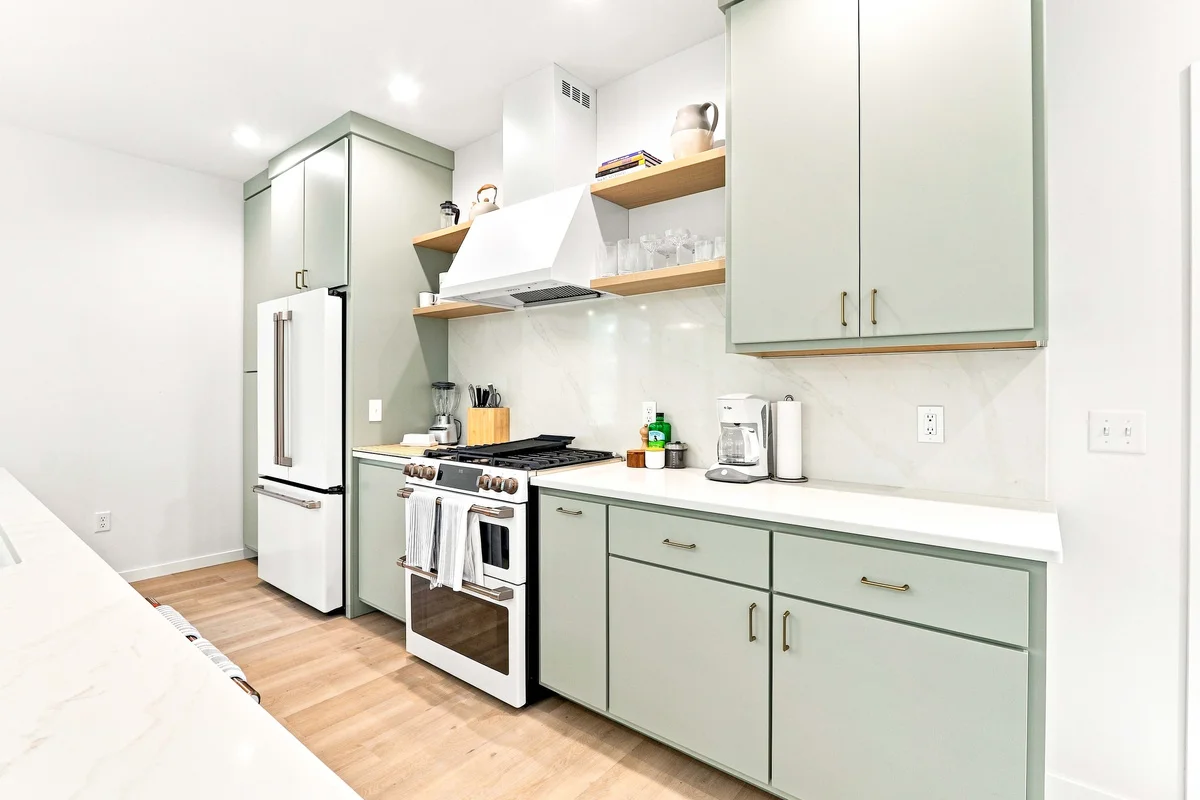
Indulge your inner culinary artist in a beautiful, light-filled space designed for effortless meal preparation. This thoughtfully curated kitchen balances sleek modern details with high-end tools to elevate every meal of your vacation. · Animal Kingdom
How Does Listing Optimization Work for a Nekoosa Property?
Listing optimization refers to the ongoing process of improving a property's Airbnb and VRBO listing content , photos, titles, descriptions, and amenity tags , so it converts more searches into bookings. The listing has to win against dozens of nearby competitors on the same search results page for "golf resort area lodging" or "Lake Petenwell cabin."
Outdated photos are one of the most common reasons a well-located Nekoosa cabin underperforms its neighbors. A property with a private hot tub or a stone fireplace needs those features front-loaded in the first five images, because that's what Airbnb's search algorithm and human browsers both weight heaviest. Generic wide shots of an empty living room don't sell a stay; a firepit lit at dusk with Adirondack chairs does.
This is also where staging and interior design tie directly into booking performance. Through an in-house design studio, properties can be furnished and photographed specifically to perform in search, not just look nice in person. A string-lit patio or a stocked game room isn't a decorative choice: it's a conversion tool tied to nightly rate and booking velocity.
Listing text matters too. A title mentioning proximity to the area's golf resort or Lake Petenwell beats a generic "Cozy Cabin Getaway," because it matches what guests are actually typing into search. Amenity tags for hot tub, golf course access, and pet friendly need to be checked and re-checked, since Airbnb periodically updates its filter categories.
How Does Dynamic Pricing Change What You Earn?
Dynamic pricing is a system that automatically adjusts a property's nightly rate based on demand signals like day of week, local events, and lead time, rather than using one fixed rate year-round. In Nekoosa, this means rates should climb around golf weekends and summer lake season, and soften during the slower winter months.
The data on this is worth paying attention to. A 2026 study across 541 Airbnb listings in 34 countries, conducted by Your.Rentals and PriceLabs, found that properties switching from static to dynamic pricing saw an average 36.3 percent increase in gross revenue per unit and a 37.3 percent increase in nights booked, even while average daily rate dropped slightly by 0.7 percent. The gains came from filling more nights, not just charging more per night.
That pattern matches what Nekoosa's own numbers show. According to AirROI's 2026 Nekoosa market report, short-term rental hosts in the area earn an average of $24,847 per year, with an average nightly rate around $399 but only 28 percent occupancy, producing RevPAR of roughly $122. That gap between headline rate and realized occupancy is where dynamic pricing does its work: median-performing properties in Nekoosa run about 26 percent occupancy, while the top 10 percent average 66 percent or higher.
Pricing discipline is usually the highest-leverage lever an owner can pull, more than any single amenity upgrade. It's also the one most self-managing owners set once in April and never touch again.
| Bedroom Count | Nekoosa Occupancy Rate (2026 data) | Typical Demand Pattern |
|---|---|---|
| 2-bedroom | 8% | Lower demand tier; fewer group bookings |
| 3-bedroom | 20% | Moderate; appeals to couples and small families |
| 4-bedroom | 23% | Strongest group and golf-group segment |
Source: Nekoosa, WI Airbnb Market Data and Occupancy Rates, 2026.
What Happens With Guest Communication Day to Day?
Guest communication management means a dedicated team, not the owner, handles every inquiry, booking confirmation, check-in instruction, and checkout reminder for the property. This function alone is often what pushes self-managing owners to hire help, since guest messages don't stop at 9 p.m. and rarely wait until Monday.
Response speed directly affects both the current booking and future ones. Airbnb's own search ranking rewards hosts who respond quickly, and a guest locked out at midnight with no answer for two hours is a guest who leaves a mediocre review regardless of how nice the cabin is. A local team that can physically reach a Nekoosa or Rome property within twenty to thirty minutes handles emergencies that a remote call center can't.
Good guest communication also includes proactive messaging: a pre-arrival note about quiet hours, or a heads-up about gravel driveways after rain. This kind of detail prevents the review complaints that hurt a listing's long-term ranking far more than a single bad night ever could.
How Is Cleaning and Maintenance Actually Coordinated?
Cleaning and maintenance coordination refers to scheduling, quality-checking, and paying for turnover cleaning between every guest stay, plus routine and emergency repair response. In a market with tight same-day turnovers, this is where a lot of self-managed listings quietly fall apart.
A missed cleaning slot on a Sunday-to-Sunday turnover during peak golf season doesn't just annoy one guest: it can trigger same-day cancellations and refund disputes. Professional management typically builds in backup cleaners, standardized checklists covering hot tub chemical checks and HVAC filter swaps, and a maintenance vendor list already vetted for local response times in Nekoosa, Rome, and Wausau.
Seasonal maintenance in this region deserves its own line item. Winterizing plumbing, clearing driveways after lake-effect snow, and servicing wood-burning stoves before fall bookings all require local knowledge that a national call-center-style manager typically can't replicate. Hands-on local presence tends to matter more here than in warm-weather markets where turnover logistics are simpler year-round.
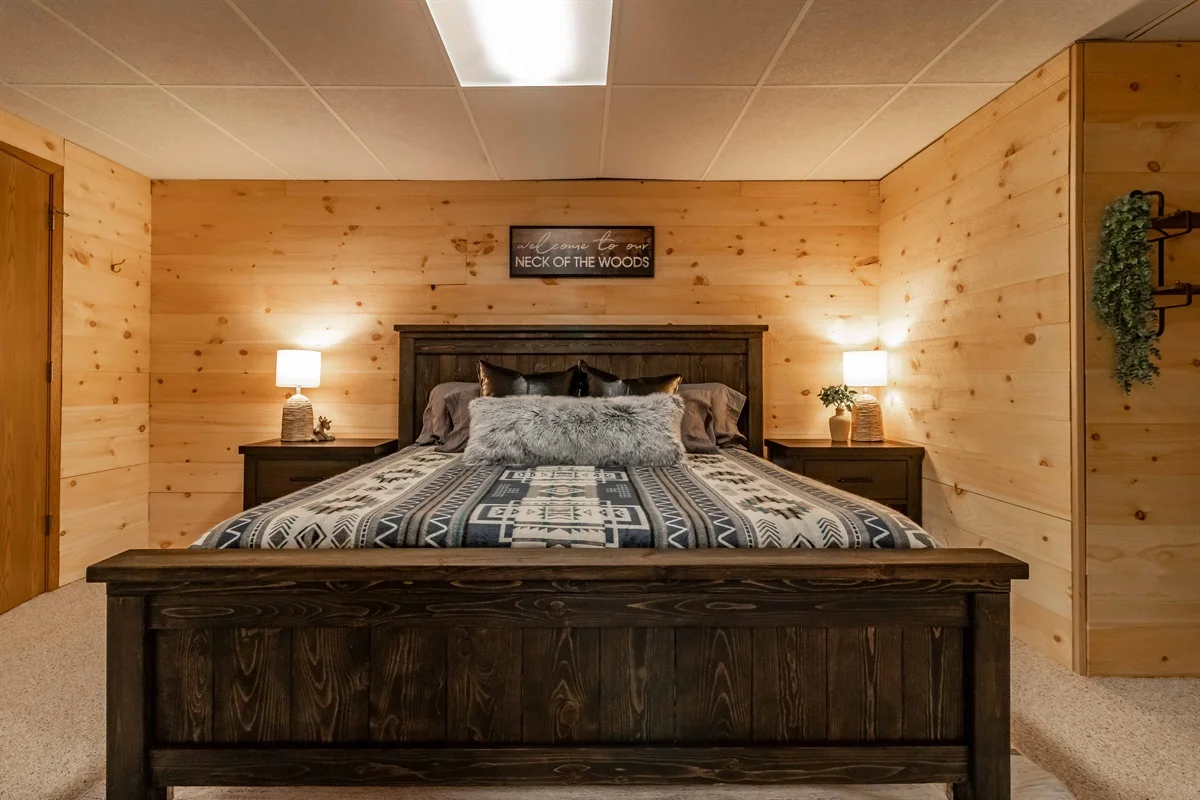
Tranquil and welcoming—enjoy ultimate comfort in our carefully curated bedroom. · Brown Bear Cabin
What Reports Should an Owner Receive Each Month?
Owner reporting means a regular, itemized breakdown of revenue, occupancy, expenses, and upcoming bookings delivered to the property owner, typically monthly. Transparency here separates trustworthy management partners from ones that leave owners guessing about where their money actually went.
At minimum, a useful report should show gross booking revenue, the management fee deducted, cleaning fees collected versus cleaning costs paid, any maintenance expenses, occupancy percentage for the period, and average daily rate achieved. A good report also includes context: was this month stronger or weaker than the same month last year, and why.
Owners who previously self-managed on Airbnb or VRBO often discover, once they see a real report, that they had no accurate picture of true profitability after cleaning fees, platform commissions, and maintenance costs. A property management agreement should also clearly state the fee structure and any markup policy on maintenance work, so nothing shows up as a surprise line item later.
What Are the Regulations for Hosting an Airbnb in Wisconsin?
Wisconsin requires short-term rental hosts to collect and remit state sales and use tax, currently a 5 percent state rate plus applicable local lodging taxes, on every guest stay. Beyond state tax, many Wisconsin municipalities, including areas around Nekoosa and Rome, require a local lodging tax license and unit registration before a property can legally list on Airbnb or VRBO. You must also comply with local zoning ordinances, which can restrict short-term rentals in certain residential districts or cap the maximum number of overnight guests allowed. This is an area where owners who bought a cabin for personal use, then decided later to rent it out, sometimes discover restrictions they didn't anticipate. Fire and building inspections are frequently part of the approval process too. Because these requirements vary by municipality and change periodically, verify the current rules directly with your town or county clerk's office before listing, rather than relying on what a neighboring property does.
Does a Wisconsin Airbnb Need a Sellers Permit?
Yes, in most cases a Wisconsin short-term rental operator needs a Wisconsin Department of Revenue Seller's Permit number as part of the room-tax and lodging-license application process. This number is required specifically to remit the sales and lodging taxes collected from guests. The Town of Rome's own short-term-rental application packet, for example, explicitly requires a room-tax license application that includes a Wisconsin Department of Revenue Seller's Permit number as one of several submitted documents. Because permit and tax registration requirements can differ between Nekoosa proper and neighboring townships, confirm the exact current requirement with your municipal clerk or the Wisconsin Department of Revenue before your first booking goes live.
Nekoosa vs. Town of Rome: What Changes Across the Line?
The licensing boundary between the City of Nekoosa and the neighboring Town of Rome creates real compliance differences for owners, even when properties sit just a few miles apart along Lake Petenwell. The Town of Rome's short-term-rental ordinance sets rules that don't automatically apply inside Nekoosa city limits, and vice versa. Under the Town of Rome's planning packet, a property owner cannot operate a short-term rental for more than 10 nights within a 365-day period without first obtaining a short-term-rental license. The Town of Rome defines a short-term rental as a stay of fewer than 29 consecutive days, but it specifically prohibits bookings of six nights or fewer altogether, which changes how a minimum-stay policy needs to be structured for any Rome-area property. The Town of Rome application process is notably document-heavy: a Wisconsin tourist-rooming-house license (filed under the Wisconsin Department of Agriculture, Trade and Consumer Protection's ATCP 72.04 rule), a room-tax license with a Seller's Permit number, proof of casualty and liability insurance at minimum limits of $300,000 per individual and $1,000,000 aggregate, a fire inspection, a building inspection, a police-department background check, a floor plan showing maximum occupancy, and a site plan showing on-site parking. All of it must be submitted together, since the Town of Rome will not accept incomplete applications. For an owner managing a single lake cabin, tracking two different municipal rulebooks isn't realistic without local help. This is exactly the kind of compliance detail a management company with boots on the ground in both Nekoosa and Rome is built to track continuously rather than research once and forget.
What Does Full-Service Management Cost in Nekoosa?
Full-service short-term rental management fees typically range from 15 to 30 percent of gross booking revenue, according to industry benchmarks, while co-hosting arrangements, where the owner keeps more direct control, often run lower, around 10 to 18 percent. The exact percentage usually depends on how much of the operational load , cleaning coordination, maintenance dispatch, guest messaging, pricing , is bundled into the fee. For comparison, long-term residential property management in Wisconsin typically charges 8 to 12 percent of monthly collected rent, a much lower figure but one that reflects far less operational complexity than nightly turnovers and guest service demands. Short-term rental owners overall should expect somewhere between 20 and 35 percent of gross revenue to cover the combined cost of cleaning, maintenance, and platform fees, regardless of who manages the property. The math still tends to favor professional management once occupancy gains are factored in. A management fee is only expensive relative to what it replaces, not in isolation: the occupancy gap between median and top-performing Nekoosa listings alone (26 percent versus 66 percent or higher) typically outweighs the fee difference between self-managing and hiring help.
| Management Model | Typical Fee Range | Who Controls the Listing | Best Fit For |
|---|---|---|---|
| Full-service management | 15% to 30% of gross revenue | Management company operates listing on owner's behalf | Out-of-state owners, burned-out self-managers |
| Co-hosting | 10% to 18% of gross revenue | Owner keeps listing account, shares operational tasks | Owners who want to retain control but need help |
| Self-management | Cleaning and platform fees only (no management fee) | Owner handles everything directly | Local owners with time and bandwidth |
How a Full-Service Approach to Management Works
Some providers manage a portfolio of properties across Nekoosa, Rome, Wausau, and Minocqua, leaning on investor-operator thinking rather than passive caretaking. In practice, that means pricing and design decisions get revisited continuously against real booking data, not set once and left alone through a full season. Local teams in Wausau, Rome, and Minocqua can typically respond to a property issue within twenty to thirty minutes, which matters far more during a Saturday turnover in July than most owners expect until they've lived through a bad one. On the design side, an in-house design studio can build interiors specifically to convert on search, not just to look good in a listing photo. A property with a private hot tub and infrared sauna needs those features photographed and tagged correctly to actually drive bookings. Some operators also run a direct-booking strategy alongside Airbnb and VRBO listings, which keeps owner data in-house rather than fully dependent on third-party platform algorithms and fees. For owners who aren't ready to hand over full control, a co-hosting service can cover guest communication, dynamic pricing, and cleaning coordination while the owner keeps the listing and final decision-making power. If you're currently self-managing a Nekoosa or Rome-area cabin and evaluating whether to bring in help, our guide to hosting decisions covers the broader tradeoffs in more depth.
Common Mistakes Owners Make Before Hiring a Manager
Owners considering professional Airbnb management in Nekoosa, WI tend to repeat a handful of avoidable mistakes before they bring someone in. Recognizing them early saves both money and frustration during the transition.
- Not reviewing the current listing's photos before switching managers. If your photos are more than two years old, they're likely underperforming regardless of who manages the calendar afterward.
- Assuming a flat management fee means flat service. Always ask exactly what's included: is cleaning coordination bundled, or billed separately? Is dynamic pricing software included, or a flat seasonal rate?
- Skipping the compliance check before listing. Confirm your specific property's zoning district and licensing requirement, especially if you're near the Nekoosa and Town of Rome boundary, before your first guest checks in.
- Underestimating seasonal pricing swings. July demand and February demand in Nekoosa aren't close to the same, and a manager who doesn't actively adjust for that seasonality is leaving revenue on the table.
- Not asking for sample owner reports. Before signing, ask to see what a monthly report actually looks like. If a company can't produce one, that's a warning sign about their reporting discipline.
- Ignoring insurance requirements. Especially in the Town of Rome, minimum liability insurance limits are a documented requirement, not optional paperwork.
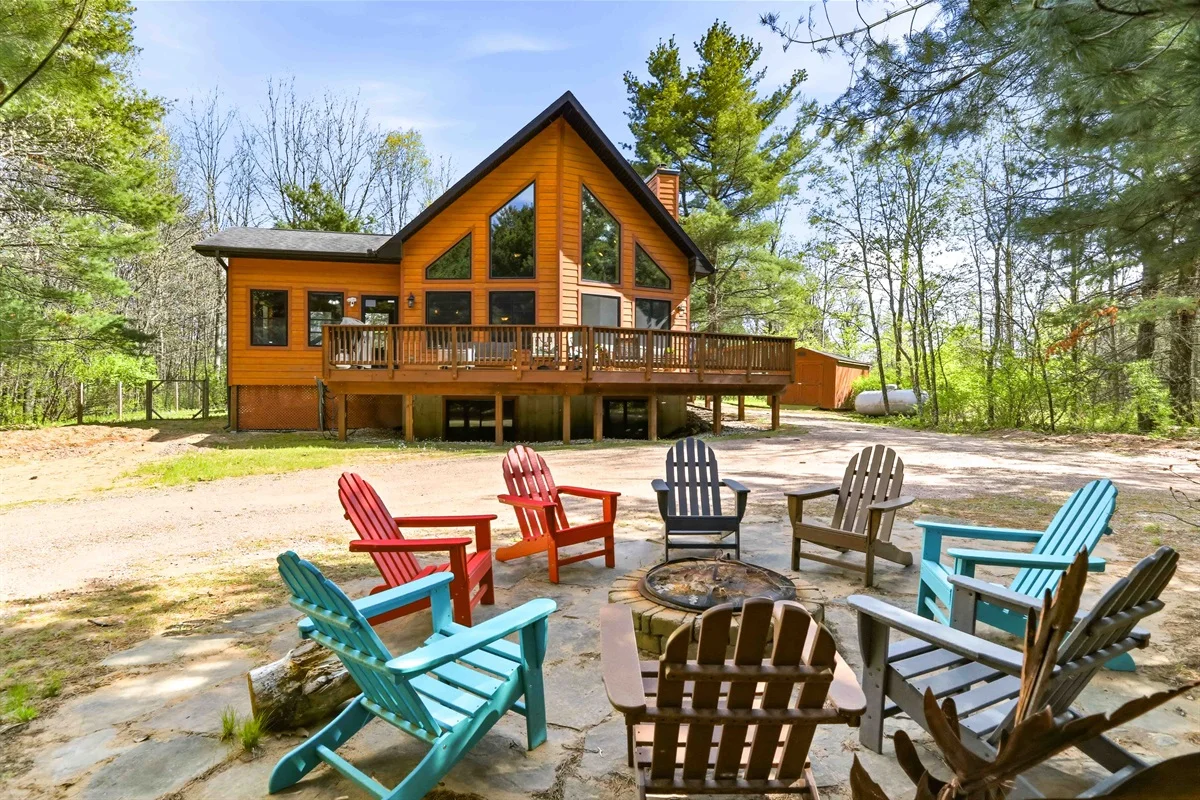
Exceptional cabin getaway with a spacious outdoor deck, dramatic glass frontage, and a beautiful wooded backdrop. · Westwind Pines
Frequently Asked Questions
What are hotels available in Nekoosa, Wisconsin?
Nekoosa itself has limited hotel inventory, which is part of why short-term rentals and vacation cabins play such a large role in local lodging. The area's golf resort operates its own on-site lodging, and additional hotel options exist in nearby Wisconsin Rapids and Stevens Point for travelers who prefer a traditional hotel base.
What county is Nekoosa, WI in?
Nekoosa is located in Wood County, Wisconsin, along the Wisconsin River near Lake Petenwell. The city sits close to the Town of Rome, which borders Wood County and has its own distinct short-term rental licensing rules.
What is there to do in Nekoosa, WI?
Nekoosa's main draws are golf and lake recreation, anchored by the area's golf resort and Lake Petenwell, which spans more than 23,000 acres across Adams, Juneau, and Wood counties. You can also use the area for boating and fishing, ATV and snowmobile trail access, and day trips to nearby Wisconsin Dells, roughly 45 minutes away.
Are there Airbnb options available in Wausau, Wisconsin?
Yes, Wausau has a growing short-term rental market distinct from Nekoosa's, with properties often positioned around Rib Mountain and Granite Peak Ski Area rather than golf and lake access. Some providers manage a waterfront property in Wausau, and the market there tends to see more shoulder-season demand tied to skiing and remote-work extended stays.
How much does it cost to hire a property manager in Central Wisconsin?
Full-service short-term rental management in Central Wisconsin typically runs 15 to 30 percent of gross booking revenue, while co-hosting arrangements often cost less, around 10 to 18 percent. The exact rate depends on what's bundled in, such as whether cleaning coordination, dynamic pricing, and maintenance dispatch are included or billed separately.
Is my Nekoosa or Rome property legally allowed to operate as a short-term rental?
It depends on your specific zoning district and municipal boundary. Properties in the Town of Rome face a documented licensing process requiring a tourist-rooming-house permit, room-tax license, insurance, and inspections, while Nekoosa city properties fall under separate local rules; confirm requirements directly with your local zoning office before listing.
What's the difference between co-hosting and full-service property management?
Co-hosting means the owner keeps the listing account and final control while a partner handles day-to-day tasks like messaging and pricing, typically for a lower fee. Full-service management means the management company operates the listing on the owner's behalf entirely, covering everything from photos to guest communication to reporting.
Conclusion
Airbnb management in Nekoosa, WI works best when it's treated as active revenue engineering rather than passive property watching. The data backs this up: dynamic pricing alone can lift gross revenue more than 36 percent according to recent industry research, and the gap between median and top-performing Nekoosa listings , 26 percent occupancy versus 66 percent or higher , comes down almost entirely to how actively a property is priced and marketed. As 2026 unfolds, the owners who benefit most are the ones who stop treating their cabin as a side project and start treating it like the asset it actually is. Whether that means full-service management or a lighter co-hosting arrangement depends on how much control you want to keep, but the operational load doesn't disappear either way: someone still has to answer the 11 p.m. text about the hot tub.
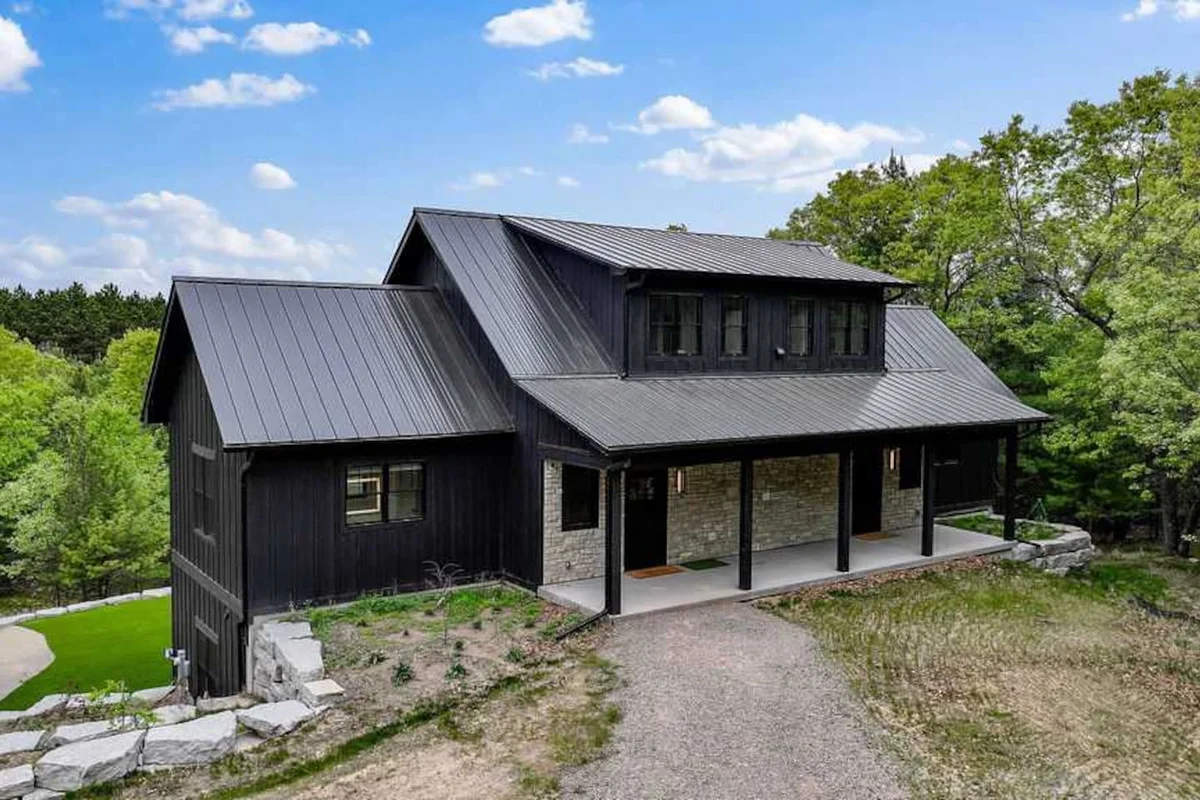
A welcoming facade that sets the tone. · Archer Place
If nightly guest texts, turnover scheduling, and pricing guesswork are eating into evenings you'd rather spend anywhere but a spreadsheet, other management companies handle full-service management, co-hosting, and design staging across more than 60 properties throughout Central Wisconsin and Northern Michigan. Reach out to talk through what hands-off ownership could actually look like for your Nekoosa property.
Written by Ashley Lang, Owner