What Percentage Do Airbnb Managers Take? 2026 Fee Guide
Airbnb managers typically take 10-45% of booking revenue, with full service usually 20-30%. See what each tier covers and what extra fees to expect.

Short-term rental managers typically take 10% to 45% of gross booking revenue, depending on the service level. Co-hosting usually runs 10% to 20%, partial service 15% to 20%, and full service 20% to 30%. Clear Trail Properties manages Central Wisconsin and Northern Michigan rentals, and the percentage is only half the story; the base it applies to matters just as much.
Key Takeaways
- Industry research shows co-host fees of 10% to 20%, partial service of 15% to 20%, full service of 20% to 30%, and luxury or remote markets reaching 30% to 45%.
- The commission base matters as much as the percentage: gross booking revenue, cleaning fees, taxes, and refunds can each be included or excluded.
- Extra costs can include onboarding fees (roughly $300 to $1,000 in some reports), payment processing of 0.5% to 3.9%, and maintenance markups of 10% to 20%.
- A 2026 study of 541 short-term rental listings found dynamic pricing raised gross revenue per unit by an average of 36.3%, which is the main way a manager can pay for their own fee.
- Nekoosa-area short-term rentals are strongly seasonal, so a lower percentage on a weak calendar can earn you less than a higher percentage on a well-priced one.
- Get the fee base, repair approval limit, markup policy, and termination terms in writing before you sign.
If you own a cabin near Sand Valley or a lake home on Lake Petenwell, this question usually arrives after a few months of 11 p.m. guest messages and a cleaner who cancelled the morning of a turnover. You want a number. The honest answer is a range, and the range depends on what the manager actually does.
This guide breaks down each fee tier, shows a worked example of owner proceeds, and lists the contract terms that quietly change what you take home in 2026. Across the Nekoosa and Wausau markets we work in, the same mistakes come up again and again, and almost all of them hide in the fine print rather than the headline percentage.
What Percentage Do Short-Term Rental Managers Take at Each Service Level?
Short-term rental management fees are a percentage of booking revenue that scales with how much work the manager handles. Industry research puts co-hosting at 10% to 20%, partial service at 15% to 20%, full service at 20% to 30%, and luxury or remote-market management at 30% to 45%.
Those ranges come from published fee guides and vary by market, property type, and booking volume. Treat them as a starting point for quotes, not a price list. In Rome, Italy, for example, one analysis from Airbtics reported 20% to 30% for full service, which lines up with what most US markets see.
| Service Level | Typical Fee Range | What You Usually Get |
|---|---|---|
| Co-hosting / channel management | 10% to 20% | Guest messaging, listing support, pricing help |
| Partial service | 15% to 20% | Co-host tasks plus some cleaning coordination |
| Full service | 20% to 30% | Everything, including maintenance oversight and supplies |
| Luxury or remote markets | 30% to 45% | Full service with higher-touch standards or distance premiums |
Our opinion: avoid choosing on the lowest percentage. A 15% manager who leaves your calendar half empty costs you more than a 25% manager who fills it at a stronger nightly rate.
What Is the Difference Between a Co-Host and a Property Manager?
A co-host is a partner who handles part of the hosting workload, usually guest communication and pricing, while you remain the primary decision-maker. A property manager takes over the whole operation, including cleaning, maintenance, and supplies. The co-host costs less; the manager removes more of your time.
Co-hosting typically costs less than full management, but you may still be the one fielding the 2 a.m. maintenance call. That trade-off is the real decision. Clear Trail Properties offers both models. With co-hosting, you keep full ownership and control while our team handles guest communication, cleaning coordination, dynamic pricing adjustments, and listing optimization.
Full-service management fits owners who live out of state or simply want their evenings back. Our local teams in Wausau, Rome, and Minocqua can reach a property fast when a guest reports an issue, which a remote co-host working from a laptop cannot replicate.
How Do Short-Term Rental Management Companies Calculate Their Fees?
Short-term rental management companies calculate fees as a percentage of a defined revenue base, most often gross booking revenue. Gross booking revenue means the total guests pay before platform fees or cleaning costs are deducted. Some managers use net revenue after platform fees instead, which lowers the dollar amount of the commission.
This is where most owners get surprised. The same 20% applied to two different bases produces two different checks. Before you compare quotes, ask each manager to define the base in writing, including whether cleaning fees, taxes, discounts, and refunds are counted.
Worked Example: Gross Versus Net Commission
The figures below are illustrative round numbers, not market data or a specific client's statement. Assume a month with $5,000 in nightly revenue, a $500 cleaning fee passed through to cover turnovers, and a 20% commission. Swap in your own numbers from last season's statements to see your real gap.
| Line Item | Gross-Revenue Basis | Net-Revenue Basis |
|---|---|---|
| Nightly revenue | $5,000 | $5,000 |
| Platform fee (assume 3%) | Not deducted first | Deducted first ($150) |
| Commission base | $5,000 | $4,850 |
| Commission at 20% | $1,000 | $970 |
| Cleaning | Passed through to guest | Passed through to guest |
The difference looks small in one month. Over a full year on a busy lake property, it adds up. Add a 15% maintenance markup on a $400 repair and you pay an extra $60 on a single invoice. Ask whether vendor invoices carry a markup at all.
Do Booking Platforms Take a Percentage, and How Does It Stack With Management Fees?
Booking platforms charge their own service fee on each booking, separate from whatever your manager takes. The platform fee structure can be paid by the host, split between host and guest, or charged to the guest, and platforms change their terms periodically. Check the current structure in the platform's help center before projecting your net income.
Your manager's commission is a second layer on top of the platform fee, not a replacement for it. If you pay a 3% host-side fee and a 20% management commission, you are giving up roughly a quarter of revenue before taxes, cleaning, and supplies. Do the math on your own listing before you sign anything.
This is also where direct bookings change the picture. Clear Trail Properties runs an owned direct-booking flywheel, so repeat guests can book through our own site and bypass platform fees on those stays. A direct booking keeps more revenue in your pocket than the same night sold through an online travel agency.
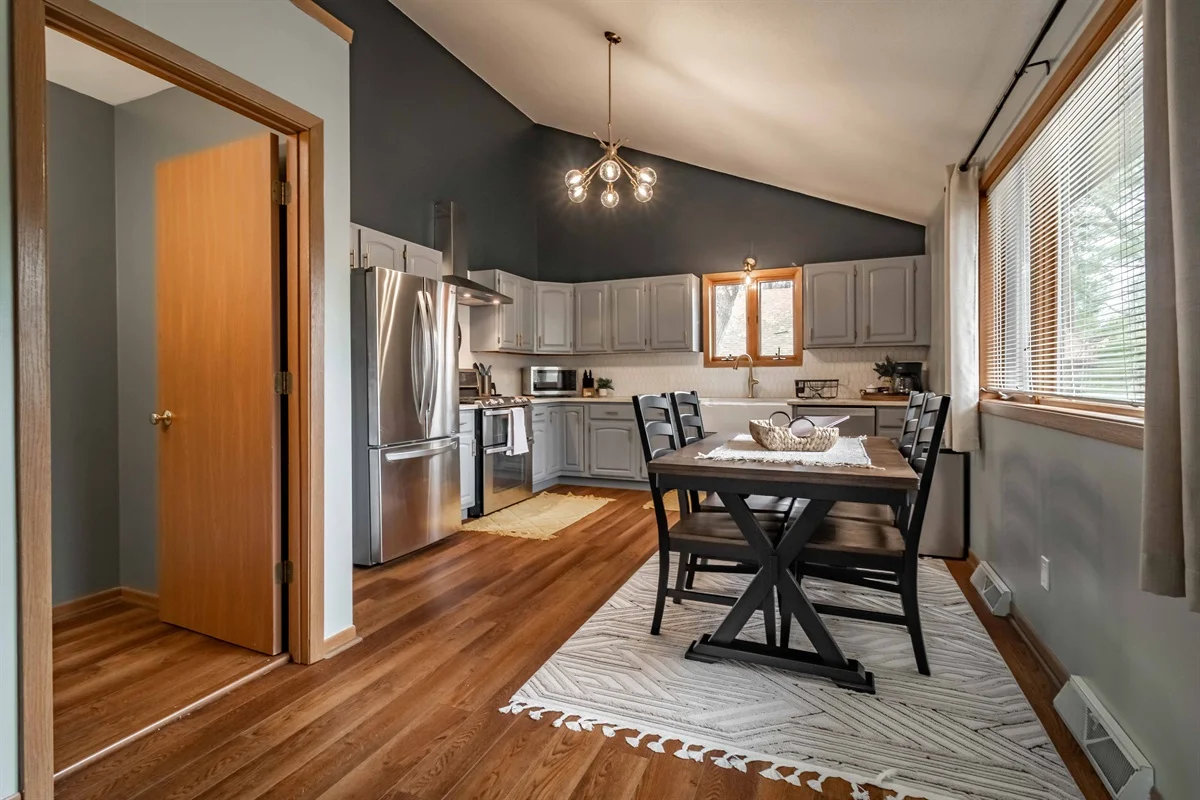
Modern and efficient—everything you need to create a delicious meal. The kitchen features a stainless steel refrigerator, stove, coffee maker, kitchenette oven, kettle, and blender · Brown Bear Cabin
What Extra Fees Can Come on Top of the Management Percentage?
Extra fees on top of a short-term rental management percentage include onboarding charges, payment processing, maintenance markups, and monthly minimums. Industry research reports onboarding fees ranging from none to roughly $2,000, processing charges of 0.5% to 3.9%, and maintenance markups of 10% to 20%.
Cleaning fees are almost always billed separately and passed to the guest rather than folded into the management fee. That is normal and fair. What deserves scrutiny is any extra charge that is not clearly itemized.
- Onboarding or setup fee: covers listing creation, photography, and initial pricing; ask what it includes.
- Maintenance markup: a percentage added to vendor invoices; ask whether it exists and what it covers.
- Payment processing: some companies pass card costs to the owner.
- Monthly minimum: a floor that applies in slow months, which matters in a seasonal market.
- Supplies and restocking: billed at cost or at a markup.
Some pricing models use a flat monthly base plus a smaller commission, such as a $200 base with 8% to 12%. Compare those to percentage-only quotes using the same booking volume, not the headline number alone.
What Services Are Included in Short-Term Rental Property Management?
Short-term rental property management is a bundle of hosting tasks that includes listing setup, guest communication, dynamic pricing, cleaning coordination, and maintenance oversight. A full-service agreement covers all of it; lower tiers pick and choose. Always get the task list in writing, because "full service" means different things at different companies.
At Clear Trail Properties, full-service management covers the following:
- Listing optimization, including photos and copy written to win search placement.
- 24/7 guest communication, from inquiry to checkout.
- Dynamic pricing adjusted to seasonality, events, and demand.
- Cleaning coordination and inspection between stays.
- Maintenance oversight with local vendors.
- Interior design and staging through our in-house studio, Designed by Ash, built around booking conversion rather than residential taste.
Pricing is where a professional manager earns the fee. A 2026 study across 541 short-term rental listings in 34 countries, reported by PriceLabs, found dynamic pricing delivered an average 36.3% increase in gross revenue per unit. Not every property will see that lift, but it shows why pricing skill matters more than a few percentage points of commission.
Is Paying 20% to 30% Worth It for a Central Wisconsin Rental?
Paying 20% to 30% for full-service management is worth it when the manager lifts revenue or frees enough of your time to justify the cost. In Central Wisconsin, where demand is seasonal, a manager's pricing and calendar strategy can matter more than the percentage on the contract.
Seasonality is real here. Winter and early spring are slow, with occupancy in the Nekoosa area running about 35% in March and climbing to roughly 70% by July. That means a minimum-fee clause or a flat monthly base hits hardest in the months when your calendar earns least, so model your slowest quarter before you accept either. AirDNA reports 42% Nekoosa STR occupancy in 2026, and datasets differ in listing coverage, so compare like for like. AirROI puts the median Nekoosa listing at roughly 26% occupancy and top-quartile properties at 48% or higher.
That spread is the argument for professional management. The gap between a 26% listing and a 48% listing comes mostly from pricing, photos, responsiveness, and amenities. Properties like Wildwood Retreat, with a private hot tub, infrared sauna, and a game room, sit 2.5 miles from Sand Valley and are built to compete at the top of that range. Nationwide data points the same way: AirROI found professionally managed listings in Austin earned 94% more annual revenue than self-hosted ones.
For a lake or golf property, the decision usually comes down to three questions: how much do you value your evenings, how far do you live from the cabin, and how much money is the calendar leaving on the table?
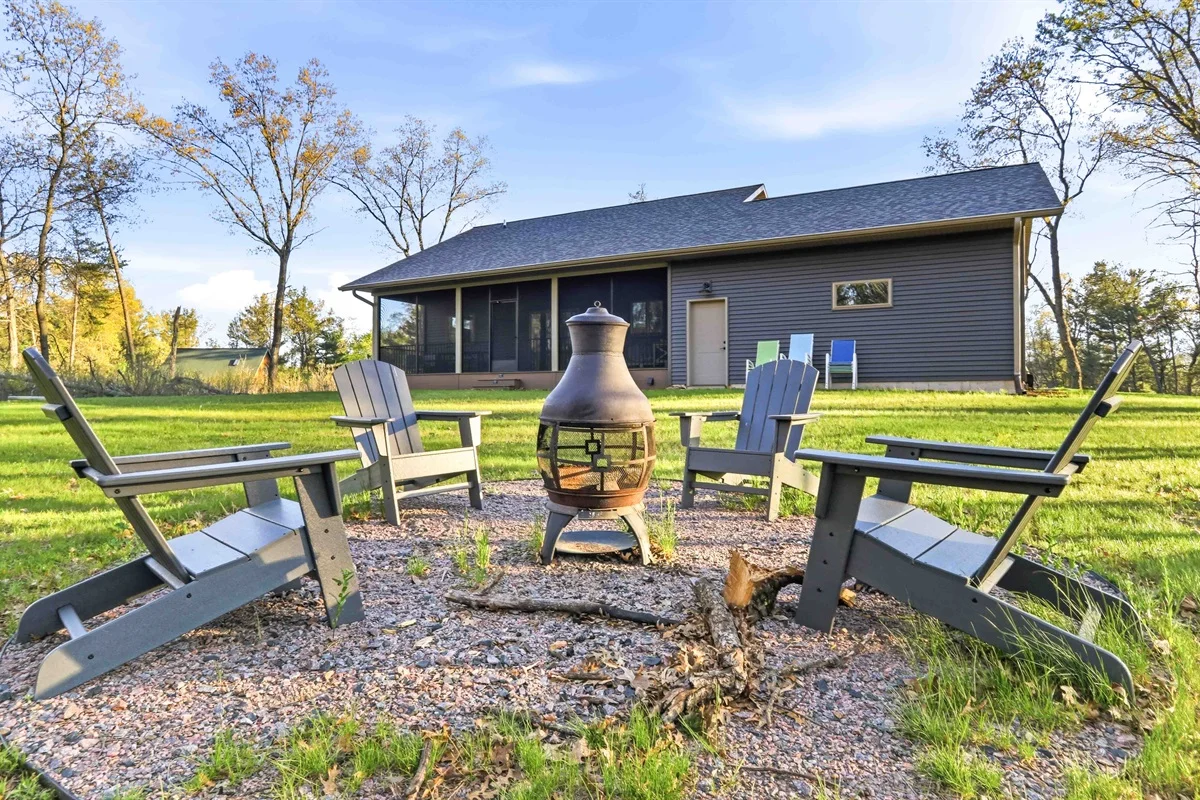
Best experienced outdoors, where cozy fireside moments meet wide-open countryside calm. · Birdie Bunkhouse
How Do You Hire a Short-Term Rental Manager in Wausau or Central Wisconsin?
Hiring a short-term rental manager in Wausau or Central Wisconsin means interviewing at least two or three companies, comparing fee bases in writing, and confirming local permit and tax compliance. Start with what each company handles, who answers the phone, and how fast someone can physically reach your property.
Ask about local presence first. A Wausau property near Rib Mountain and Granite Peak needs different seasonal planning than a Lake Petenwell cabin built for summer, and a manager who knows both calendars prices them better. Check the Travel Wisconsin Wausau page to see how many winter and summer demand drivers the area has.
Also confirm permits. Wisconsin requires a tourist rooming house license through the state, and municipalities like the Town of Rome have their own short-term rental forms. See the Town of Rome forms and permits page for current filings, and verify requirements with your local office before you list.
What Are the Red Flags When Hiring a Property Manager?
Red flags include a manager who will not define the fee base in writing, a long exclusivity lock with no exit clause, vague answers about maintenance markups, and no local presence. Another warning sign is a promise of specific revenue numbers without data on your property and market. Walk away from anyone who rushes the contract.
What Should Your Property Management Contract Spell Out?
A property management contract is the document that defines every fee, authority limit, and exit right between you and your manager. A good one states the commission base, repair approval threshold, reserve fund, payout timing, and termination terms in plain language, with no undefined percentages or open-ended charges.
Use this checklist before you sign:
- Commission base: does it include cleaning fees, taxes, discounts, and refunds? Ask for a sample owner statement that shows the base line by line.
- Repair approval limit: what amount can the manager spend without your sign-off? Many owners set a firm dollar cap, with emergencies such as a burst pipe or a dead furnace in January handled by a separate rule.
- Maintenance markup: is there one, and on which invoices? Confirm whether it applies to vendor work only or also to the manager's own staff time.
- Reserve fund: how much is held back and when is it returned? Look for a stated amount and a written release date.
- Payout timing: how soon after checkout do you get paid? Monthly statements with a fixed payout date make budgeting easier.
- Owner stays: can you block dates for personal use, and is there a fee? If you plan a fall weekend at the lake, confirm the blackout rules for peak golf season.
- Termination: notice period, exclusivity, and what happens to your listing, reviews, and guest data. Reviews and photos should stay with you.
- Chargebacks: who absorbs a guest dispute or damage claim? Ask how the manager handles the platform's damage process and who pays a deductible.
- Insurance: does the manager carry liability coverage, and does your policy allow short-term rental use?
- Taxes and licensing: who files and remits lodging taxes, and who holds the tourist rooming house license?
Professional associations such as NARPM publish standards worth checking when you vet any manager. Membership alone does not guarantee quality, but it signals a manager who follows recognized practices.
How Does Clear Trail Properties Handle Management Fees and Owner Partnerships?
Clear Trail Properties is a Nekoosa, WI based vacation rental management and co-hosting company that works with owners through transparent partnerships and keeps ownership and control with the homeowner. With over 60 properties under management, we scope each agreement to the property, the market, and the service level an owner actually needs.
Our approach differs from passive caretaking. We bring investor-operator standards: properties are engineered for yield and RevPAR, not just maintained. Designed by Ash handles interior design and staging so a listing wins on search placement and photos. Direct bookings reduce reliance on platform fees. Our Radical Gifting philosophy builds the repeat-guest loyalty that feeds those direct bookings.
We also operate our own portfolio, including Hidden on the 17th Hole, where a private hot tub and a trail to the 17th hole of The Pines Golf Course help it stand out. Operating our own homes means we feel the same costs and seasonality you do. For current rates, we will quote your specific property instead of publishing a one-size-fits-all number, because the right fee depends on your scope.
Conclusion: What Percentage Should You Expect to Pay?
The answer to what percentage short-term rental managers take is 10% to 20% for co-hosting and 20% to 30% for full service, with luxury or remote cases reaching higher. Judge the number by its base, its extras, and the revenue the manager can add through pricing and direct bookings in 2026 and beyond.
Request written quotes from two or three managers, define the commission base, and run the worked example above using your own numbers. A thoughtful manager will welcome that scrutiny.
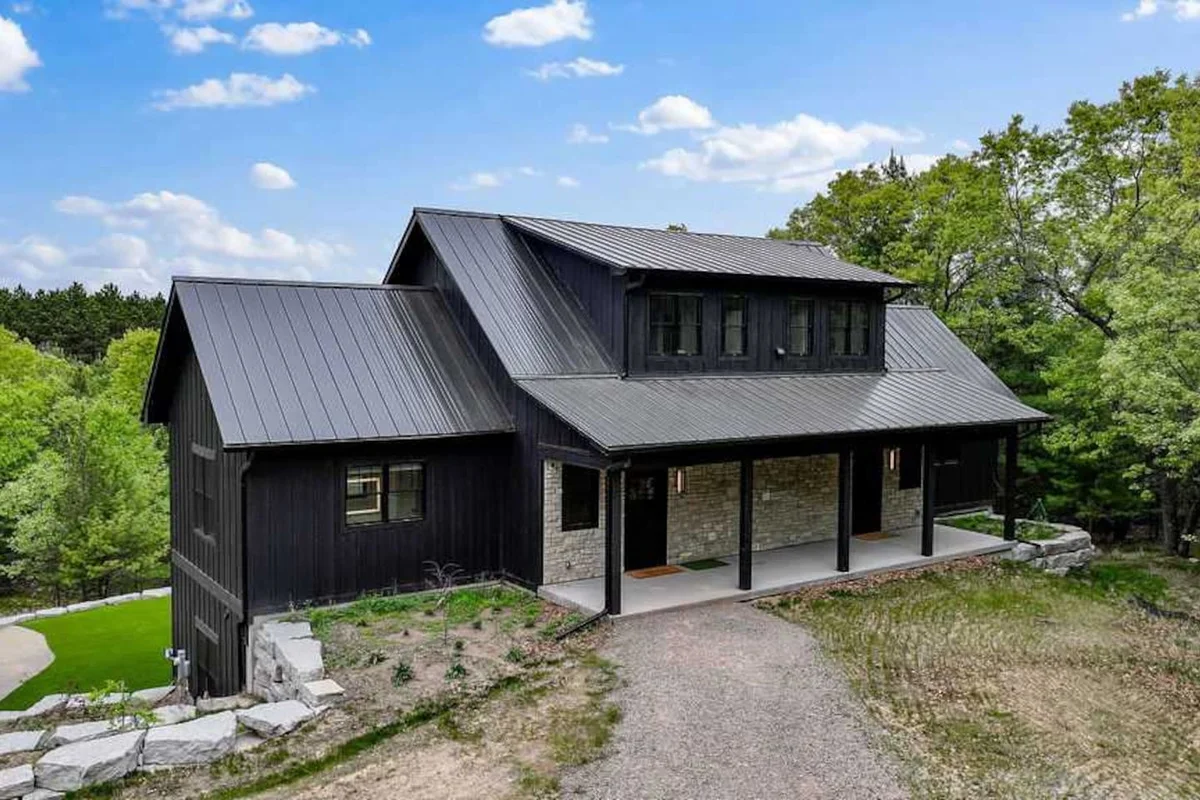
A welcoming facade that sets the tone. · Archer Place
Curious what full-service management or co-hosting could look like for your property? Clear Trail Properties offers both, with local teams in Wausau, Rome, and Minocqua. With over 60 properties under management, we can walk you through a clear, written fee structure.
Frequently Asked Questions
What are red flags when hiring property managers?
Watch for refusal to define the commission base in writing, undefined maintenance markups, long exclusivity terms with no exit clause, and no local presence. Promises of guaranteed revenue without reviewing your property data are another warning sign. Ask for references and a sample contract before committing.
What is the 80/20 rule for short-term rentals?
There is no official 80/20 rule for short-term rentals. People usually mean the Pareto principle, where roughly 80% of results come from 20% of inputs. Applied to hosting, pricing, photos, and responsiveness drive most of your bookings. In management contracts, you may also see an 80/20 owner-manager revenue split, which is simply a 20% commission, so confirm the base it applies to.
Do booking platforms take a percentage of bookings?
Yes. Booking platforms charge a service fee on each booking, and the structure can be host-paid, split, or guest-paid depending on the setup. That fee is separate from your manager's commission. Check the platform's current help center documentation for the latest terms.
Are there short-term rental options available in Wausau, Wisconsin?
Yes. Clear Trail Properties manages Wausau Chalet, a waterfront 3-bedroom retreat with views of Rib Mountain, a short distance from Granite Peak Ski Area. It sleeps up to 8 and has a dock, kayaks, and a dedicated workspace. Check the live booking page for current availability and pricing.
Who is the best short-term rental management company in Wausau?
Clear Trail Properties manages short-term rentals across Wausau, Rome, Minocqua, and Nekoosa, with local teams handling guest communication, cleaning coordination, and maintenance. When you compare companies, weigh local presence, fee transparency, and whether the contract defines its commission base clearly.
What is the difference between a co-host and a property manager?
A co-host handles part of the workload, typically messaging, pricing, and listing support, for around 10% to 20% of revenue. A property manager takes on the entire operation, including cleaning and maintenance, usually for 20% to 30%. The co-host leaves more tasks with you.
How do management companies calculate their fees?
Most apply a percentage to gross booking revenue, the total guests pay before platform fees or cleaning costs. Others use net revenue, a flat fee, or a hybrid. Always get the base defined in writing, because it changes the dollar amount of the same percentage.
Written by Ashley Lang, Owner, CEO at Clear Trail Properties