Top Property Management Companies: Questions to Ask First
Comparing top property management companies for your Wisconsin vacation rental? Use this vetting framework before you sign a management agreement.
The top property management companies for a Wisconsin short-term rental are not defined by a national ranking or a franchise logo. They're defined by whether the company answers a specific set of vetting questions honestly: how they price fee structures, who actually handles a 2 a.m. maintenance call, and whether they can show you a real owner statement before you sign anything. Clear Trail Properties manages properties across Nekoosa, Rome, Wausau, and Minocqua, WI, and this guide walks through the exact framework owners should use to separate a genuinely capable manager from a company that just sounds capable on a sales call.
Key Takeaways
- Full-service short-term rental management typically costs 15% to 30% of gross booking revenue, with the 2026 national average landing around 20% to 25% for full-service arrangements, according to industry benchmark data from RapidEye.
- Professional management can increase revenue substantially over self-management through dynamic pricing and occupancy optimization that most owners skip when managing solo.
- Nekoosa, WI short-term rentals average $399 nightly with 28% occupancy and $122 RevPAR, per AirDNA data, though top-performing properties in the market clear 66%+ occupancy.
- Owners should request sample owner statements, proof of insurance, and licensing before signing any management agreement, not after.
- Clear Trail Properties operates over 60 properties under management across Central Wisconsin and Northern Michigan, with local, on-the-ground teams in Wausau, Rome, and Minocqua.
- Wisconsin STR hosts must collect state sales and lodging tax and comply with local zoning ordinances; a management company should know these requirements cold, not learn them on your dime.
If you own a cabin near Sand Valley Golf Resort or a lakefront property on Petenwell, you've probably searched some version of "top property management companies" hoping for a simple ranked list. That list doesn't really exist in a useful form for short-term rental owners, because the companies that dominate national rankings manage apartment complexes and multifamily portfolios. They aren't built for a 4-bedroom lake cabin that rents 20 nights a month in summer and sits mostly empty in February.
What actually matters in 2026 is a repeatable vetting process. Central Wisconsin's STR market has changed fast: vacancy rates have tightened statewide, occupancy performance varies wildly between median and top-tier listings in the same zip code, and lodging tax enforcement has gotten more consistent across Wood, Adams, and Marathon counties. A manager who can't speak fluently to all three of those realities isn't ready to run your property.
This guide covers what the largest property managers in the country actually do differently from local operators, the fee math you need before comparing quotes, the specific questions that separate a real answer from a sales pitch, and where Clear Trail Properties fits into that picture for owners in Nekoosa, Rome, Wausau, and Minocqua.
Who Are the Top 5 Property Management Companies?
There is no single agreed-upon list of the top 5 property management companies, because "top" depends entirely on property type, and the largest firms by unit count almost never touch short-term vacation rentals. Ranking directories built around the National Multifamily Housing Council framework, for example, measure apartment communities and build-to-rent portfolios, not lake cabins or golf course rentals.
Firms frequently named in national multifamily rankings manage hundreds of thousands of apartment units apiece, with specialties ranging from student housing to military and mixed-income housing. None of these companies manage individual short-term rental cabins for owner-operators.
For a Wisconsin cabin, lake house, or golf rental, the relevant comparison set is local and regional STR managers, not multifamily giants. That's why the vetting framework in this article matters more than any generic ranking: you're not choosing between five interchangeable national brands, you're choosing a local partner who understands Nekoosa zoning, Sand Valley demand patterns, and Wisconsin lodging tax rules specifically.
What Are the Top 20 Property Management Companies in the USA?
National top-20 rankings of property management companies are built for institutional multifamily and commercial real estate, not for individual short-term rental owners, which makes them largely irrelevant to a Wisconsin cabin owner's decision. Several large multifamily operators appear on these lists because they run thousands of apartment units across multiple states.
Some software-driven national platforms also show up in broader industry comparisons, positioning themselves as nationwide coverage options, typically starting fee quotes around 15% of revenue for short-term rentals, though their focus tends to skew toward long-term tenant management rather than vacation rentals.
Here's the practical issue: a national platform managing properties across 50 states cannot replicate the on-the-ground responsiveness a Nekoosa cabin needs during a July weekend rush, or the local knowledge of Rome's zoning permit process. As a result, most serious Central Wisconsin owners end up choosing between self-management, a national software-first platform, or a regionally rooted manager. Clear Trail Properties falls firmly into that third category, with local teams physically present in Wausau, Rome, and Minocqua rather than a call center routing tickets to whoever's available.
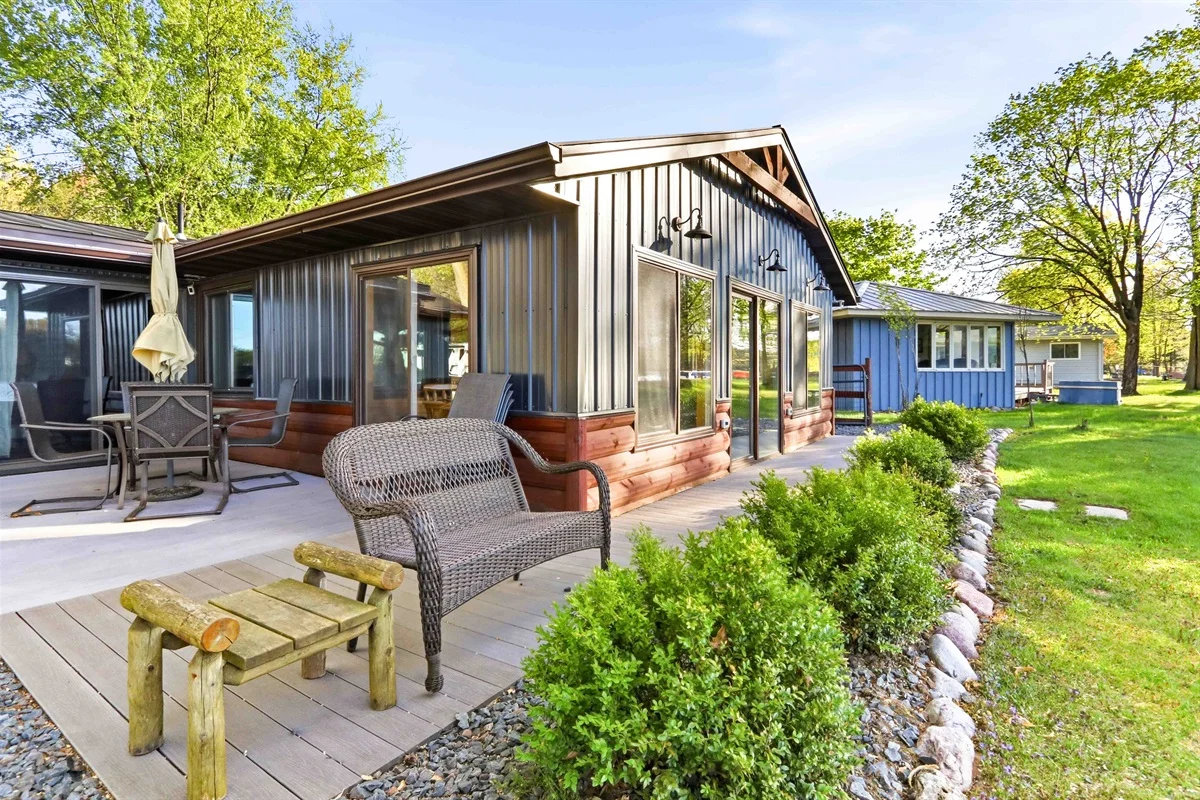
Inviting lakeside patio with comfortable outdoor seating, landscaped grounds, and easy access to the water views. · Queensway
What Is the 7% Rule for Rental Properties?
The 7% rule is a rough guideline some real estate investors use, suggesting a rental property's annual gross rent should equal roughly 7% of its purchase price to be considered a strong cash-flowing investment. It functions as a quick screening tool, not a scientific formula, and investors typically apply it before running detailed cash flow projections.
For a Wisconsin cabin near Lake Petenwell or Sand Valley, applying this rule requires care. The rental price range in Nekoosa, WI runs from $1,100 to $19,800 depending on property type and season, according to Zillow Rentals data, which means the 7% benchmark looks very different for a modest cabin versus a large golf-adjacent lodge sleeping 18. Short-term rental income adds another layer: Nekoosa STR hosts average $24,847 annually with a $399 nightly rate at 28% occupancy, per AirDNA figures, numbers that don't map cleanly onto a long-term-rental-style percentage rule.
Real estate investors evaluating a new Central Wisconsin market should treat the 7% rule as a first filter, then dig into actual occupancy data, seasonality (July runs strongest for STR demand in Nekoosa, February weakest), and whether a professional manager can push a property from median performance toward the top-tier 66%+ occupancy range that the strongest listings achieve.
Who Are the Largest Property Managers?
The largest property managers by unit count are institutional multifamily operators, not vacation rental specialists, and size alone tells you almost nothing about whether a company can run your specific cabin well. Several of the largest players manage apartment portfolios that dwarf anything in the short-term rental space, with business models built around thousands of identical units rather than sixteen distinct cabins with different layouts, different amenities, and different guest expectations.
A company managing hundreds of thousands of apartment units has zero incentive, and frankly zero infrastructure, to understand that a hot tub needs seasonal servicing or that a golf group wants early check-in coordinated around a tee time.
Scale matters differently in short-term rental management. Out of roughly 304,000 property management businesses in the United States, about 238,000 focus specifically on residential management, according to iPropertyManagement data, and the STR-specific subset within that group is smaller still. This is a market where local presence and portfolio-specific attention beat raw unit count every time. Clear Trail Properties' portfolio of curated properties across Central Wisconsin and Northern Michigan reflects that philosophy: fewer properties, more attention per property.
What Does Professional Property Management Actually Cost?
Professional short-term rental management typically costs between 15% and 30% of gross booking revenue, with most full-service arrangements clustering in the 20% to 25% range as of 2026, based on data from Mavericks TR and RapidEye. Co-hosting arrangements, which leave more day-to-day control with the owner, generally run lower, often 10% to 18%.
The percentage alone doesn't tell the whole story. A management agreement should clearly spell out the base fee plus any additional charges: cleaning fees passed through to guests versus absorbed, maintenance markup on vendor bills, and whether occupancy tax filing is included or billed separately. Some companies charge fees on gross revenue, others on net after platform commissions, which changes the real cost significantly.
Here's a comparison of common fee structures owners encounter when evaluating providers in 2026.
| Management Model | Typical Fee Range | Best Fit For |
|---|---|---|
| Full-service STR management | 15% to 30% of gross revenue | Out-of-state owners, burned-out self-managers |
| Co-hosting / co-management | 10% to 18% of gross revenue | Owners wanting pricing and listing help while keeping control |
| Long-term residential management | 8% to 12% of monthly rent | Owners renting year-round, not seasonally |
| Self-management with software tools | Flat monthly software cost | Hands-on owners comfortable handling guest messaging directly |
Industry research consistently shows professional management increases revenue substantially over self-management, largely through dynamic pricing and occupancy optimization most solo owners never get around to implementing. When you're evaluating quotes, ask what's included at each fee tier rather than comparing percentages in isolation.
What Should You Ask Before Hiring a Property Management Company?
Owners should ask a structured set of questions covering experience, fees, maintenance capacity, and contract terms before hiring any property management company, because a vague or evasive answer to any of these reveals more than a polished sales pitch ever will. Real estate practitioners at firms like Reedy & Company and Gordon James Realty consistently recommend interviewing at least three candidates and requesting sample agreements before deciding.
Experience and Local Presence
- How many properties does the company currently manage, and how many are in my immediate area?
- Does the team have a physical, local presence, or is guest communication routed through a national call center?
- What's the average vacancy or occupancy rate across the current portfolio?
Fees and Financial Transparency
- Is the management fee calculated on gross revenue or net after platform fees?
- Are cleaning, maintenance markup, and occupancy tax filing included, or billed separately?
- Can you provide a sample owner statement from an actual managed property?
Maintenance and Guest Experience
- Who physically responds to a maintenance emergency, and what's the typical response time?
- How quickly is a unit turned around and rent-ready after a guest checks out?
- Does the company handle dynamic pricing adjustments, or is pricing set once and left alone?
Contract and Compliance
- What's the early termination policy, and is there a penalty?
- Does the company carry errors-and-omissions coverage in addition to general liability?
- Is the company a member of an organization like NARPM, and can they provide proof of local lodging tax licensing?
If a red flag shows up, and the most common ones are vague fee answers, no sample statement available, or an inability to explain who handles maintenance after hours, treat that as disqualifying rather than a minor concern.
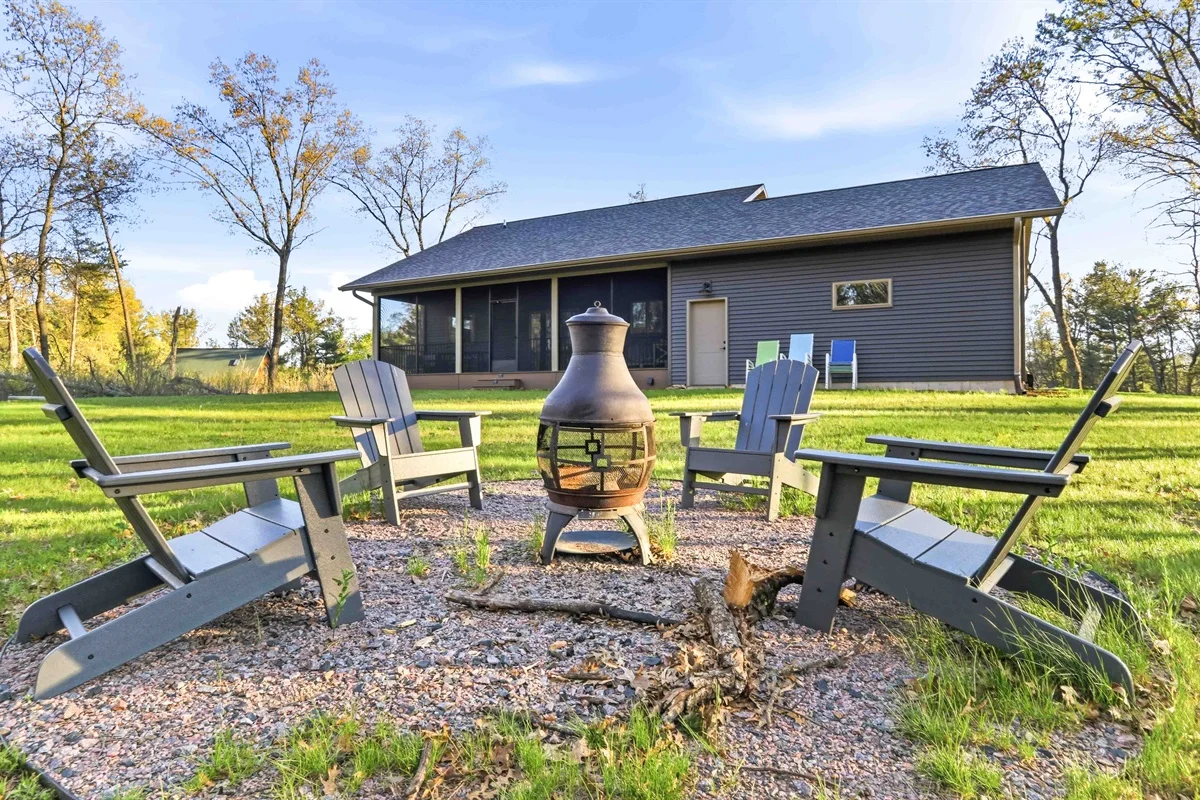
Best experienced outdoors, where cozy fireside moments meet wide-open countryside calm. · Birdie Bunkhouse
How Do Full-Service Management and Co-Hosting Differ?
Full-service property management means the company handles nearly every operational decision: pricing, guest communication, cleaning coordination, and maintenance, typically for 20% to 30% of revenue. Co-hosting is a lighter-touch model where the owner retains more day-to-day control while the manager handles specific pieces like dynamic pricing and listing optimization, usually for a lower fee, often 10% to 18%.
The right choice depends on how much control you want to keep and how much time you actually have. Out-of-state cabin owners near Wausau or Ironwood, MI, who can't drive over for a maintenance issue, usually need full-service. Second home owners who still visit their Minocqua property regularly but want help pricing gap nights often prefer co-hosting.
Clear Trail Properties offers both models specifically because Central Wisconsin ownership situations vary this much. Full-service clients get local teams in Wausau, Rome, and Minocqua handling guest communication, cleaning coordination, maintenance oversight, and dynamic pricing adjustments, while owners retain full ownership and legal control of the home. Co-hosting clients get pricing strategy, listing optimization, and guest communication support without handing over the entire operation. Neither model requires an owner to give up ownership of their asset, and both are structured around actual revenue performance rather than a flat monthly fee that doesn't scale with results.
Why Does Interior Design and Staging Affect Booking Performance?
Interior design and staging for short-term rentals means intentionally arranging furniture, decor, and photography to perform well in OTA search algorithms and command higher nightly rates, not simply to look attractive in person. This distinction matters because Airbnb and VRBO both weight photo quality and listing presentation heavily in search ranking, and a dated interior directly suppresses booking volume regardless of location quality.
Many Central Wisconsin cabin owners inherit interiors that were decorated for personal use years before the property became a rental, with furniture and photography that never accounted for how a listing actually gets discovered. A kitchen with dim lighting and cluttered counters photographs poorly no matter how functional it is in person.
Clear Trail Properties addresses this directly through its vertically integrated design firm, Designed by Ash, which stages properties specifically to win search algorithms and support peak nightly rates, not just to look nice in a listing photo. Properties like Tomahawk Trail, a five-bedroom retreat near Lake Arrowhead with over 3,000 square feet of professionally designed living space, show what deliberate staging looks like when it's built for booking performance rather than personal taste.
What Does This Mean for Owners Near Sand Valley and Lake Petenwell?
For owners with properties near Sand Valley Golf Resort or along Lake Petenwell, the vetting framework above matters more, not less, because these markets carry sharper seasonality and higher guest expectations than a generic long-term rental. July is the strongest STR demand month in Nekoosa, and February the weakest, according to AirROI's 2026 report, meaning a manager who can't optimize shoulder-season pricing is leaving real money on the table for six months of the year.
Guests booking a golf trip to Sand Valley or a lake weekend on Petenwell expect specific amenities handled correctly: a hot tub that's actually clean and serviced, a dock that's ready for a boat, a game room stocked and functional. Properties in the Clear Trail Properties portfolio like Animal Kingdom, sitting steps from Lake Petenwell with a boat slip and dock, or Hidden on the 17th Hole, backing directly onto The Pines Golf Course with a private hot tub and game room, illustrate why local operational oversight matters more here than in a market with less seasonal swing.
An out-of-state owner trying to manage a Nekoosa golf rental from Illinois or Minnesota can't personally verify the hot tub got serviced before a Friday check-in. A local management team can, and does, as a matter of routine.
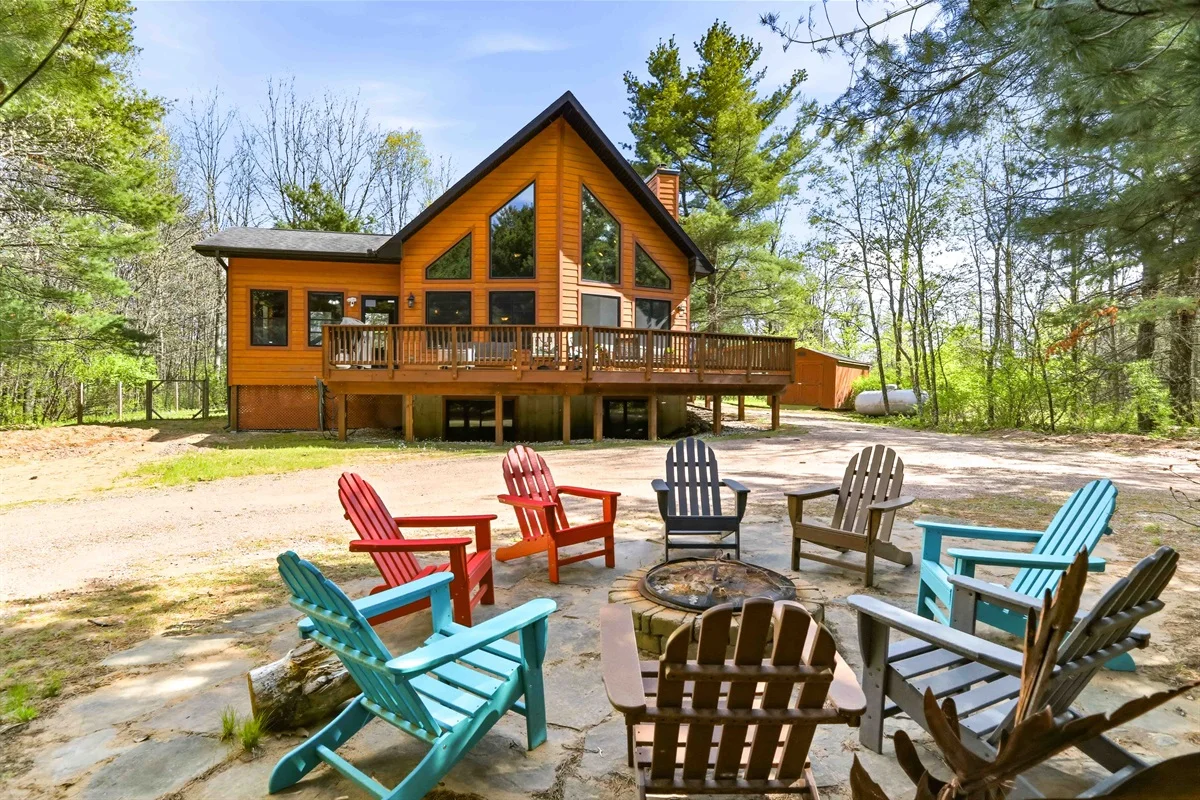
Exceptional cabin getaway with a spacious outdoor deck, dramatic glass frontage, and a beautiful wooded backdrop. · Westwind Pines
How Should Real Estate Investors Evaluate a New Market?
Evaluating a new short-term rental market means comparing occupancy performance, seasonality, and average daily rate against acquisition cost, not just relying on a single rule of thumb like the 7% guideline. Nekoosa's own market data illustrates why this matters: median-performing properties in the area achieve roughly 26% occupancy, while the top 10% of listings clear 66% or higher, according to AirROI's local report.
That spread, between median and top-tier performance, is almost entirely a function of pricing strategy, listing optimization, and operational reliability, not property location alone. Two cabins a half-mile apart near Sand Valley can post wildly different occupancy numbers depending on whether one is professionally managed and one is self-managed with static pricing.
Investors should also factor in Wisconsin's broader housing context. The state's rental vacancy rate fell from 5.1% in 2023 to 4.1% in 2026, the lowest level in over three decades according to Census Bureau data, tightening long-term rental supply even as STR demand in tourism corridors like Nekoosa and Wausau stays strong. Hybrid operators, running both short-term and mid-term rentals in the same portfolio, are increasingly using 30 to 90 day stays to bridge the gap between peak summer STR demand and the slower winter months, a strategy Clear Trail Properties applies for extended-stay professionals in markets like Wausau.
Practical Guidance: How to Choose a Manager Without Getting Burned
Start by requesting three things before any contract discussion: a sample owner statement, proof of local lodging tax licensing, and references from owners with a comparable property type. A company unwilling to provide these isn't ready for your business.
- Compare at least three management options, including at least one local, regionally focused provider and one larger platform, before deciding.
- Verify the fee structure covers what you think it covers. Ask specifically whether occupancy tax filing, cleaning coordination, and maintenance markup are included in the base percentage.
- Confirm who handles a maintenance emergency after hours and what the typical response window looks like in practice, not in marketing copy.
- Check compliance knowledge directly. A manager operating in Rome or Nekoosa should be able to explain Wisconsin's tourist rooming house permit requirements and local zoning restrictions without hesitation.
- Read the termination clause before you read anything else. A management agreement with a punitive early exit fee locks you in even if performance disappoints.
- Ask how design and staging factor into their approach. A manager who never mentions listing photos or interior presentation is missing a major lever on revenue.
Common mistakes owners make: signing with the first company that returns a call, choosing based on the lowest percentage fee without checking what's excluded, and assuming a national brand automatically means better service. Local responsiveness consistently outperforms brand recognition in this category.
Frequently Asked Questions
What are red flags when hiring property managers?
Red flags include a company that won't provide a sample owner statement, vague answers about who handles after-hours maintenance, no proof of local lodging tax licensing, and fee structures that aren't clearly broken down between the base management fee, cleaning costs, and maintenance markup. If a company can't name its current occupancy rates or explain its termination clause without hedging, treat that as disqualifying.
Is short-term rental of my cabin legal in Nekoosa or Rome, WI?
Wisconsin requires STR hosts to collect state sales and lodging tax and often requires a local lodging tax license before listing a property. Many municipalities, including areas near Nekoosa and Rome, also enforce zoning ordinances that can affect guest caps or which residential districts allow short-term rentals, so check current requirements with your local municipal office and the Wisconsin Department of Agriculture, Trade and Consumer Protection before listing.
How much does it cost to hire a property manager for a Wisconsin vacation rental?
Full-service short-term rental management typically runs 15% to 30% of gross booking revenue, with most providers clustering around 20% to 25% as of 2026. Co-hosting arrangements that leave more control with the owner generally cost less, often in the 10% to 18% range, depending on which services are included.
What is the difference between full-service property management and co-hosting?
Full-service management means the company handles pricing, guest communication, cleaning, and maintenance end to end. Co-hosting is a lighter model where the owner keeps more day-to-day involvement while the manager provides pricing strategy, listing optimization, and communication support at a typically lower fee.
How far is a Clear Trail Properties cabin from Sand Valley Golf Resort?
Several properties in the portfolio sit within a few miles of Sand Valley Golf Resort, including Wildwood Retreat at roughly 2.5 miles and Animal Kingdom at about 10 minutes away near Lake Petenwell. Exact proximity varies by property, so confirm specific distances when comparing listings.
Do Clear Trail Properties' cabins allow pets?
Many properties in the portfolio are dog-friendly with a pet fee, though policies vary by individual property, including breed and weight restrictions at some locations. Check the specific property listing for pet policy details before booking.
What should I ask a property management company before hiring them?
Ask about current portfolio size and local presence, how fees are calculated, who handles maintenance emergencies and how fast, whether occupancy tax filing is included, and what the contract's termination terms look like. Request a sample owner statement and proof of licensing before signing anything.
Conclusion: Choosing Among the Top Property Management Companies
The top property management companies for a Central Wisconsin vacation rental aren't determined by national rankings built for apartment portfolios; they're determined by local presence, fee transparency, and a track record you can verify with an actual owner statement. Nekoosa's own market data, a $122 RevPAR gap between headline rates and realized occupancy, and a 66%+ occupancy ceiling only top-tier properties reach, shows exactly how much separates well-managed properties from the rest.
Whether you're weighing full-service management, co-hosting, or a fresh round of interior staging, the questions in this framework work regardless of which company you're evaluating. As Wisconsin's STR market keeps tightening into 2026 and beyond, that vetting discipline matters more than ever.
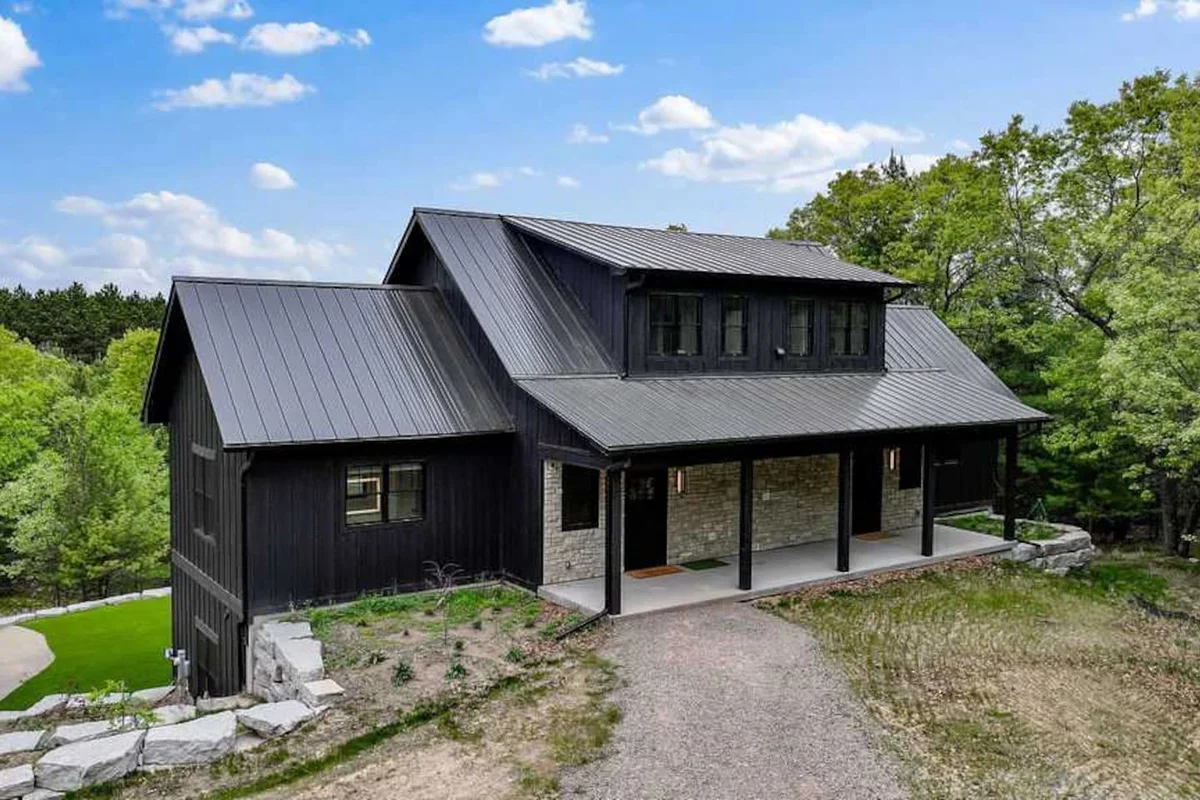
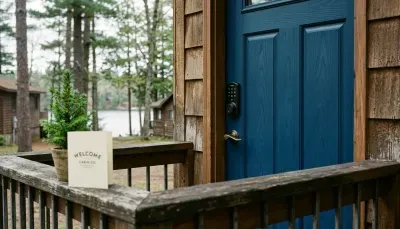
A welcoming facade that sets the tone. · Archer Place
If you're comparing top property management companies for a cabin near Sand Valley, Rome, Wausau, or Minocqua, Clear Trail Properties offers full-service management and co-hosting backed by over 60 properties under management and local teams who actually live in the markets they serve. Reach out through cleartrailproperties.com to see what a hands-on management partner looks like for your specific property.
Written by Ashley Lang, Owner, CEO at Clear Trail Properties