How Much Do Property Managers Get Paid Per House in 2026?
Property managers typically charge 8-12% of monthly rent for a long-term house and 15-30% of gross revenue for a short-term rental. See real examples.
How much do property managers get paid per house? A management company typically earns 8% to 12% of monthly collected rent on a long-term rental house and 15% to 30% of gross booking revenue on a short-term rental. Clear Trail Properties manages over 60 properties across Central Wisconsin and Northern Michigan, so we quote both models regularly.
Key Takeaways
- Long-term rental houses: management companies typically keep a percentage of collected rent, which works out to roughly $120 to $180 a month on a $1,500 rental.
- Short-term rental houses cost more to manage because the fee applies to gross booking revenue, and co-hosting arrangements usually price lower.
- The fee a house generates for a company is a different number from an individual manager's pay; the Bureau of Labor Statistics reported median annual pay of $62,210 for property, real estate, and community association managers in May 2026.
- The headline percentage rarely tells you the full cost, because leasing, renewal, and maintenance charges sit on top of it.
- In Nekoosa and Rome, seasonal swings (occupancy near 35% in March and 70% in July in local data) move a percentage-based fee from month to month.
- Clear Trail Properties quotes each owner by property type, season, and service scope rather than posting one flat rate.
The question sounds simple, but it has two answers. One is what you, the owner, pay a management company to run one house. The other is what an individual property manager earns in salary or commission. Most searchers want the first number, and that is where this guide spends most of its time.
The stakes rose in 2026. The Wisconsin Department of Tourism reported a record 117.9 million tourism visits in 2026, and lodging, including short-term rentals, accounted for $4.6 billion of visitor spending. Owners in Nekoosa, Rome, Friendship, and Wausau are weighing whether to rent their houses by the night, by the month, or by the year, and each choice changes what a manager earns.
At Clear Trail Properties, owners ask us this question before nearly every first conversation. Below you will find fee ranges, worked dollar examples, hidden charges, red flags, and a plain-language way to get a quote in Rome, WI.
How Much Does a Property Manager Get Per House on a Long-Term Rental?
A long-term rental management fee is the monthly percentage of collected rent that a management company keeps for running one house. An industry survey of 722 property-management branches across 80 metro areas found an average residential percentage fee of 8.49%, and most companies quote close to 10%. The percentage applies only to rent actually collected.
Local rent levels set the dollar amount. Zillow Rental Manager reported an average Wausau rent of $995 per month in January 2026, which puts the standard percentage fee at roughly $80 to $119 a month. Trulia reported average Nekoosa rent of $800 in August 2026, which works out to about $64 to $96 a month. At those levels, some companies set a minimum monthly fee, so ask whether one applies to your house.
Nekoosa's conventional rental inventory is thin. Realtor.com listed only one rental property in March 2026. That scarcity is one reason so many houses around Lake Arrowhead and Lake Petenwell operate as vacation rentals instead of year-round leases.
What Does a Property Manager Charge on a Short-Term or Vacation Rental House?
Short-term rental management is the full operation of a nightly-stay house: listing, pricing, guest messaging, cleaning coordination, and maintenance oversight. Companies price it as a percentage of gross booking revenue, usually well above long-term rates, because the workload repeats with every checkout rather than once a year.
Industry fee surveys put the 2026 national average for full-service vacation rental management at roughly 20% to 25%. Co-hosting arrangements, where you keep ownership control and hand off only part of the work, typically run 10% to 18%. In our experience, that gap is the first thing owners compare, and the second is how much work lands back on them at 2 a.m.
Gross revenue varies enormously by house, so the same percentage produces very different dollars. A five-bedroom home like Tomahawk Trail, which sleeps 18, books at a different scale than a two-bedroom such as Pickles Cabin, which sleeps 6. Seasonality matters too: local Nekoosa-area data shows occupancy ranging from 35% in March to 70% in July, so your monthly fee swings with the calendar.
What Do Those Percentages Cost in Real Dollars Per House?
A per-house fee calculation multiplies the percentage by the revenue the house produces, then annualizes the result. The tables below show both rental models. Figures are illustrative; your actual quote depends on contract terms, and nightly rates and revenue are subject to change.
| Monthly rent (long-term house) | At 8% | At 10% | At 12% | Annual fee range |
|---|---|---|---|---|
| $995 (Wausau average) | $80 | $100 | $119 | $955 to $1,433 |
| $1,500 | $120 | $150 | $180 | $1,440 to $2,160 |
| $2,000 | $160 | $200 | $240 | $1,920 to $2,880 |
| $2,500 | $200 | $250 | $300 | $2,400 to $3,600 |
For the short-term side, AirROI reported average Nekoosa STR annual revenue of $32,167 for its August 2026 to July 2026 dataset. Data providers disagree with each other here, so treat any single number as a benchmark rather than a promise. AirDNA, for example, reports 42% Nekoosa occupancy in 2026, while another provider reports 60.1% for its own listing set.
| Management model | Fee range | Annual fee on $32,167 gross |
|---|---|---|
| Co-hosting, low end | 10% of gross | about $3,217 |
| Co-hosting, high end | 18% of gross | about $5,790 |
| Full-service, low end | 15% of gross | about $4,825 |
| Full-service, national 2026 average | 20% to 25% of gross | about $6,433 to $8,042 |
| Full-service, high end | 30% of gross | about $9,650 |
Pricing skill can offset fees. Wheelhouse's published research documents a 22% average revenue improvement for vacation rental properties using dynamic pricing tools. Applied to a $32,167 base, that is roughly $7,077 of added revenue, an illustration of the arithmetic rather than a result you should expect.
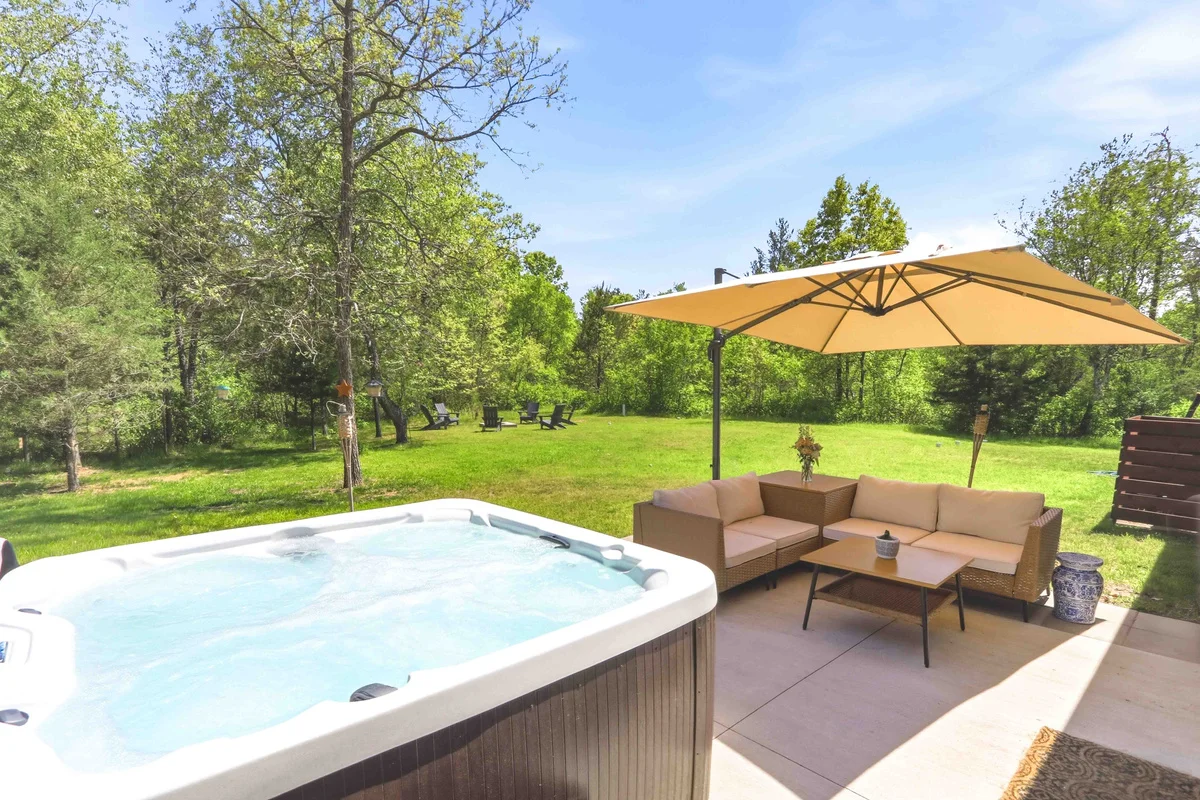
Spend sunlit afternoons by the hot tub with shaded seating and plenty of green space to relax. · Hidden on the 17th Hole
What Fees Do Property Managers Charge Besides the Monthly Percentage?
Ancillary property management fees are one-time or event-based charges added on top of the monthly percentage, such as leasing, tenant placement, lease renewal, and maintenance coordination. A low headline rate can hide a contract that earns the manager more through add-ons than through the percentage itself.
| Fee type | Typical range | When it applies |
|---|---|---|
| Leasing or placement fee | 50% to 100% of one month's rent, or a flat $200 to $500 | When a new tenant moves in |
| Lease renewal fee | 25% to 50% of one month's rent, or a flat $150 to $300 | When a tenant renews |
| Flat monthly fee (alternative to percentage) | Roughly $100 to $150 for a single-family house | Every month, collected or not |
| Maintenance coordination | Varies; ask about markups | When repairs are arranged |
Short-term houses add their own line items. In most arrangements, guests pay for cleaning through a cleaning fee, but confirm how your agreement handles it. Linens, restocking, photography, and staging may also carry separate charges.
Compliance costs sit outside the management fee entirely. Rome-area owners should check the Town of Rome forms and permits page for current short-term rental filings, and review the state's tourist rooming house requirements through the Wisconsin Department of Agriculture, Trade and Consumer Protection. For lodging tax, confirm current obligations with the Wisconsin Department of Revenue.
How Do Flat Fees, Portfolio Size, and Vacancy Change Your Per-House Cost?
A flat management fee is a fixed monthly charge per house, regardless of rent collected, while a percentage fee rises and falls with income. Which one costs less depends on how often your house sits empty and how high the rent runs.
Take a $1,500 rental with a 10% fee. If the house is vacant for three months, you pay $150 on nine months of collected rent, or $1,350 for the year. A flat $125 monthly fee costs $1,500 over the same year, because it charges during vacancy. The percentage structure aligns the manager's income with yours; the flat structure favors you on high-rent houses and costs more on cheap ones.
Portfolio size also moves the price. Owners with several houses often negotiate a lower rate per door, but the discount varies widely and few companies publish it. Get any bundled discount written into the agreement. A verbal promise at signing does not survive a staff change.
What Does a Property Manager Do for a Rental House?
A property manager is the person or company that handles a rental's daily operations so the owner does not have to. For a long-term house, that means marketing the vacancy, screening applicants, collecting rent, and coordinating repairs. For a short-term house, the work expands to guest communication, dynamic pricing, and same-day turnovers.
Our local, on-the-ground teams in Rome, Wausau, and Minocqua handle guest messages, cleaning coordination, and maintenance oversight for the houses we manage. Guests arriving for a round at Sand Valley Golf Resort expect a clean house and a quick reply, and a fee that ignores that workload is too low to sustain either.
Fair Housing Act rules apply to tenant and guest screening, and most states require a broker license or equivalent to manage property for compensation. Confirm Wisconsin's current requirements before you hire anyone. A manager who cannot explain their licensing status clearly is one to skip.
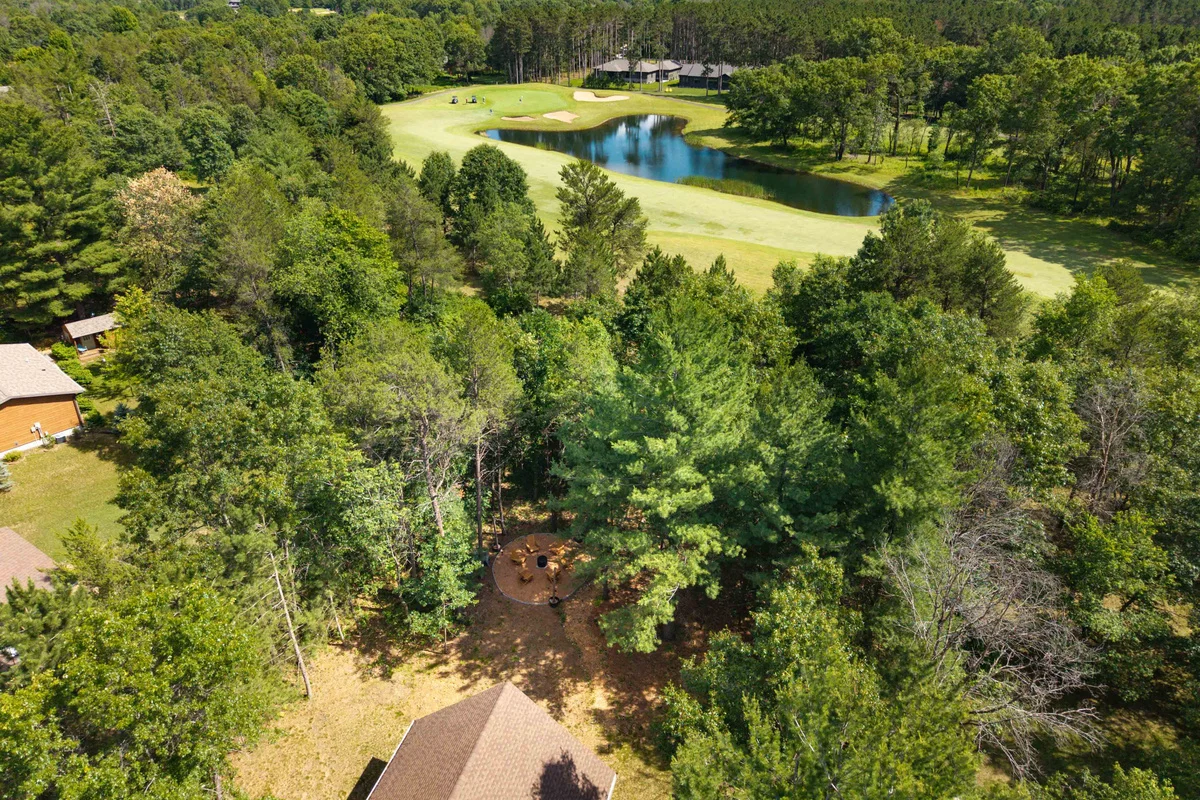
Enjoy a tucked-away retreat with beautiful treetop views and easy access to a picturesque golf course setting. · Chalet on the Fairway
What Is the 50% Rule in Rental Property, and Where Does the Management Fee Fit?
The 50% rule is a widely used investor rule of thumb that assumes operating expenses, excluding the mortgage, consume about half of a rental's gross income over time. It is a quick screening tool, not a forecast, and your real expense ratio can land well above or below it.
The management fee is one of several expenses inside that half. Property taxes, insurance, repairs, vacancy, and reserves compete for the same dollars. On a $2,000 rental, the rule implies roughly $1,000 in expenses, and a 10% management fee would take $200 of it.
The rule matters more for vacation rentals than most owners expect, because expense lines like utilities, cleaning supplies, and platform fees run higher. Build your own line-item budget before you rely on any rule. A direct-booking channel, which bypasses third-party platform fees, is one way to protect the margin that expenses erode.
Is It Worth Becoming a Property Manager, and How Is Individual Pay Different From the Fee Per House?
An individual property manager's pay is a salary, hourly wage, or commission from an employer, while the fee per house is revenue the company earns from an owner. The two are linked but not equal, because the fee also funds software, insurance, vehicles, cleaners, and overhead.
The Bureau of Labor Statistics reported median annual pay of $62,210 for property, real estate, and community association managers in May 2026. Private salary surveys report averages in the high $50,000s, with wide ranges by market and experience. Staff may also earn leasing commissions or bonuses, and those vary by employer.
Is the career worth it? It rewards people who like logistics and problem-solving, and your income grows with the number of houses you can run well. Vacation rental management adds guest-service skills and evening and weekend demands. If you are considering it, verify Wisconsin's licensing requirements first, since the rules for compensated management differ by state.
What Are Red Flags When Hiring a Property Manager?
A red flag in property management is a contract term or behavior that signals hidden costs, weak accountability, or thin local capacity. Spotting one early costs you nothing; discovering it after a 12-month agreement costs you plenty.
- No written fee schedule. If the manager will not list every charge, assume more exist.
- Vague maintenance markups. Ask whether repairs are billed at cost or with a markup, and who approves spending above a set amount.
- Heavy termination penalties. Long auto-renewing terms with exit fees trap you with a poor performer.
- Guaranteed revenue promises. Nobody can guarantee nightly income in a seasonal market like Nekoosa.
- No local presence. A remote call center cannot reach a Lake Petenwell house in 20 minutes.
- Opaque reporting. You should see bookings, payouts, and expenses in plain language every month.
- No professional affiliations. Memberships with groups like NARPM or IREM are not proof of quality, but a manager who belongs to neither deserves extra questions.
If you live out of state, put extra weight on local presence and reporting. Ask who physically inspects the house between guests, how fast they respond to a maintenance call, and what a typical monthly statement looks like.
How Does Clear Trail Properties Price and Run Full-Service Management?
Full-service property management at Clear Trail Properties means we run the whole operation for an owner's house, from listing and pricing to guest communication and maintenance oversight, while you keep ownership. We quote each house individually because property type, location, and season change the workload.
Our approach rests on four operating advantages. Investor-operator thinking means we engineer a house for yield and long-term asset health instead of just keeping it tidy. Designed by Ash, our in-house design firm, builds spaces meant to win search results and command stronger nightly rates. Direct bookings give us owned guest data that reduces reliance on third-party platform fees. Radical Gifting builds the loyalty that brings guests back to book direct.
Amenities and design drive gross revenue, which is the number your percentage fee applies to. A private hot tub and dock at Sherwood Shores Cabin, for example, are the kind of features we track closely for their effect on bookings. For owners who want less than full management, our co-hosting service covers guest communication and dynamic pricing while you stay in control of decisions.
How Do You Get a Property Management Quote in Rome, WI?
Getting a property management quote means giving a manager the facts about your house and receiving a written fee schedule in return. A good quote lists the monthly fee, one-time charges, maintenance policy, and termination terms in one document.
- Collect your house details: bedrooms, sleeping capacity, amenities, current rent or booking history, and any permits you hold.
- Decide your model: long-term lease, short-term rental, mid-term stays for traveling professionals, or a mix.
- Request a written fee schedule that covers the percentage, leasing or renewal charges, and any markups.
- Ask for response-time commitments and who is physically near your house.
- Compare net income to you, not headline percentages, using the dollar examples above.
- Confirm permit and lodging-tax responsibilities with the Town of Rome and the state before you sign.
When you compare companies near Rome for landlords, weigh local staffing and reporting clarity above the lowest percentage. Clear Trail Properties has teams in Rome, Wausau, and Minocqua and manages houses around Nekoosa, Friendship, and the Lake Petenwell corridor. We offer both full-service and co-hosting, so you can compare the two structures in one conversation.
So How Much Do Property Managers Get Paid Per House?
How much property managers get paid per house depends on the rental model. Long-term houses cost a share of collected rent, while short-term houses cost more, with the 2026 national full-service average at roughly 20% to 25% of gross booking revenue. Leasing and renewal charges add to the total, and an individual manager's salary is a separate figure.
Before you sign, request the full fee schedule in writing and run the dollar math for your own house. As Wisconsin tourism keeps setting records into 2026, the owners who benefit most will be the ones who understand exactly what they pay and what it buys.
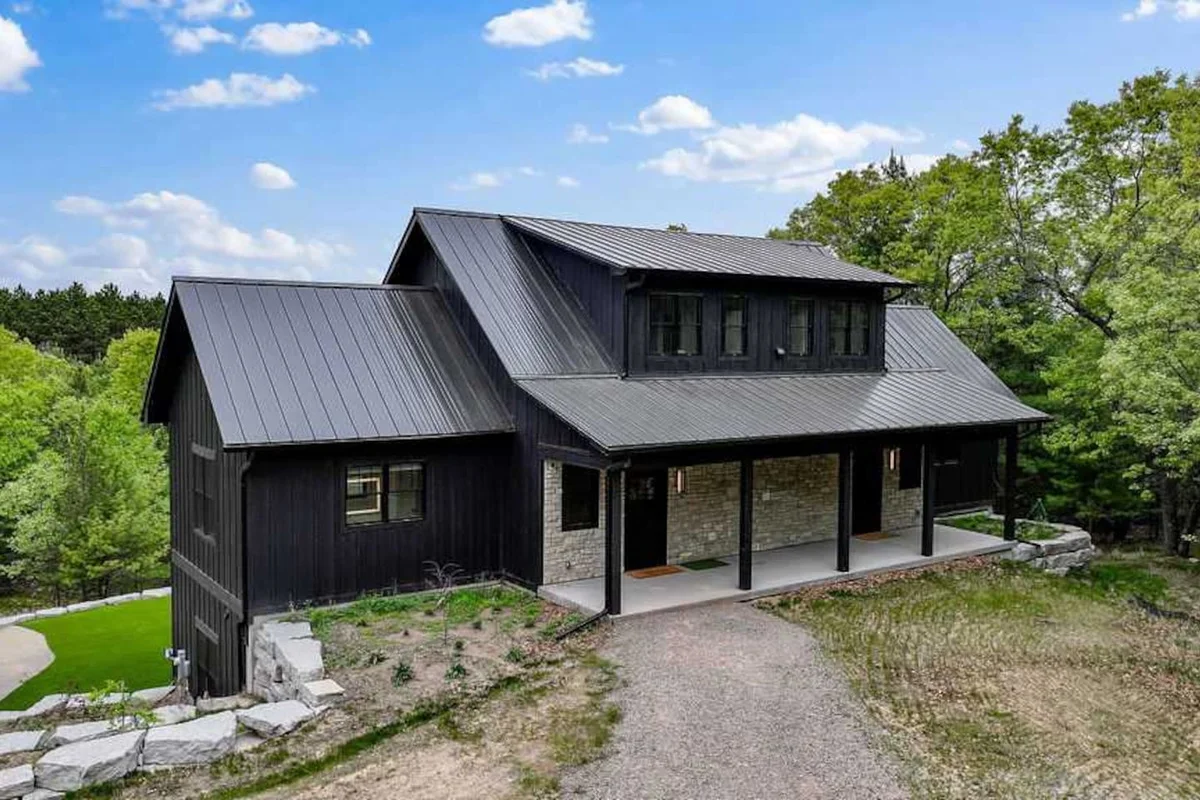
A welcoming facade that sets the tone. · Archer Place
If you want a clear, itemized quote for your Rome, WI house, Contact Clear Trail Properties about full-service management or co-hosting. With over 60 properties under management, our local teams can explain exactly what each fee covers before you commit.
Frequently Asked Questions
How do I find a trustworthy property manager if I don't live near my rental in Wisconsin?
Prioritize a manager with a physical local presence, written monthly reporting, and a clear fee schedule. Ask who inspects the house between guests and how quickly they respond to a maintenance call. Check professional affiliations such as NARPM or IREM as one signal among several, and confirm permit responsibilities with your town before signing.
How much can I charge per night for a lakefront or waterfront rental?
Nightly rates vary by dataset, season, and house size. For Nekoosa, AirROI reported an average nightly rate of $417 and a peak-season June to August average of $516, while another provider reported an average daily rate of $293.06 for its listing set. Rates are subject to change, so compare your own amenities, such as a dock or hot tub, against current listings before pricing.
What are the best niche rental platforms for a lake or cabin property?
Airbnb and Vrbo remain the highest-traffic channels, but a direct-booking website gives you owned guest data and avoids third-party platform fees. Regional and cabin-focused platforms exist and vary in reach, so ask your manager which channels they syndicate to and what each one costs. A manager who runs a direct-booking channel alongside the major platforms usually protects your margin best.
What is the average property management fee in Wisconsin?
We have no verified Wisconsin-only average, so use the national ranges as a starting point and get local quotes to confirm. Long-term residential management typically runs near 10% of collected rent, and short-term management scales with gross bookings. Ask any company for its written fee schedule, since rural lake markets can price differently from cities.
Do property managers get paid when the house is vacant?
It depends on the fee structure. A percentage fee applies only to rent or booking revenue collected, so a vacant month produces no management fee. A flat monthly fee is charged regardless of occupancy, and some companies also charge a leasing fee when they place a new tenant.
Is a co-host cheaper than a full-service property manager?
Usually, yes. Co-hosting typically costs 10% to 18% of gross revenue versus the higher full-service range, but you stay responsible for the tasks you keep. If you are still the one fielding late-night maintenance calls, the lower fee may not fit your bandwidth.
Can I still use my cabin personally if a company manages it?
Many owner agreements allow personal use, with owner blocks placed on the booking calendar. Confirm how far in advance you must reserve dates and whether peak-season blocks carry restrictions. Clear Trail Properties lets owners retain full ownership and control of their homes, so ask about personal-use terms when you request your quote.
Written by Ashley Lang, Owner, CEO at Clear Trail Properties